

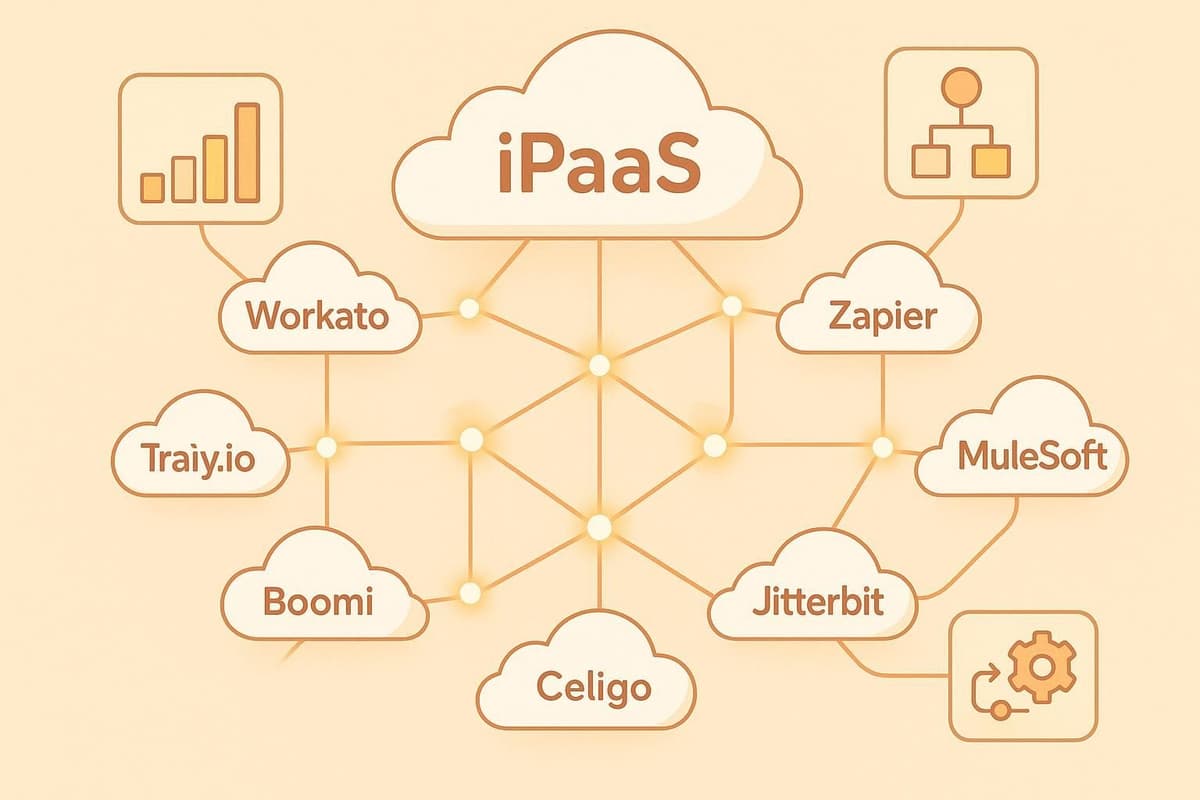
Here’s what you’ll get: A detailed comparison of the top 12 iPaaS platforms in 2025, designed to help businesses streamline data integration and automation. From enterprise-grade solutions like MuleSoft to user-friendly tools like Zapier, this guide breaks down features, costs, and performance to match your organization’s needs.
Why this matters: As businesses handle increasing data volumes, outdated integration methods often lead to inefficiencies. Modern iPaaS solutions not only connect applications but also automate workflows and leverage AI for decision-making. Choosing the right platform can reduce complexity, save costs, and enhance productivity.
Snapshot:
Let’s dive into how these platforms compare and how they solve specific challenges.
New! Mulesoft Vs Boomi Vs Workato: Best Api Management Tool For Your Business 2025?
1. MuleSoft
MuleSoft's Anypoint Platform, a solution owned by Salesforce, is tailored for enterprises that need to manage complex, high-volume integrations. It caters to large organizations requiring advanced data processing and robust integration capabilities.
Enterprise-Grade Data Processing Capabilities
The Anypoint Platform is built to handle large-scale, distributed data processing. Its DataWeave tool enables intricate data transformations, such as converting formats, enriching data from multiple sources, and performing real-time validations. The platform's runtime engine supports both cloud-based and on-premises deployments, allowing it to process an impressive volume of transactions per hour. Additionally, CloudHub ensures scalability by automatically adjusting to demand, although this can lead to increased operational costs as usage grows.
MuleSoft also stands out for its extensive connector ecosystem, which reinforces its enterprise focus.
Connector Ecosystem Quality
MuleSoft provides a wide range of pre-built connectors designed for reliability and enterprise-level functionality. These connectors undergo rigorous testing to ensure features like connection pooling, retry mechanisms, and detailed error handling work seamlessly. Key connectors for systems such as SAP, Oracle, and Microsoft are equipped to handle complex enterprise scenarios. Through the Anypoint Exchange marketplace, businesses can access and share custom connectors, though developing these often requires specialized technical skills. Instead of merely offering a large number of connectors, MuleSoft prioritizes their depth and reliability.
Performance and Scalability
MuleSoft is engineered to support enterprise-scale workloads, but achieving optimal performance requires careful planning and skilled developers. Detailed API monitoring tools provide insights that are essential for maintaining performance. However, challenges can arise when dealing with complex transformation logic or integrating with legacy systems. To get the best results, it’s crucial to design integrations with scalability in mind from the start.
Security is another area where MuleSoft demonstrates its enterprise-grade capabilities.
Pricing Structure and Total Cost
MuleSoft operates within the premium pricing tier, with costs varying significantly depending on the scale of deployment and additional services required. Beyond the initial licensing fees, businesses should also account for expenses related to scaling, maintenance, training, and infrastructure.
Enterprise Security and Compliance
MuleSoft incorporates robust security features, including support for OAuth 2.0, SAML, client certificates, and API-level policies. These tools help organizations comply with regulations such as HIPAA, SOC 2, and GDPR. Features like threat protection, rate limiting, and audit logging enhance data security and governance. However, implementing these measures effectively requires expertise to avoid potential misconfigurations.
MuleSoft exemplifies the traditional iPaaS approach, offering powerful integration solutions that meet the complex demands of large enterprises. While the platform's capabilities come with added complexity and higher costs, its focus on reliability and scalability makes it a strong choice for organizations with extensive integration needs.
2. Microsoft Azure Logic Apps
Microsoft Azure Logic Apps is a platform designed to simplify process automation through visual workflows. By adopting a low-code/no-code approach, it enables users to create and manage integration flows without extensive programming knowledge.
Cloud-Native Integration Architecture
Operating entirely on Microsoft's managed cloud, Azure Logic Apps eliminates the need for maintaining physical hardware. Its intuitive visual designer allows users to build workflows using a straightforward drag-and-drop interface, making automation accessible even for non-technical users.
Connector Ecosystem and Microsoft Integration
Azure Logic Apps supports over 1,400 prebuilt connectors, including integrations with tools like Blob Storage, Service Bus, Outlook, Excel, SharePoint, SQL databases, Oracle, SAP, and IBM MQ. These connectors ensure smooth data exchange, particularly for organizations already utilizing Office 365 or other Azure services[1]. This extensive network of integrations makes it a strong contender in the integration platform as a service (iPaaS) market, addressing modern automation needs effectively.
3. IBM Integration
IBM Integration is a platform designed to address the complex needs of modern enterprises by combining advanced data transformation capabilities with intelligent connectivity. It builds on IBM's legacy of reliable middleware while embracing the efficiency of cloud-native technologies. Below is a closer look at its key features and strengths.
Enterprise-Grade Data Transformation Engine
IBM Integration stands out with its ability to handle intricate data transformations through advanced mapping and logic tools. Its transformation engine supports both real-time and batch processing, allowing businesses to process large volumes of data while ensuring accuracy and consistency. This is particularly advantageous for organizations operating legacy mainframe systems alongside modern cloud-based solutions. Such capabilities create a strong foundation for the platform's connectivity features, which are discussed next.
Hybrid Cloud Architecture and Connectivity
The platform offers seamless integration between on-premises and cloud environments, ensuring consistent data flow across diverse systems. IBM Integration includes a wide array of prebuilt connectors that work with popular platforms like SAP, Oracle databases, IBM Db2, Salesforce, and even mainframe systems. This extensive connectivity makes it a practical solution for enterprises with varied and complex technology infrastructures.
AI-Powered Integration Intelligence
IBM Integration takes its functionality further by incorporating AI capabilities, including Watson AI. These tools help streamline processes by offering smart mapping suggestions, identifying errors, and analyzing data patterns to recommend optimization strategies. By proactively detecting potential issues, the platform enables teams to address problems before they escalate into production environments.
Enterprise Security and Compliance Framework
Security and compliance are at the core of IBM Integration's design. It offers end-to-end encryption, role-based access controls, and detailed audit logging to meet stringent industry standards. The platform is well-suited for industries like healthcare, financial services, and government, providing features such as data masking and secure key management to safeguard sensitive information.
Pricing Structure and Total Cost Considerations
IBM Integration employs a capacity-based pricing model, starting with a base monthly fee that scales based on data volume and the number of connectors used. Larger implementations may incur additional costs for professional services and premium support. Enterprises should carefully evaluate these factors to understand the total cost of ownership and ensure alignment with their budgets.
Implementation Complexity and Time-to-Value
Deploying IBM Integration requires a high level of technical expertise and can take several months, particularly for complex implementations. However, the platform's robust architecture supports long-term scalability, making it a strong choice for organizations with demanding integration needs. While the initial setup might be time-intensive, the benefits of secure, scalable, and intelligent data processing make it a worthwhile investment for many enterprises.
4. Informatica
Informatica's Intelligent Data Management Cloud (IDMC) is built to handle high-volume cloud transactions efficiently. This capability serves as the foundation for its advanced transformation engine, making it a key player in modern data management.
Advanced Data Integration and ETL Capabilities
Informatica addresses the evolving needs of data integration by combining the efficiency of ETL processes with intelligent automation. Its tools, such as PowerCenter and Cloud Data Integration, excel in managing complex transformations. The platform supports both real-time streaming and batch processing while employing data quality tools to identify and correct inconsistencies. Informatica’s CLAIRE AI enhances this process by suggesting optimal transformation logic. Its parallel processing architecture is particularly effective for large enterprise datasets, distributing workloads across multiple nodes to maintain high performance even at scale.
Connector Ecosystem and Enterprise System Support
The platform provides an extensive array of pre-built connectors for major enterprise applications, including SAP, Oracle, Microsoft Dynamics, Workday, and Salesforce. These connectors facilitate high-volume data synchronization, complete with error handling and retry mechanisms. Informatica also integrates deeply with legacy systems and complex database environments, supporting platforms like IBM z/OS and AS/400. This broad compatibility ensures it can meet the needs of diverse enterprise systems.
Performance with Large Data Volumes
Informatica’s performance depends on the complexity of the data and transformation tasks. While straightforward data transfers are managed efficiently, the platform’s cloud infrastructure scales resources automatically during peak loads. However, this scaling can increase costs. For more complex transformations, processing times may slow down despite the platform’s auto-scaling capabilities.
Cost Structure and Total Ownership Considerations
Informatica uses a consumption-based pricing model, meaning costs increase with higher data volumes, additional connectors, or advanced features like real-time processing. Enterprise-level deployments often require significant investment, encompassing licensing fees and professional services for setup and customization. These factors make it essential to evaluate total ownership costs when comparing Informatica to other platforms.
Enterprise Security and Compliance Framework
The platform adheres to major regulatory standards, including SOC 2 Type II, GDPR, HIPAA, and PCI DSS. Its data governance features, such as automated data lineage tracking and policy enforcement, provide organizations with better visibility into data movements. Additional security measures, such as field-level data masking and role-based access controls, ensure that sensitive information is accessible only to authorized personnel. These features align well with Informatica’s broader data processing capabilities.
Implementation Complexity and Support Quality
The complexity of implementing Informatica can vary based on the number of systems being integrated and the overall data landscape. Deployments often require certified expertise, and the platform offers 24/7 support along with dedicated customer success managers for enterprise clients. While critical issues are typically resolved quickly, standard support queries may take longer to address. Additionally, although the pre-built connectors are generally reliable, third-party integrations may occasionally face synchronization delays during high-volume periods, necessitating regular monitoring and occasional manual intervention.
5. Dell Boomi
Dell Boomi is a platform designed to tackle modern integration needs by blending enterprise-level capabilities with accessibility for mid-sized businesses. It supports a wide range of use cases, from straightforward workflows to intricate data transformations.
Unified Platform Architecture and Data Handling
At the core of Dell Boomi's AtomSphere platform is a unified architecture that combines data integration, API management, and workflow automation. Its proprietary Atom runtime engine powers data processing, offering deployment options in the cloud, on-premises, or hybrid environments. This adaptability allows organizations to meet data sovereignty requirements while benefiting from cloud scalability. The platform's drag-and-drop visual interface simplifies the creation of integration processes, making even complex data transformations more manageable. This cohesive design also ensures broad compatibility with various systems through its extensive connector support.
Extensive Connector Library and Integration Capabilities
Dell Boomi provides a wide array of pre-built connectors that integrate with popular enterprise applications, cloud services, and databases. These include Salesforce, NetSuite, SAP, Oracle, Microsoft Dynamics, and SaaS platforms like Workday and ServiceNow. Cloud-based connectors typically offer reliable mapping and error-handling features, though connectors for older systems may require additional configuration to accommodate custom fields or intricate logic.
Scalability and Performance Considerations
The scalability of Dell Boomi hinges on the Atom deployment model chosen. Cloud Atoms are well-suited for moderate workloads, while high-volume operations demand careful resource planning. However, when working with complex transformations involving multiple data sources, processing speeds can slow. In such cases, batch processing may be necessary for large-scale implementations to maintain efficiency.
Pricing and Cost Clarity
Dell Boomi operates on a subscription-based pricing model that scales with factors like usage, the number of connectors, and data volume. While this approach offers flexibility, costs can become less predictable as integration needs grow. Businesses should evaluate potential additional charges and align them with their broader integration strategy to avoid unexpected expenses.
Security and Compliance Features
The platform meets key industry security standards, including SOC 2 Type II, and complies with regulations like GDPR, HIPAA, and PCI DSS. Security measures include field-level encryption, role-based access controls, audit logging, API throttling, IP whitelisting, and certificate-based authentication. However, some advanced security features may require additional licensing.
Implementation and Support Insights
For straightforward use cases, Dell Boomi offers quick setup times. However, more complex deployments can take several months to complete. While the visual editor simplifies integration design, advanced configurations often benefit from certified professionals to ensure optimal performance. Support availability varies by subscription tier, with enterprise customers typically receiving priority assistance. Standard support users, on the other hand, may experience delays during busier periods.
6. Workato
Workato is a platform that blends integration, workflow automation, and AI-driven suggestions into a cohesive toolset designed to streamline business processes.
Business Automation-First Architecture
At the heart of Workato's platform is its "recipe" approach, which simplifies automation by allowing users to create workflows across various applications. These recipes can include conditional logic, data transformations, and approval workflows, making them versatile for a range of business needs. What sets Workato apart is its focus on accessibility for business users while still providing the robust functionality required by enterprise-level operations.
Workato’s Workbot feature integrates automation directly into collaboration tools like Slack and Microsoft Teams. This means users can trigger workflows, approve requests, and receive notifications without leaving their communication platform. By embedding automation into these everyday tools, Workato eliminates the need for users to switch between interfaces, keeping workflows seamless and efficient.
Connector Quality and Application Support
Workato offers over 1,000 pre-built connectors to enable real-time synchronization and two-way data flow across applications. These connectors support both trigger-based and scheduled operations, ensuring flexibility for different workflows.
However, the performance of these connectors can vary. For widely used SaaS platforms, the connectors are reliable, with strong error handling and detailed field mapping. On the other hand, connectors for more niche or legacy systems may require additional configuration to work effectively. Workato also allows third-party developers to contribute connectors through its community connector program, though these are not always as polished or supported as the official ones.
AI-Enhanced Recipe Development
Workato incorporates AI into its design with the Recipe IQ feature, which helps users identify inefficiencies and optimize workflows. Recipe IQ can pinpoint bottlenecks, suggest alternative approaches, and even predict potential integration issues before they arise. This AI-driven guidance extends to recipe creation, where the platform offers suggestions for triggers, actions, and data mappings based on the applications being connected. These features make automation more intuitive, even for users with limited technical expertise.
Performance and Scalability Characteristics
Performance challenges: How complexity and data volume impact execution speed
Workato’s performance is largely influenced by the complexity of the recipes and the amount of data being processed. For simple workflows involving cloud applications, execution times are typically quick. However, more complex recipes with multiple layers of logic and data transformations can experience delays. Additionally, because Workato operates on a shared infrastructure model, performance may vary during peak usage times, particularly for customers on lower-tier plans.
For organizations handling high data volumes, throttling mechanisms can slow down workflows. Those processing over 10,000 records per hour often need to adopt batch processing strategies or upgrade to dedicated infrastructure options. While these upgrades can improve performance, they also come with significantly higher costs.
Pricing Structure and Cost Considerations
Cost concerns: How task-based pricing can escalate expenses
Workato’s pricing combines subscription tiers with usage-based charges for tasks, which are defined as individual recipe executions. Entry-level plans start at approximately $10,000 annually but can quickly increase as organizations expand their usage. Workflows that run frequently or process large datasets can lead to unpredictable costs due to the task-based pricing model.
For enterprise-level features such as on-premises agents, enhanced security, and dedicated support, organizations often need to invest in the Professional or Enterprise tiers. These plans typically start at $50,000 annually, and additional task volumes can drive costs even higher. For mid-sized businesses, this pricing structure can make Workato a significant financial commitment.
Enterprise Security and Compliance Framework
Workato ensures a high level of security and compliance, holding certifications such as SOC 2 Type II and adhering to GDPR, HIPAA, and other regulatory standards. The platform includes features like field-level encryption, role-based access controls, and audit logging. For added security, it offers IP whitelisting, single sign-on integration, and certificate-based authentication for sensitive connections.
Organizations with strict data sovereignty requirements can use Workato’s on-premises agent capability, which allows data to remain within their infrastructure while still leveraging cloud-based orchestration. While this hybrid model addresses compliance needs, it can add complexity to deployment and ongoing maintenance.
Implementation Complexity and Time-to-Value
Workato’s user-friendly design enables quicker initial implementations compared to traditional enterprise integration platforms. Simple workflows can often be deployed within days, while more complex integrations typically take 2-4 months. The platform’s visual recipe builder simplifies the process, making it accessible for business users with minimal training.
That said, advanced use cases, such as custom connectors and complex data transformations, often require the expertise of certified partners. The learning curve varies depending on the user’s technical background; while business users can grasp basic workflows quickly, IT teams may need several weeks to fully master the platform’s more advanced features.
7. SnapLogic
SnapLogic is a platform tailored for cloud-based integration, offering flexible scalability to meet shifting data requirements. This adaptability allows organizations to adjust resources seamlessly as their data needs grow and change.
However, for enterprises managing large-scale projects, higher integration volumes can lead to increased expenses, particularly with consumption-based pricing models. It's important to assess how expanding pipelines affects both performance and overall costs to ensure efficient resource allocation.
sbb-itb-23997f1
8. Celigo
Celigo stands out as a platform rooted in its strong connection to NetSuite, now offering expanded capabilities for broader enterprise integration. Originally designed for NetSuite users, it has evolved to include a wide range of pre-built connectors that enable seamless data synchronization across various systems. If you're considering Celigo, ensure its connector library aligns with your specific integration requirements, especially if you're operating outside the NetSuite ecosystem.
While Celigo is versatile, it's important to note that performance can lag during high-volume tasks or intricate data mapping processes. To avoid surprises, test the platform under conditions that mimic your real-time synchronization demands.
Celigo follows a consumption-based pricing model, where costs increase with transaction volume. To understand the potential financial commitment, carefully review its pricing structure and evaluate how it fits into your overall budget.
From a security perspective, Celigo offers standard protective measures. However, organizations with stringent regulatory requirements should take the time to confirm that the platform meets their compliance needs.
The platform's visual workflow interface is user-friendly, making it accessible for business users to manage straightforward integrations. That said, more complex setups may require technical expertise for customization. While simple configurations can be deployed quickly, larger-scale, multi-system integrations will demand careful planning and rigorous testing to ensure success.
9. Zapier
Zapier has become a go-to platform in the world of no-code automation, thanks to its straightforward and user-friendly design. It enables users, even those without technical expertise, to connect popular applications and create automated workflows, known as "Zaps." These workflows operate on a trigger-based system, making it easy for businesses to streamline repetitive tasks and improve efficiency.
Despite its accessibility, Zapier does face challenges when it comes to scaling for enterprise-level needs. The platform enforces a limit of 10,000 requests within a 5-minute period, equating to roughly 33 requests per second [2]. For organizations that rely on high-volume data synchronization, this restriction can lead to delays, particularly in real-time polling, which may take several minutes [2]. Additionally, while its no-code framework is ideal for simplicity, it can become a bottleneck for handling large datasets or performing more complex data transformations, where custom-coded solutions often excel [2].
Zapier is best suited for smaller-scale departmental automations and connecting widely-used SaaS applications. However, as businesses grow and their integration demands increase, these limitations may become a hindrance. The platform’s ease of use remains its key strength, but it underscores a trade-off between simplicity and the ability to handle enterprise-level scalability.
10. Microsoft Power Automate
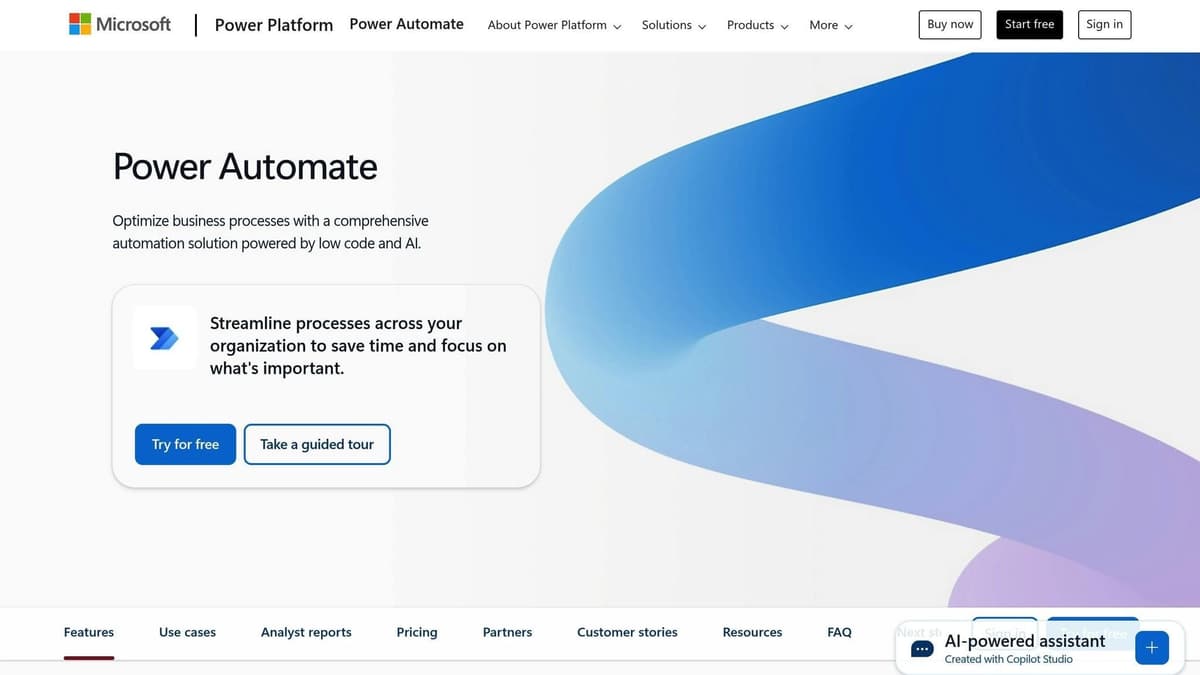
Microsoft Power Automate is a platform designed to streamline business processes and integrate data, leveraging the expansive Microsoft ecosystem. It goes beyond the typical capabilities of integration platforms by offering seamless workflow automation through its deep connections with Microsoft 365, Azure services, and Dynamics 365. This makes it an attractive choice for organizations aiming to enhance their digital operations.
The platform boasts over 1,000 pre-built connectors, but their performance and reliability can vary. While standard connectors are included, premium connectors - offering more robust features - come with additional licensing costs. Many businesses find that to achieve high-performance integrations, upgrading to these premium tiers becomes necessary, which can significantly increase the overall cost.
Data Integration Capabilities and Performance
Power Automate employs a visual design interface for building workflows and transforming data. However, more complex transformations often require custom expressions or integration with Azure Logic Apps. Premium plans allow up to 100,000 actions per day, with individual flows limited to a maximum run time of 30 days.
For real-time data synchronization, Power Automate primarily relies on polling mechanisms rather than true event-driven triggers. Depending on the settings and connector type, this can result in latency ranging from 1 to 15 minutes. Organizations needing faster synchronization - such as sub-minute updates - often resort to custom solutions using tools like Azure Service Bus or Event Grid, which can increase architectural complexity and operational overhead.
Enterprise Readiness and Scaling Considerations
Power Automate is closely integrated with Microsoft’s security and compliance ecosystem. Features like Azure Active Directory authentication, data loss prevention policies, and compliance certifications enhance its enterprise readiness. However, this tight Microsoft alignment can complicate multi-cloud strategies, as workflows may not perform as efficiently outside the Microsoft environment.
At scale, the platform may encounter limitations. For example, processing millions of records monthly can lead to throttling and unpredictable performance due to its shared infrastructure. During peak usage periods, flow execution times might vary, which can be challenging for businesses requiring consistent performance.
Cost Structure and Hidden Expenses
While Power Automate’s pricing starts at $15 per user per month for basic automation using standard connectors, the cost can escalate quickly. Premium connectors, AI Builder credits for document processing, and advanced analytics features require additional fees. These extras can more than triple the per-user costs, particularly for organizations leveraging premium applications like Salesforce, SAP, or Oracle.
A key cost consideration lies in licensing complexity. For example, any user triggering a flow that interacts with premium applications must have the appropriate licensing. This can lead to unexpected expenses as automation scales across an organization, especially when workflows become more intricate and involve multiple premium features.
Integration Quality and Ecosystem Maturity
The quality of Power Automate’s connectors is another important factor. Microsoft-native connectors, such as those for Office 365, SharePoint, and Dynamics 365, are highly reliable and feature-rich. However, third-party connectors often vary in quality, with some showing inconsistent error handling or limited functionality, like restricted field mapping. While Microsoft’s certification program has improved third-party connector reliability, it’s essential for organizations to test specific connectors during the planning phase to ensure they meet project needs.
Power Automate’s primary strength lies in its ability to merge traditional data integration with broader business automation tasks. It handles workflows like approvals, document processing, and user interactions, reducing the need for multiple specialized tools. However, for straightforward data integration tasks, simpler, more focused platforms may be a better fit, as Power Automate’s versatility can sometimes introduce unnecessary complexity.
11. APPSeCONNECT
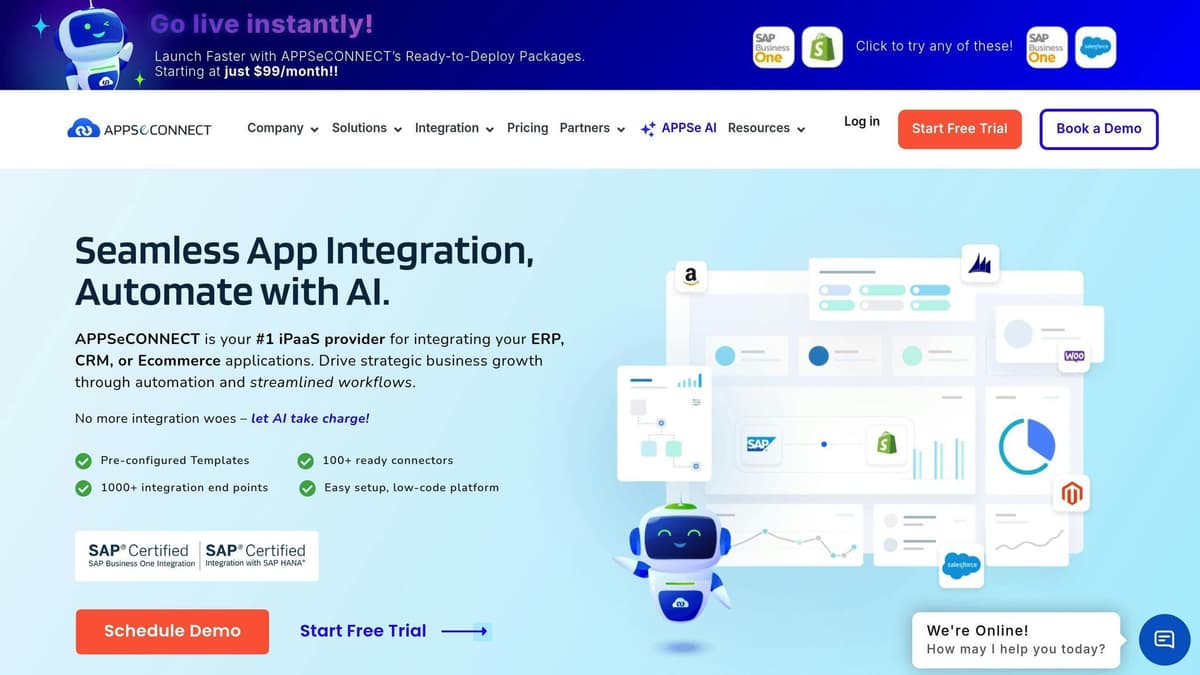
APPSeCONNECT offers pre-configured industry solutions through what it refers to as "touchpoints" - integration packages designed for specific business needs, such as syncing e-commerce platforms with ERP systems or connecting CRM tools to accounting software. These touchpoints cater to popular combinations like Shopify with SAP Business One, Magento with Microsoft Dynamics, or WooCommerce with QuickBooks. While this template-driven approach significantly reduces setup time, it may not provide much flexibility for businesses needing highly customized integrations.
This focus on pre-built touchpoints ensures efficient data integration for common business scenarios.
Data Integration Capabilities and Performance
APPSeCONNECT supports data transformations through a visual, no-code mapping interface. It offers both real-time and batch processing capabilities, though real-time operations can face delays when dealing with API limits or high data volumes. To manage surges in data, the platform employs queuing mechanisms that prevent system overload but may introduce delays during peak times.
The platform's data transformation tools are well-suited for standard business processes but can struggle with more complex data structures or unique business logic. Advanced customization often requires additional scripting or external tools, which can complicate the otherwise straightforward setup. Despite these limitations, APPSeCONNECT performs well for common integration needs.
Enterprise Readiness and Scaling Considerations
APPSeCONNECT supports both cloud-based and on-premises deployments, with hybrid options being particularly popular among mid-sized businesses. It includes essential enterprise features such as role-based access control, audit trails, and data encryption.
However, scaling can become a challenge as businesses outgrow the platform's pre-configured scenarios. While it handles moderate data volumes effectively, enterprises processing millions of transactions monthly may encounter performance issues. Its architecture is most suitable for organizations with 50 to 500 employees.
In addition to scalability, the platform's pricing structure plays a key role in its appeal.
Cost Structure and Pricing Transparency
APPSeCONNECT follows a connector-based pricing model, starting at approximately $299 per month. Unlike platforms that charge per transaction, this model bases costs on the number of active integrations and the volume of data processed. This setup offers cost predictability for businesses with stable integration needs, but scaling costs can rise quickly as new systems are added or data volumes increase.
The pricing also includes implementation support and pre-configured templates, which can help reduce initial setup expenses compared to platforms requiring heavy customization.
Integration Quality and Ecosystem Maturity
APPSeCONNECT's connector ecosystem prioritizes popular business applications over covering a wide range of systems. It offers strong integrations with major ERP platforms like SAP, Microsoft Dynamics, and NetSuite, as well as widely used e-commerce and CRM platforms.
The platform's connectors are generally reliable within its supported ecosystem, with robust field mapping and error-handling capabilities. However, businesses needing connections to less common or legacy systems may find their options limited. APPSeCONNECT excels in handling complex business scenarios within its supported applications, making it a strong choice for organizations with standard technology stacks that value pre-configured, reliable integration solutions.
12. Integrate.io
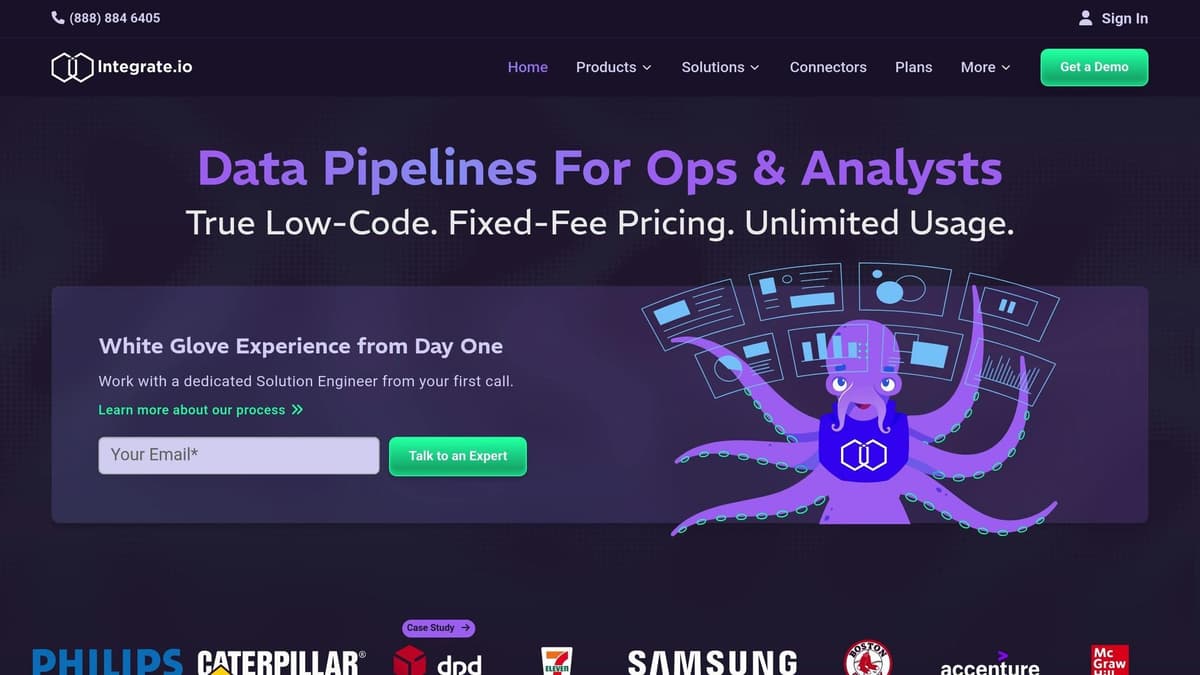
Integrate.io is a data-focused iPaaS platform designed to handle complex ETL processes, supporting advanced data warehouse operations and analytics workflows. Its primary focus is on constructing efficient data pipelines rather than integrating business applications, making it an excellent fit for companies building data lakes, upgrading legacy systems, or advancing their business intelligence efforts.
ETL Capabilities and Data Pipeline Efficiency
At the heart of Integrate.io’s functionality is its visual ETL designer, which simplifies tasks like data cleansing, deduplication, aggregation, and schema mapping. By generating optimized queries, it ensures smoother data processing. The platform’s distributed processing architecture allows it to scale for large data volumes, though its performance depends on the complexity and concurrency of the data pipelines. Additionally, the change data capture (CDC) feature provides near real-time synchronization from various database sources. However, latency can vary based on system configurations and the size of the data being processed.
Connector Ecosystem and Integration Versatility
Integrate.io supports a wide array of pre-built connectors for major databases, cloud applications, and data warehouses. These include popular platforms like Snowflake, Amazon Redshift, Google BigQuery, Salesforce, and Microsoft Dynamics. The connectors are designed to handle detailed field-level mapping and support complex data types. While database connectors typically perform reliably with built-in error handling and retry mechanisms, some SaaS application connectors may require additional setup to address custom fields or intricate object relationships. For proprietary systems, the API connector framework allows businesses to create tailored integrations.
Enterprise-Grade Security and Compliance
Security is a core strength of Integrate.io, with features such as encryption for data in transit and at rest, role-based access controls, and comprehensive audit logging. The platform adheres to industry-standard compliance requirements and supports data governance with tools like data lineage tracking. Deployment options include cloud-hosted environments, virtual private clouds, and hybrid models, giving organizations flexibility to meet their security and data residency needs.
Pricing Model and Cost Considerations
Integrate.io uses a consumption-based pricing structure, charging based on data volume and pipeline executions. This model provides predictable costs for batch processing but can become more expensive for frequent or real-time integrations. Enterprise packages offer additional value by including professional services and support, which can help streamline implementation and ongoing operations.
Implementation and Time-to-Value
The platform’s visual interface simplifies the design and management of data transformations, especially when compared to code-intensive alternatives. However, expertise in data modeling and SQL can enhance the implementation process. Deployment timelines vary depending on project scope, but many organizations report achieving results quickly. By combining data integration and quality management functions in one platform, Integrate.io helps businesses streamline operations and meet modern demands for scalable, efficient automation.
Platform Comparison: Pros and Cons
Choosing the right iPaaS platform involves balancing its strengths against its limitations. Building on the detailed feature reviews above, this analysis distills the key advantages and drawbacks of each platform, offering a clearer perspective on how they align with enterprise needs. These comparisons provide insight into the challenges enterprises face, cost considerations, and the trade-offs in performance when applied in practical scenarios.
Platform
Key Strengths
Notable Limitations
High-grade security, comprehensive API management, and a vast connector library
Expensive licensing, steep learning curve, and complex deployment processes
Seamless integration within the Azure ecosystem, flexible pricing models, and robust support
Limited connectors outside the Microsoft ecosystem and potential performance issues with large data volumes
Advanced B2B integration, mainframe connectivity, and strong compliance capabilities
Outdated interface, heavy reliance on professional services, and lengthy implementation times
Advanced data quality and transformation features in a cloud-native setup
High costs and a configuration process that often requires specialized expertise
User-friendly visual development, excellent SaaS connectivity, and scalable architecture
Real-time processing challenges and some connectors requiring customization for complex data
AI-powered automation suggestions, easy for business users, and wide-ranging automation capabilities
Complex recipe management at advanced tiers and limited custom coding options
Self-service integration, elastic execution engine, and strong API management
Performance dips with highly complex transformations and less robust error handling
Focused ERP integrations with pre-built templates for quick deployment
Limited customization options beyond its core focus and a narrower platform scope
Intuitive interface, extensive app ecosystem, and fast setup
Lacks enterprise-grade security and struggles with reliability in critical integrations
Smooth Office 365 integration, accessibility for non-developers, and affordable pricing
Limited data transformation features, varying connector quality, and scalability issues
Industry-specific solutions, flexible deployment, and dedicated support
Lower brand visibility, a smaller connector library, and regional availability limitations
Strong data integration focus with efficient ETL processes and a visual pipeline designer
Primarily designed for data workflows, with limited support for real-time business automation
Enterprise Readiness Reality Check
While vendors often highlight their platforms' capabilities, real-world performance can tell a different story. Many complex platforms demand extended implementation times and may struggle to integrate seamlessly with diverse external systems. Additionally, the quality of connectors varies widely, with some falling short in functionality critical for high-priority processes.
Cost Escalation Patterns
Initial costs for entry-level platforms may seem manageable, but scaling up often reveals hidden expenses. For larger enterprises, the total cost of ownership - including professional services, ongoing maintenance, and licensing - frequently exceeds initial estimates, making budgeting a challenge.
Performance and Scalability Limitations
Some platforms perform well in controlled environments but falter under the demands of high-volume, multi-system synchronization. Latency in real-time processing often becomes evident only during actual deployment and scaling, highlighting the importance of rigorous testing.
The Comprehensive Automation Evolution
Traditional iPaaS platforms primarily emphasize data integration, but modern businesses need more. Today’s enterprises demand tools that not only connect data but also automate workflows and incorporate AI-driven process optimization. Platforms like Latenode exemplify this shift by combining robust data integration with advanced workflow automation, reducing the need for multiple specialized tools.
This shift toward comprehensive automation reflects a growing trend. Enterprises are increasingly looking for solutions that integrate seamlessly while enhancing operational efficiency and long-term value. Latenode’s ability to merge integration with workflow intelligence positions it as a forward-thinking choice for organizations aiming to streamline processes and embrace automation at scale.
When evaluating iPaaS solutions, businesses should consider whether standalone integration tools meet their broader automation goals or if a more unified platform can better support their long-term objectives.
Conclusion
The iPaaS landscape in 2025 reveals a diverse market where no single platform meets every enterprise need. Choosing the right solution depends largely on your organization’s size, complexity, and long-term automation goals. This variety calls for a thoughtful evaluation of both costs and capabilities.
Enterprise-grade platforms, such as MuleSoft and Informatica, offer extensive features but come at a premium. MuleSoft starts at approximately $80,000 per year, while Informatica begins around $100,000 annually [3]. These platforms justify their price with advanced security measures, broad connector libraries, and the ability to handle complex, large-scale integrations.
For mid-sized organizations, platforms like Dell Boomi and Workato strike a balance between functionality and cost. Dell Boomi starts at $5,000 per connector annually [3], and Workato begins at around $10,000 per year, often requiring significant upfront consulting fees [3]. These solutions are ideal for businesses that need strong integration capabilities without the complexity or expense of enterprise-level platforms.
On the other end of the spectrum, business-user-focused platforms like Zapier appear affordable, with pricing ranging from $19.99 to $599 per month [3]. However, their strict usage limits and potential overage fees can lead to unexpected expenses, especially as businesses scale.
Understanding Total Cost of Ownership
Initial pricing is only part of the story. Hidden costs, such as usage-based fees, throughput limitations, and upgrade expenses, can significantly increase the total cost of ownership [3]. Platforms with transparent pricing models that clearly outline what’s included in each tier are often better suited for predictable budgeting.
The Shift Beyond Traditional iPaaS
Beyond the question of cost, modern business needs are reshaping integration strategies. While traditional iPaaS platforms excel at connecting data, today’s enterprises demand more. The focus is shifting toward platforms that combine robust data connectivity with intelligent workflow automation and AI-driven capabilities.
Latenode exemplifies this shift by offering an all-in-one solution that integrates data connectivity, workflow automation, and AI orchestration. This unified approach eliminates the need for multiple tools, reducing operational complexity while enabling advanced business process optimization. By consolidating these functions, organizations can achieve more seamless automation and adapt to evolving demands.
When selecting an iPaaS solution, it’s essential to determine whether standalone integration tools meet your broader automation needs or if a comprehensive platform aligns better with your digital transformation goals. The most successful implementations tend to involve solutions that scale with your business, avoiding costly migrations or the need for additional specialized tools in the future.