

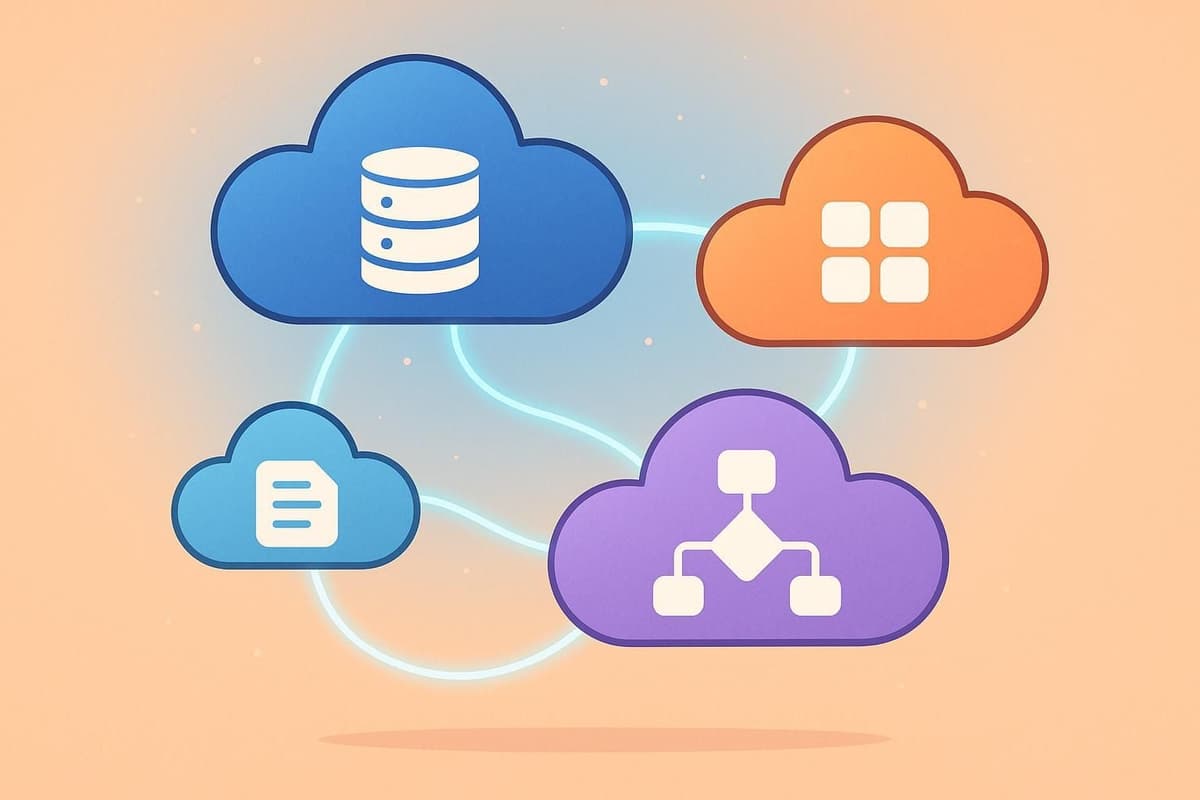
iPaaS, or Integration Platform as a Service, is a cloud-based solution that simplifies the process of connecting various software applications and data sources. By using pre-built connectors, automated workflows, and data transformation tools, iPaaS eliminates the complexity of traditional integration methods, which often require on-premises infrastructure and custom development. This approach helps businesses reduce costs and technical overhead while ensuring seamless data flow across systems.
For example, iPaaS can automate the sharing of customer data between a CRM and accounting software, saving time and reducing errors. It’s especially useful for companies managing multiple SaaS tools, handling real-time data needs, or scaling their systems quickly.
Modern iPaaS platforms like Latenode go beyond simple integrations by combining system connectivity with advanced workflow automation and AI capabilities. This enables businesses to not only sync data but also automate processes, such as triggering marketing campaigns or updating inventory in real time. With flexible deployment options and transparent pricing, Latenode addresses common iPaaS limitations like vendor lock-in and hidden costs.
As the demand for streamlined integrations grows, iPaaS continues to evolve, offering solutions for challenges like data silos, scalability, and compliance requirements. Whether you’re onboarding SaaS tools or managing cross-cloud data synchronization, iPaaS can be a game-changer for your business operations.
Ultimate Guide to iPaaS for Businesses
How iPaaS Works and What It Includes
iPaaS, or Integration Platform as a Service, tackles the challenges of connecting diverse systems by employing a cloud-based approach. Instead of relying on in-house infrastructure, iPaaS shifts integration tasks to specialized cloud environments managed by experts, offering businesses a seamless way to unify their tools and data.
Cloud-Based iPaaS Foundation
At the heart of iPaaS is the managed services model, which eliminates the need for companies to invest in servers, software installations, or dedicated integration teams. Instead, businesses access integration tools through web-based platforms. This setup allows the iPaaS provider to handle server maintenance, security updates, scaling, and performance optimization. Think of it as the difference between owning a car and using a ride-sharing service - traditional integration demands ownership and upkeep, while iPaaS offers on-demand service management.
The multi-tenant architecture is another key feature. This design enables iPaaS providers to serve numerous customers using shared infrastructure while ensuring data privacy and security. The shared model allows for cost savings and scalability - when one customer experiences a surge in demand, the platform dynamically allocates resources without disrupting other users.
Geographic distribution further enhances performance. With data centers located in multiple regions, iPaaS platforms ensure low latency for businesses operating across different locations. For example, if your business has offices in New York and London, integrations are processed from the nearest data centers, ensuring smooth operations.
Now, let’s dive into the core components that make this cloud-native approach possible.
Main iPaaS Components
- Pre-built connectors
These are ready-made code modules designed to communicate with specific applications. They simplify the integration process by handling tasks like authentication, rate limiting, and data formatting. For instance, a connector for Salesforce can streamline data exchange without requiring custom coding. However, the functionality of these connectors varies - some offer basic data retrieval, while others support advanced features like triggering workflows or managing custom objects. - Data transformation engines
These engines convert data into compatible formats between systems. For example, if your e-commerce platform stores customer addresses in separate fields (e.g., street, city, state, zip code) but your shipping software requires a single concatenated address, the transformation engine ensures the data is properly reformatted during the integration. - Workflow orchestration engines
These engines control the timing and sequence of integration processes. They manage scheduling, error handling, and conditional triggers. For instance, you could configure a workflow to sync high-priority customer data during business hours while processing routine updates at night. - API management tools
These tools provide dashboards for monitoring integrations, tracking errors, and analyzing performance. Many platforms also include features like API rate limiting and authentication management to prevent overloading your business applications.
iPaaS Architecture and Integration Patterns
Using these components, iPaaS platforms employ various integration patterns to efficiently manage data flows.
- Hub-and-spoke architecture
This is the most common design in iPaaS. The platform acts as a central hub, connecting all your business applications (the spokes). Data is routed through the hub, which handles transformations, routing, and error management. This setup simplifies integration by reducing the need for direct connections between every pair of applications. - Point-to-point integration patterns
These are ideal for straightforward data transfers between two systems. For example, you could automatically create accounting entries in QuickBooks whenever a sale is completed in your e-commerce platform. These integrations involve simple data mapping with minimal transformation. - Event-driven integration patterns
These patterns react to specific triggers or changes in your systems. For instance, when a customer updates their profile in your CRM, an event-driven integration can instantly update their details in your email marketing platform, customer support system, and billing software. This ensures real-time data consistency across all tools. - Batch processing patterns
Batch integrations handle large volumes of data during scheduled intervals. For example, businesses might sync inventory levels overnight, compile daily sales reports, or update customer segments for marketing campaigns. Though not real-time, batch processing is efficient for managing substantial data loads without straining system performance during peak hours. - Message queuing systems
These systems ensure reliable data delivery even when destination applications are temporarily unavailable. For example, if your accounting software is offline for maintenance, the iPaaS platform queues pending transactions and processes them once the system is back online. This reduces the risk of data loss and minimizes the need for manual intervention during downtimes.
iPaaS Benefits and Drawbacks
iPaaS offers a range of advantages, but it also comes with limitations that businesses need to weigh carefully.
Why Companies Choose iPaaS
iPaaS platforms stand out for their ability to streamline integration processes and reduce setup times.
Faster deployment is a key advantage, cutting integration timelines from months to days. Traditional integration projects often require extensive planning, custom development, and infrastructure setup. With iPaaS, pre-built connectors and managed infrastructure eliminate the need for server procurement, software installation, or network security configurations.
Simplified integration setup empowers business users to handle many tasks independently. Visual interfaces reduce reliance on IT departments, making it easier to manage configurations without technical expertise.
Managed infrastructure is another major benefit. iPaaS providers handle server maintenance, apply security patches, and manage scaling. For instance, when integration demands spike during busy periods, the platform automatically allocates resources without requiring manual intervention or additional capacity planning.
Scalability and elasticity are built into iPaaS platforms, which dynamically adjust to growing data volumes. This flexibility is especially useful for companies experiencing rapid growth or seasonal fluctuations in their integration needs.
Compliance and security management is handled by the provider, with many platforms maintaining certifications like SOC 2, GDPR, and HIPAA. This reduces the burden on businesses to meet regulatory requirements independently.
However, while these benefits are compelling, there are challenges that organizations must consider.
iPaaS Problems and Limitations
Despite its strengths, iPaaS can introduce challenges related to cost, flexibility, and control.
High costs can quickly become an issue. While iPaaS platforms often advertise affordable starting prices, actual expenses can rise significantly with usage. Pricing models based on data volume, API calls, or connector usage can lead to unpredictable monthly bills. For businesses handling large data volumes, the annual cost of iPaaS may surpass the expense of building and maintaining dedicated integration infrastructure.
Vendor lock-in is another concern. Many iPaaS platforms rely on proprietary data transformation tools, custom workflows, and platform-specific connectors. These dependencies make switching providers a complex and costly process, often requiring businesses to rebuild integration logic from scratch.
Performance issues may arise due to the nature of cloud-based integration. Data must travel between your applications and the iPaaS provider’s data centers, introducing potential latency. This can affect time-sensitive operations like real-time inventory updates or financial transactions, where delays could disrupt business processes.
Customization limitations can restrict flexibility. While iPaaS platforms are excellent for standard use cases, they may fall short when dealing with complex data transformations, unique API requirements, or custom business logic.
Limited control over updates and changes is another drawback. iPaaS providers can modify connectors, deprecate features, or adjust pricing structures without customer input. Such changes can disrupt existing integrations or lead to costly reconfigurations.
Data residency and sovereignty concerns are significant for businesses in regulated industries or those with strict geographic data storage requirements. Relying on third-party cloud infrastructure can complicate compliance with these regulations.
Choosing the right integration strategy requires balancing these trade-offs based on your organization’s specific needs, technical expertise, and long-term goals. Carefully evaluating both the benefits and limitations of iPaaS is essential for making an informed decision.
sbb-itb-23997f1
When to Use iPaaS and When to Avoid It
Understanding when to use iPaaS solutions - and when to steer clear - can save businesses from costly missteps and technical hurdles. This section highlights scenarios where iPaaS shines and situations where it may fall short.
Best iPaaS Use Cases
iPaaS platforms are particularly effective in certain scenarios, thanks to their managed infrastructure and ready-to-use connectors that simplify integration tasks.
SaaS Application Onboarding
When adopting popular cloud tools like Salesforce, HubSpot, or Slack, iPaaS platforms can significantly reduce integration time. Pre-built connectors streamline the process, cutting timelines from weeks to days. This makes iPaaS invaluable for companies frequently adding new software or lacking extensive technical resources.
Multi-Cloud Data Synchronization
For organizations juggling multiple cloud providers - such as AWS for computing, Google Workspace for collaboration, and Microsoft Azure for analytics - iPaaS simplifies cross-cloud connectivity. It eliminates the need for separate integration setups for each environment.
API-Based Integration Projects
iPaaS works well for straightforward data exchanges involving standard REST APIs and common formats like JSON or XML. These platforms efficiently handle integrations where APIs are well-documented, avoiding the need for custom development.
Seasonal or Variable Workloads
Businesses with fluctuating demands, such as e-commerce companies facing holiday traffic spikes, benefit from iPaaS platforms’ elastic scaling. These systems automatically adjust resources to meet demand, ensuring smooth operations during peak periods.
Compliance-Heavy Industries
Industries with strict compliance requirements - like healthcare (HIPAA), finance (SOC 2), or those managing GDPR regulations - can rely on iPaaS providers that maintain the necessary certifications. This reduces the burden of managing compliance infrastructure internally.
When iPaaS May Not Be the Best Choice
Despite its strengths, iPaaS is not always the right fit. Certain scenarios can expose its limitations and lead to inefficiencies.
High-Volume Data Processing
Usage-based pricing models can make iPaaS prohibitively expensive for data-intensive operations, where custom-built solutions may offer better cost efficiency.
Complex Data Transformations
Projects requiring intricate business logic or specialized algorithms often exceed the capabilities of iPaaS platforms. Visual workflow tools may fall short when handling such advanced requirements.
Real-Time Applications
For use cases demanding millisecond-level response times, like financial trading or manufacturing control systems, iPaaS may introduce latency due to external data processing.
Legacy System Integration
Older systems with proprietary protocols or non-standard APIs can be challenging for iPaaS platforms, which typically cater to modern, standardized technologies.
How to Decide if iPaaS is Right for You
Choosing the right integration approach requires a thorough evaluation of your technical and business needs. Here are the key factors to consider:
Technical Complexity
Assess whether your integration involves standard formats, well-documented APIs, and simple transformations. If your project requires custom algorithms or complex workflows, a more flexible solution may be necessary.
Volume and Performance Needs
Estimate your data volumes, API call frequencies, and performance expectations. High data loads can make iPaaS costly, while latency-sensitive applications might require on-premises solutions.
Budget and Ownership Costs
Evaluate the total cost of ownership, including usage-based fees, potential overages, and vendor lock-in risks. Compare these costs to the expense of developing and maintaining custom integration infrastructure.
Team Expertise
The technical skill level of your team matters. Teams with strong development capabilities may prefer platforms like Latenode, which combine visual workflow design with coding flexibility, offering a hybrid approach. On the other hand, less technical teams might lean toward simpler platforms, though this could lead to limitations as needs grow.
Long-Term Strategy
Think about whether you need basic point-to-point integration or a more comprehensive solution for business process automation. While traditional iPaaS platforms focus on data integration, advanced platforms like Latenode go further, enabling intelligent workflows and automation.
Vendor Dependency
Consider your comfort level with vendor lock-in. Platforms offering self-hosting or deployment flexibility provide greater control, which can be crucial for compliance or security-sensitive organizations.
Scalability and Future Growth
Anticipate how your integration needs will evolve. Platforms that combine iPaaS functionality with advanced automation capabilities, such as AI integration and business process optimization, offer more room for growth compared to basic point-to-point solutions.
For many organizations, the need goes beyond simple data connectivity. Platforms like Latenode integrate iPaaS functionality with advanced workflow automation, AI tools, and business process optimization, creating a unified environment that supports both current and future needs.
2025 iPaaS Market Analysis and Platform Comparison
The iPaaS market continues to expand rapidly as businesses prioritize digital transformation and grapple with increasingly intricate integration challenges. This growth reflects a pressing need for solutions that connect varied systems without relying on outdated, on-premises infrastructure.
iPaaS Market Size and 2025 Growth Trends
The global iPaaS market is showing strong momentum, driven by several key trends shaping its trajectory in 2025:
- AI-powered integration: Modern platforms now leverage machine learning to automate tasks like data mapping, workflow suggestions, and identifying potential integration issues. These features reduce manual effort while improving reliability.
- Hybrid and multi-cloud adoption: As organizations embrace multiple cloud providers, ensuring smooth connectivity between these environments has become essential. Traditional point-to-point integrations often struggle to meet the scale and flexibility required, making iPaaS solutions more appealing.
- Real-time data processing: The shift from batch to real-time data handling is transforming areas like inventory management, customer support, and financial reporting. This shift pushes iPaaS providers to strengthen their streaming data capabilities.
- Industry-specific solutions: Businesses are increasingly seeking platforms tailored to their unique needs, such as healthcare solutions compliant with HIPAA, secure options for finance, or tools for integrating IoT systems in manufacturing.
- Cost optimization: With pricing models based on usage, unexpected costs can arise from premium connectors, advanced data transformations, or additional support services. Organizations are scrutinizing total costs to ensure budget efficiency.
These trends underscore the diverse strategies shaping the iPaaS market, as illustrated through the feature and pricing comparison below.
iPaaS Platform Features and Pricing Comparison
The iPaaS market offers a range of platforms, each addressing integration challenges in distinct ways. Below is a comparison of traditional iPaaS solutions and more comprehensive automation platforms, highlighting their strengths and considerations:
| Feature Category | Traditional iPaaS | Comprehensive Automation Platforms | Key Considerations |
|---|---|---|---|
| Core Focus | Data integration between systems | End-to-end workflow automation, including integration | Scope of automation needs |
| Pre-built Connectors | Standard connectors | Over 300 app integrations with custom options | Connector quality and maintenance |
| Data Transformation | Visual mapping tools | Visual mapping combined with custom code | Handling complex logic |
| Workflow Orchestration | Basic sequential workflows | Advanced branching, conditional flows, and AI logic | Business process sophistication |
| AI Integration | Often an add-on feature | Native support for AI models like OpenAI, Claude, and Gemini | AI automation requirements |
| Custom Code Support | Limited or premium feature | Full JavaScript support with access to NPM libraries | Development flexibility |
| Pricing Model | Per-connector fees and usage tiers | Execution-based pricing that scales predictably with usage | Cost predictability and scalability |
| Deployment Options | Cloud-only | Cloud-based and self-hosting options | Data control and compliance needs |
| Real-time Processing | Basic real-time triggers | Advanced triggers and automation capabilities | Performance and automation depth |
Pricing structures vary significantly between platforms. Traditional iPaaS solutions often rely on connector- or usage-based models, which may lead to unpredictable costs. Meanwhile, comprehensive automation platforms typically offer execution-based pricing, providing clearer scalability. While basic iPaaS platforms excel at straightforward data syncing, they may struggle with complex workflows or custom business processes. Additionally, cloud-only solutions can create vendor lock-in, which is less of a concern with platforms offering self-hosting options.
This overview lays the groundwork for understanding how Latenode surpasses the limitations of traditional iPaaS.
How Latenode Fits in the iPaaS Market
Latenode redefines iPaaS by combining system integration, advanced workflow orchestration, and native AI automation into one cohesive platform.
Unlike conventional iPaaS solutions that focus solely on connecting systems, Latenode empowers users to design complex automation workflows. These workflows go beyond data integration, enabling AI-driven decision-making, web automation, and custom business logic in a single environment.
Here’s what makes Latenode stand out:
- Flexible Workflow Design: Latenode pairs a visual workflow builder with full coding capabilities, supporting JavaScript and over 1 million NPM packages. This allows teams to start with simple drag-and-drop tools and scale to fully customized solutions when needed.
- Integrated Tools: Features like built-in headless browser automation and native database functionality reduce the need for additional software, streamlining operations.
- Native AI Support: With built-in compatibility for AI models like OpenAI, Claude, and Gemini, Latenode enables intelligent workflow routing and automated decision-making.
- Transparent Pricing: Latenode’s execution-based pricing starts at $19/month for entry-level usage, ensuring scalability without hidden costs.
- Deployment Versatility: Offering both cloud-based services and self-hosting options, Latenode addresses data control and compliance requirements effectively.
Latenode’s approach aligns with the industry’s evolution toward platforms that do more than connect systems - they enable comprehensive automation that adapts to an organization’s changing needs.
Choosing Your Integration Strategy
Selecting the right integration strategy means balancing your current needs with a vision for future growth. Deciding between traditional iPaaS solutions and more advanced automation platforms depends on the complexity of your workflows and the scalability you require.
iPaaS vs Other Integration Options
When comparing integration options, several key factors can guide your decision.
Scope of automation requirements is critical. Traditional iPaaS platforms are well-suited for basic data synchronization tasks. However, if your workflows involve conditional logic, AI-driven decisions, or custom rules, you’ll need a platform that supports these advanced capabilities.
Flexibility for evolving needs is another important consideration. Standard iPaaS tools often limit customization to pre-built connectors and basic mapping features. In contrast, platforms that offer both custom coding and visual builders provide the flexibility to start with simple integrations and scale to more complex workflows without switching tools.
Cost predictability can vary widely depending on the pricing model. Connector-based pricing often leads to unexpected costs as your integration needs expand. Usage-based models, such as Latenode’s transparent execution pricing starting at $19/month, help you plan for growth without surprise expenses like premium connector fees.
Avoiding vendor lock-in is essential, especially for organizations with strict compliance requirements or those prioritizing data sovereignty. While cloud-only solutions may limit your options, platforms offering both cloud and self-hosting provide greater control over your data and reduce dependency on a single vendor.
AI integration capabilities set modern automation platforms apart. Native support for AI models like OpenAI, Claude, and Gemini allows for intelligent workflow routing and automated decision-making, far exceeding the capabilities of traditional iPaaS tools focused solely on moving data.
These factors highlight the distinction between basic connectivity solutions and platforms designed for comprehensive automation. Your choice should reflect whether your focus is on simple data syncing or enabling more advanced, scalable workflows.
Next Steps for Your Integration Project
With these considerations in mind, take a structured approach to planning your integration strategy.
Start by auditing your current integration challenges and aligning them with your automation goals for the next 12-18 months. This timeframe helps you determine whether basic data syncing will meet your needs or if more sophisticated workflow capabilities are necessary.
Evaluate your technical requirements by identifying the systems you need to connect, the complexity of data transformations, and whether custom logic or AI-driven processes will play a role in your workflows.
Analyze total costs of ownership, including connector fees, premium features, support, and potential migration expenses. Transparent execution-based pricing models often provide better long-term value compared to per-connector or per-user pricing structures.
Consider your team’s technical expertise and growth trajectory. Platforms that combine drag-and-drop simplicity with the flexibility to incorporate custom coding empower teams to start small and scale as their skills and needs evolve.
For organizations seeking integration solutions that go beyond simple data connectivity, Latenode offers a robust automation platform. Combining iPaaS functionality with advanced workflow orchestration, AI integration, and flexible deployment options, Latenode supports over 300 app integrations and provides native AI capabilities. Its transparent execution-based pricing ensures scalability without hidden costs, addressing many traditional iPaaS limitations.
As the integration landscape shifts toward platforms that enable complete business process automation, investing in a solution that grows with your organization ensures long-term value. This approach minimizes the risk of costly platform migrations and positions your business to adapt to evolving needs seamlessly.