9 Essential iPaaS Features to Scale Your SaaS Startup with Latenode
Discover the 9 essential iPaaS features for scaling SaaS startups in 2025. Learn why AI-native automation, headless browsing, and cost-predictable scaling are critical for your tech stack.


Introduction
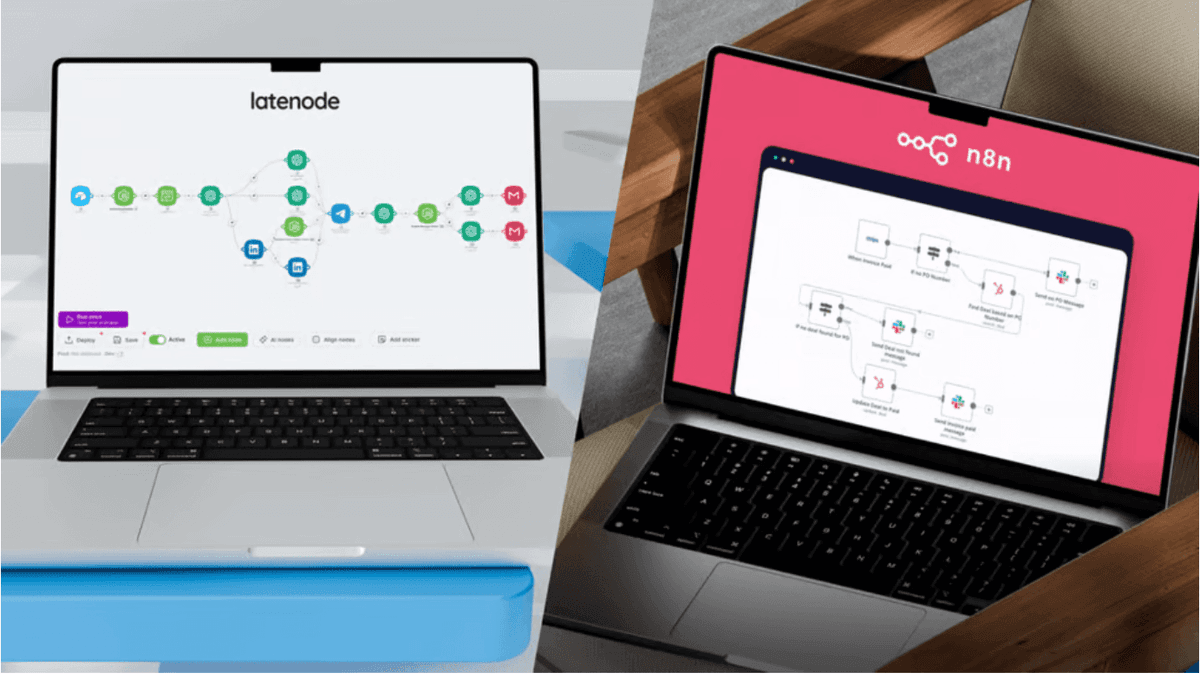
Most SaaS startups don't fail because of bad ideas—they fail because burn rates outpace revenue while operations drown in manual work. While finding product-market fit is the first hurdle, the gap between "promising startup" and "scalable company" is almost always bridged by intelligent automation. Historically, Integration Platform as a Service (iPaaS) tools were just digital glue—moving data from Point A to Point B. But in 2025, that's not enough. The definition has shifted to AI-native iPaaS, where platforms don't just connect apps but actually perform work using Large Language Models (LLMs), autonomous agents, and custom logic. For technical founders and CTOs, choosing a platform like Latenode over legacy tools means solving the "API key fatigue" and scalability issues that typically cripple early-stage ventures.
1. Native Access to Multiple AI Models (Without Extra Subscriptions)
For a modern SaaS startup, AI isn't a feature—it's the engine. However, managing this engine financially and technically can quickly become a nightmare.
Eliminating "API Key Fatigue"
If you're building automations using traditional methods, you're likely juggling separate subscriptions and API keys for OpenAI, Anthropic, Google Gemini, and Mistral. It’s an administrative headache that bleeds budget. The Latenode difference: You don't need to bring your own keys. Latenode provides unified access to over 400 AI models under a single subscription. Instead of paying $20/month for ChatGPT Plus, another $20 for Claude Pro, and managing credit limits for API usage, you simply use multiple AI models directly within the workflow builder using platform credits. Real-world impact: A startup automating customer support can switch from GPT-4 to Claude 3.5 Sonnet instantly to test better reasoning capabilities without entering a credit card or generating new secret keys.
Model Agnosticism for Specific Tasks
Smart scaling requires financial efficiency. You shouldn't use a sledgehammer to crack a nut, and you shouldn't use an expensive reasoning model for basic text classification. Optimization strategy: Categorization: Use unauthorized, cheaper models like GPT-4o mini to tag incoming emails. Complex Reasoning: Route tricky inquiries to O1 or Claude 3.5 Sonnet for drafting responses. Because Latenode includes these models natively, swapping them is as simple as selecting a different option from a dropdown menu—no code changes required.
2. Hybrid "No-Code + Full-Code" Architecture
SaaS product logic is messy. You will inevitably hit edge cases that a pre-built "drag-and-drop" node cannot solve. Standard iPaaS tools often force you to spin up a separate AWS Lambda function just to parse a weird date format.
JavaScript and NPM Package Support
A scalable iPaaS must function as a serverless environment. Latenode allows you to inject JavaScript nodes anywhere in your workflow. More importantly, it supports the import of standard NPM packages. Why this matters: You aren't limited to the platform's native integrations. If you need to use a specific encryption library (like `crypto-js`) or a niche data formatting tool (`moment.js`) to align with your legacy database, you just import it. It turns the platform from a "connector" into a robust backend extension.
AI Copilot for Code Generation
For non-technical founders or busy CTOs who want to move fast, writing this glue code can still be a bottleneck. Latenode’s AI Copilot bridges this gap. You simply tell the node: "Take the JSON output from the previous step, filter out users who haven't logged in for 30 days, and format the remaining list as a CSV." The Copilot writes the functional JavaScript for you, effectively giving you full-code power with no-code speed.
3. Headless Browser & Web Scraping Capabilities
Data is the lifeblood of a SaaS, but valuable data often lives on websites that don't offer an API. Traditional iPaaS tools hit a wall here, forcing you to subscribe to third-party scrapers like Apify or ZenRows.
Automating Lead Enrichment and Research
An essential feature for scaling is built-in Headless Browser functionality. This allows your automation workflows to launch a virtual browser (using Puppeteer technology) to load web pages, click buttons, and extract text just like a human would—but at machine speed. Startup Use Case: Automating competitor analysis. 1. Trigger: Weekly schedule. 2. Action: Headless browser visits competitor pricing pages. 3. Extraction: Scrapes current feature lists and price points. 4. Analysis: AI agent compares them to your pricing and alerts Slack if you are undercutting yourself. By utilizing these advanced web scraping techniques natively, you keep your data pipeline secure inside one platform and avoid the latency and cost of external scraping services. Learn More About Headless Browsers
4. Autonomous Agent Orchestration
The biggest shift in 2025 is moving from linear automation ("Trigger → Action") to agentic workflows ("Goal → Reasoning → Action").
Decisions vs. Rules
Standard automation follows rigid rules: "If X, do Y." Autonomous agents add a reasoning layer: "Here is an email. Figure out what the user wants. If it's a refund, check our policy. If eligible, process it. If not, draft a polite refusal." Effective workflow design in Latenode allows you to chain LLM nodes that can evaluate their own outputs. An agent can draft a response, and a second "Critic" agent can review it for tone and accuracy before sending, significantly reducing the risk of AI hallucinations.
Multi-Agent Systems
Scaling operations doesn't mean building one giant, fragile workflow. It means creating a team of digital workers. You can orchestrate multi-agent systems where specialized agents handle distinct roles: Agent A (Triage): Classifies support tickets. Agent B (Research): Looks up user data in your database. _Agent C (Action): Executes the API call to update the account. This modular approach makes debugging easier and allows you to scale specific parts of your logic independently.
5. Cost-Predictable Scalability (Credit Models vs. Task Counts)
Pricing models make or break startup stacks. Many competitors charge "per task" or "per operation." This penalizes you for efficient but high-volume workflows, such as polling a database every minute to check for changes. The Latenode Advantage: Pricing is based on execution time (compute resources), not just arbitrary step counts._ Scenario: A loop that processes 1,000 array items using simple JavaScript takes milliseconds to run. Legacy Tool: Charges for 1,000 operations (expensive). Latenode: Charges for fractions of a second of compute time (negligible cost). This aligns your costs with actual resource usage, preventing the "success tax" where your bill explodes just because your user base (and data volume) doubled.
6. Persistent Memory (RAG) for Long-Term Context
For an iPaaS to act as a central brain for your SaaS, it needs memory. Standard automations are stateless; they "forget" everything the moment the run finishes.
Retrieval-Augmented Generation (RAG) Built-in
To build truly intelligent systems, you need Retrieval-Augmented Generation (RAG). This feature allows you to upload documents—PDF manuals, policy docs, or past support logs—that the AI can reference. Dual-Layer State Management: Latenode handles this with persistent memory nodes. You don't need to spin up external vector databases like Pinecone; the platform chunks, indexes, and stores your data natively. Use Case: A "Customer Success" bot that answers technical questions based only on the new version of the API documentation you uploaded yesterday, ignoring outdated training data.
7. Human-in-the-Loop Interventions
Scaling AI requires trust, but trust requires verification. Fully autonomous loops can be dangerous if an edge case triggers a hallucination. The Approval Node: A critical safety feature is the ability to pause a workflow mid-execution. 1. AI analyzes a refund request and drafts an approval email. 2. Workflow Pauses. 3. A notification is sent to a Slack channel with "Approve" and "Reject" buttons. 4. The workflow resumes only when a human clicks "Approve." This keeps humans in the driver's seat for sensitive decisions while automating 99% of the prep work.
8. Visual Debugging and Historical Replay
When a workflow fails at 2:00 AM, you need to know exactly why. Text-based logs are often insufficient for complex logic flows. Analyzing Execution History: Latenode provides a visual replay of every execution. You can see the path the data took (green lines for success, red for failure) and inspect the exact JSON payload at every single step. Did the API return a 404? Was the email variable undefined? You can see the data state exactly as it was during the crash, making fixes instantaneous rather than a guessing game.
9. Robust Webhook & API Handling
At its core, a SaaS ecosystem is a mesh of disparate tools—Stripe, Segment, HubSpot, and your own backend. The ability to listen and react is non-negotiable.
Custom Webhook Triggers
You need the capability to catch complex data payloads from anywhere. Latenode allows you to create custom webhook triggers that can accept data from your application backend or third-party services. Flexibility: Unlike rigid platforms that expect a specific flat structure, Latenode can accept nested JSON arrays. Combined with the JavaScript nodes mentioned earlier, you can parse, transform, and route this data on the fly. This turns Latenode into a viable microservice handler for your product, offloading auxiliary logic (like generating PDF invoices) from your main codebase. Start Orchestrating AI Agents
Choosing the Right Stack for Your Growth Phase
The choice between a legacy tool and a modern AI-native platform dictates your agility for the next 12-24 months.
| Feature | Traditional iPaaS (Legacy) | Modern AI iPaaS (Latenode) |
|---|---|---|
| :--- | :--- | :--- |
| AI Access | Bring your own keys (Extra cost) | Unified subscription (400+ models included) |
| Custom Logic | Limited or Premium feature | Full JavaScript + NPM support |
| Pricing Model | Per-task (Punishes volume) | Per-compute (Scales efficiently) |
| Scraping | Requires 3rd party tools | Built-in Headless Browser |
| State/Memory | Stateless (Forgets context) | Built-in RAG & Variable Persistence |
Frequently Asked Questions
What is the difference between iPaaS and standard automation tools?
Standard automation tools are often designed for personal productivity or simple linear tasks. iPaaS (Integration Platform as a Service) is built for enterprise-grade orchestration, handling complex data logic, API management, and scalable infrastructure that runs critical business processes.
Why is JavaScript support important for no-code platforms?
No-code is excellent for speed, but it has a "functionality ceiling." JavaScript support removes this ceiling, allowing developers to write custom code for edge cases—like complex data transformation or encryption—ensuring you never have to abandon the platform because a feature is missing.
How do autonomous agents differ from standard automations?
Standard automations follow a strict flowchart ("If A, then B"). Autonomous agents act based on goals; they can analyze inputs, reason about the best course of action, and even loop back to correct their own errors, handling ambiguity that would break a standard workflow.
Can I replace my backend logic with Latenode?
You should keep your core product logic (the "secret sauce" of your SaaS) in your own code base. However, Latenode is perfect for offloading auxiliary microservices—like billing notifications, data enrichment, or customer onboarding flows—allowing your engineering team to focus on the product, not the plumbing.
Is Latenode suitable for non-technical founders?
Yes. While Latenode offers powerful features for developers, the AI Copilot allows non-technical users to generate complex code and workflow logic simply by describing what they need in plain English.
Conclusion
Growing a SaaS requires a tech stack that adapts, not one that constricts. Relying on rigid, linear automations creates technological debt that you will eventually have to pay off with expensive migration hours. To scale effectively in 2025, prioritize platforms that offer unified AI access to cut costs, custom code capabilities to ensure you never hit a wall, and a billing model that supports high-volume growth. Don't just build for where you are today—build for the scale you plan to reach. Start building your first AI-native workflow on Latenode to experience the difference between legacy integration and future-proof automation.