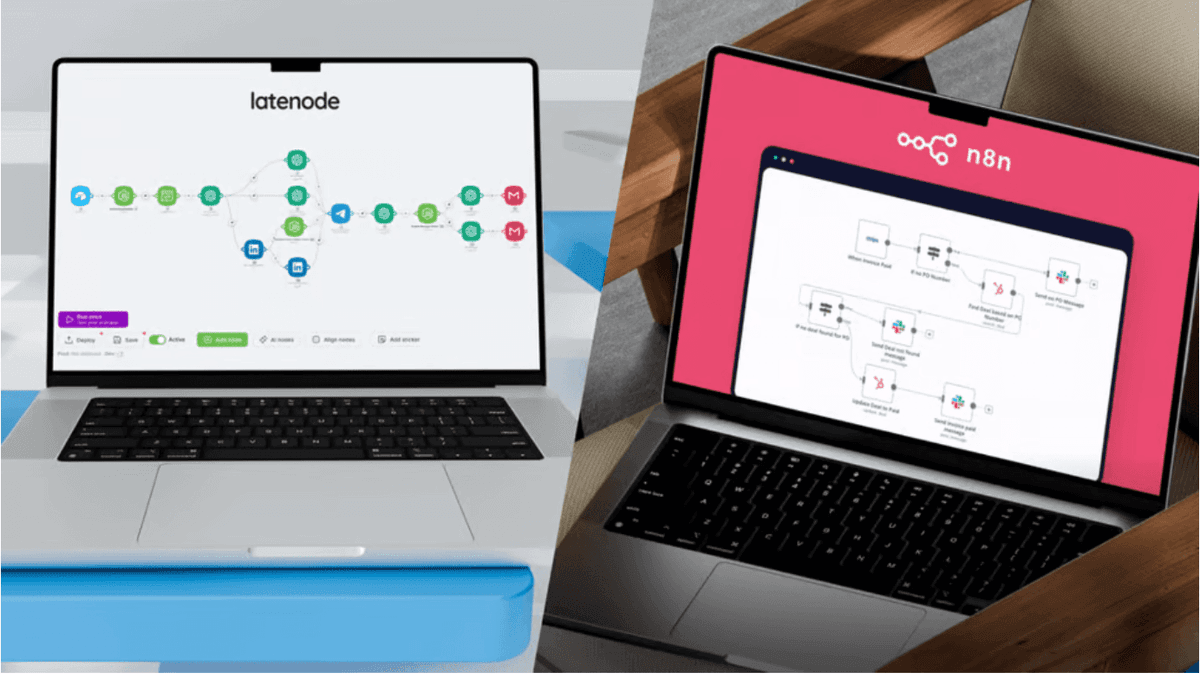
Latenode vs Celigo: AI-Powered Automation vs Traditional Integration
Deciding between Latenode vs Celigo? Compare modern AI-native automation against traditional iPaaS. Discover which platform offers better ROI for mid-market teams.


Introduction
For over a decade, the integration market was defined by a simple premise: move structured data from Point A to Point B. If you needed to sync a Sales Order from Shopify to NetSuite, you used a traditional iPaaS. However, the requirement for modern business has shifted. We no longer just need pipes to move data; we need intelligence to act on it.
This shift brings us to the critical comparison of Latenode vs Celigo. While Celigo (integrator.io) remains a heavy hitter for rigid, enterprise-grade ERP data synchronization, it often struggles with the flexibility required for modern AI automation. Latenode emerges as the agile alternative—combining the reliability of serverless infrastructure with the generative power of built-in AI agents. In this guide, we break down why sticking to traditional integration might be slowing you down and how AI-native platforms are rewriting the rules of ROI.
The Shift from Traditional iPaaS to AI-Native Automation
Traditional iPaaS platforms were built for a deterministic world. You map Field A to Field B, and if the data format changes slightly, the workflow breaks. This was sufficient when automation was strictly about database management. However, today’s operations require exploring AI and generative AI automation to handle complexity.
The new standard isn't just "connecting apps." It is about "Generative Integration." This means your automation platform shouldn't just transfer a support ticket; it should read the ticket, understand the context, generate a draft response, and only then sync the data. This is the fundamental divide between the "Data Pipes" offered by Celigo and the "Intelligent Agents" built on Latenode.
Critical Differences Between Data Sync and Intelligent Agents
Let's look at a practical example. In a standard Celigo flow, a new lead comes in. The system checks if the email exists, and if not, creates a record. It acts as a digital courier.
In an AI-native environment, that same trigger initiates an Agent. This Agent scrapes the lead’s company website, summarizes their recent news, determines their likely budget based on headcount, and drafts a hyper-personalized outreach email. To achieve this level of sophistication, you need a platform designed to build AI agents without coding or complex infrastructure management.
Celigo (integrator.io): The Enterprise Standard for Structured Data
Celigo is a powerful platform with a strong reputation in the enterprise space. It is specifically dominant in the NetSuite ecosystem, offering robust pre-built templates for e-commerce and ERP management. For purely structured, high-volume transactional data (like syncing 50,000 SKUs overnight), it is a reliable workhorse.
However, reliability often comes at the cost of agility. Celigo operates on a model designed for IT specialists. While it markets itself as user-friendly, the reality of "integrator.io" often involves steep learning curves and a reliance on specialized consultants to build and maintain flows.
Core Strengths: ERP and Heavy Data Lifting
Celigo shines when the requirements are rigid. If your organization requires strict governance over banking transactions or massive EDI (Electronic Data Interchange) transfers, Celigo’s infrastructure is built to handle that load. It focuses on maintaining the integrity of structured databases above all else.
The Hidden Costs of Complexity
The downside to this enterprise focus is friction. Setting up a simple workflow can feel like an IT project. When comparing the best iPaaS platforms, Celigo often ranks high for capability but low for speed of implementation for non-technical teams. Furthermore, pricing is often tied to "endpoints" or "flows," which can penalize you for experimenting with new automations or scaling up operations.
Latenode: AI-Native Automation for Agility and Intelligence
Latenode represents a technological leap forward, moving away from rigid visual mapping toward fluid, AI-assisted creation. It eliminates the distinction between "coder" and "non-coder" by providing a low-code environment where custom JavaScript and visual nodes coexist seamlessly, all orchestrated by Generative AI.
The platform is designed to lower the barrier to entry while raising the ceiling of what’s possible. You aren't just connecting APIs; you are orchestrating logic.
Breaking Down Barriers with the AI Copilot
One of the most significant friction points in integration is knowing how to build the logic. Latenode solves this with its AI Copilot. You can use natural language prompts to describe exactly what you need.
For example, you might type: "Create a webhook that receives a JSON payload, filters for orders over $1,000, and sends a Slack notification." The AI Copilot constructs the nodes, writes the necessary transformation code, and sets up the logic for you. It’s not magic; it’s a system designed to convert a plain description into functional, production-ready workflows instantly.
Unified AI Access: No More API Key Management
In platforms like Celigo or Zapier, using AI means bringing your own subscriptions. You have to manage an OpenAI API key, an Anthropic key, and perhaps a Google Cloud account. This adds administrative overhead and breaks billing predictability.
Latenode simplifies this by offering unified AI access. Your subscription includes access to GPT-4, Claude, and Gemini models. You can switch between models via a simple dropdown menu to test which one performs best for your specific task, without ever leaving the interface or adding a credit card for a third-party API.
Dealing with Unstructured Data
Traditional iPaaS tools choke on unstructured data—messy emails, PDF invoices, or web capabilities. Latenode excels here. Through big data transformation capabilities, you can ingest unstructured text and use AI nodes to parse it into clean JSON format.
Consider web scraping. Usually, scraped data requires extensive cleaning scripts. With Latenode, you can build a workflow to auto-clean scraped data using AI, standardizing dates, names, and addresses before they ever hit your database. This turns the chaos of the internet into structured business value.
Browse Free AI Automation Templates
Feature Comparison: Latenode vs. Celigo
To visualize the differences, it helps to look at the architectural philosophy of both tools. While Celigo focuses on connecting ecosystems (like NetSuite to Salesforce), Latenode focuses on executing logic autonomously. For a broader look at the market, you can check our complete vendor comparison.
| Feature | Celigo (integrator.io) | Latenode |
|---|---|---|
| Primary Focus | ERP/Data Sync & EDI | AI Agents & Automation |
| AI Integration | Connector-based (BYO Keys) | Native (Built-in Models) |
| Ease of Use | Technical / Steep learning curve | Visual / AI Copilot assisted |
| Custom Code | JavaScript hooks (complex setup) | JavaScript w/ AI assistance |
| Pricing Model | Enterprise / Per-Flow or Endpoint | Credit-based (Pay for execution time) |
| Setup Time | Weeks/Months (Consultants often needed) | Hours/Days (Self-serve) |
Economic Analysis: Pricing and Implementation Value
The total cost of ownership (TCO) generally favors Latenode for agile businesses. Celigo’s pricing structure is aimed at established enterprises with predictable, high-volume flows. If you are a mid-market company, the "entry tax" for Celigo can be prohibitive.
The Cost of "Seats" vs. Usage Credits
Latenode utilizes a credits-based system that is fundamentally different from the "task" based pricing of Zapier or the "flow" based pricing of Celigo. In the Latenode billing system, one credit typically covers 30 seconds of execution time. This is incredibly efficient for complex workflows.
If you have a workflow that loops through 100 items but processes them efficiently in under 30 seconds using custom code, you only pay for the time used—not 100 individual "tasks." This creates cost predictability and rewards efficient workflow design, rather than punishing you for scaling your Operations.
Setup and Maintenance Overhead
Time-to-value is the hidden economic factor. If an integration takes three weeks of back-and-forth with an implementation partner to deploy on Celigo, you have lost three weeks of productivity. Latenode’s AI Copilot allows a single Operations Manager to prototype, test, and deploy that same workflow in an afternoon. The reduction in maintenance overhead—thanks to clearer visual debugging and AI error suggestions—further reduces the long-term cost.
When to Choose Which Platform?
Honesty is key to a good tech stack. Latenode is the superior choice for modern, AI-driven operations, but legacy tools have their place.
Choose Celigo If...
- You are migrating 10 years of historical financial data into NetSuite.
- You need strict EDI compliance for major retail supply chains.
- You have a dedicated team of integration developers and a large IT budget.
Choose Latenode If...
- You want to build AI Agents that perform research, support, or sales tasks.
- You need the flexibility to create custom connections via Webhooks and JavaScript easily.
- You want to avoid managing (and paying for) multiple API keys for AI models.
- You are a mid-market business needing enterprise power without the enterprise price tag.
Frequently Asked Questions
Can Latenode handle heavy data integration like Celigo?
Yes, but with a different approach. Latenode supports webhooks, robust code-based data transformation, and database connections. While Celigo uses pre-built connectors for bulk ERP syncs, Latenode allows you to build custom, highly efficient logic for data transfer that can be more flexible than rigid templates.
Do I need to know coding to use Latenode?
No. While Latenode allows full use of JavaScript (npm packages included), the AI Copilot can write, specific code and logic for you. You simply describe what you want the code to do, and the AI generates the node.
How does Latenode's pricing compare to Celigo?
Latenode is generally much more affordable for mid-market teams. It starts with a free tier and scales via execution credits. This avoids the high up-front annual contracts typical of enterprise iPaaS solutions like Celigo.
Can I connect Latenode to NetSuite or Salesforce?
Absolutely. Latenode connects to any service with an API. You can use standard HTTP request nodes or built-in connectors to authenticate and exchange data with major ERPs and CRMs seamlessly.
Is Latenode secure for business data?
Yes. Latenode adheres to strict security standards regarding data processing. It also offers specific features like Headless Browser automation that runs in secure, isolated environments, ensuring your data workflows are safe.
Conclusion
The comparison of Latenode vs Celigo highlights a divergent path in automation history. Celigo remains a strong option for legacy ERP integrations where data structures are rigid and unchanging. However, for businesses that need to move fast and leverage intelligence, the old "pipes" model is insufficient.
Latenode represents the future of Generative Integration. By combining the flexibility of low-code with built-in access to the best generative AI tools, it empowers teams to build workflows that think, adapt, and scale. Whether you are generating content, analyzing data, or automating complex support logic, Latenode provides the agility required to stay competitive in an AI-first world.