

Businesses are increasingly turning to automation to optimize workflows and boost efficiency. Tray.io, a popular iPaaS and RPA tool, allows users to create integrations without coding, but it has limitations like opaque pricing, a complex interface, outdated connectors, and inadequate documentation. This article explores the top 5 Tray.io alternatives that address these issues and offer better solutions for various needs.
The top alternatives include SaveMyLeads for lead management automation, Zapier for easy no-code workflows, Integromat for advanced visual workflows, Workato for enterprise-level integration, and Automate.io for a balance between functionality and affordability. Each platform has unique strengths, so organizations should assess their specific needs to choose the best fit.
Key Takeaways: Tray.io has several limitations, including hidden pricing, a steep learning curve, and outdated connectors. The top 5 alternatives – SaveMyLeads, Zapier, Integromat, Workato, and Automate.io – offer various strengths and address these issues. To choose the best alternative, assess your organization's integration needs, ease of use, scalability, and pricing.
What is Tray.io?
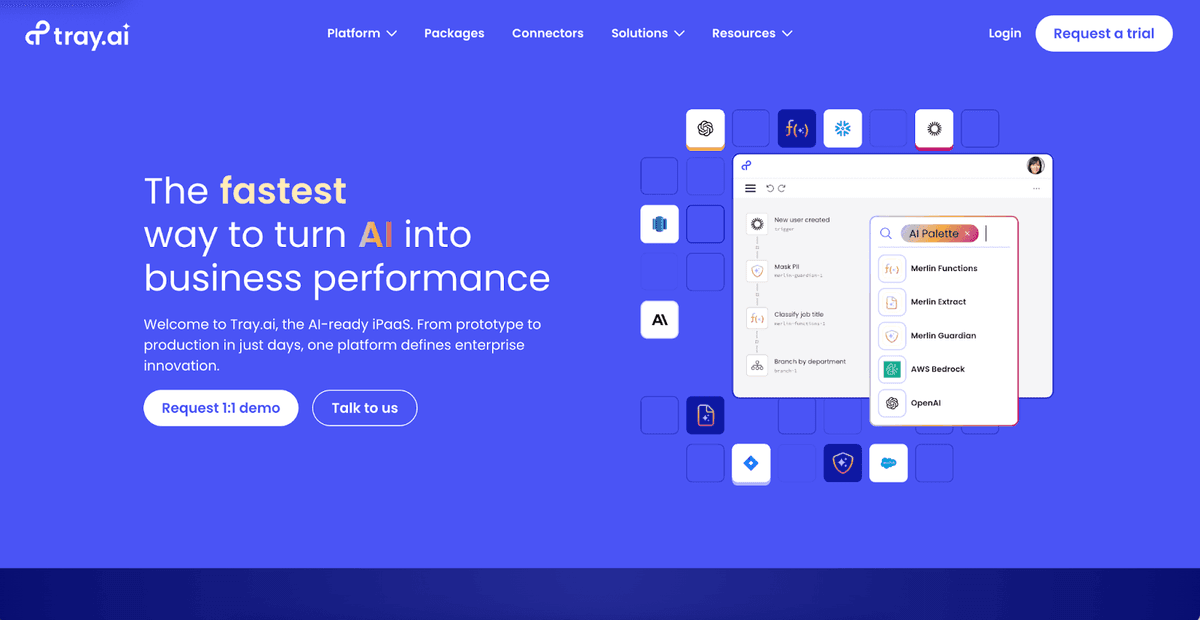
Tray.io is a versatile, cloud-based automation platform that combines the power of iPaaS (Integration Platform as a Service) and RPA (Robotic Process Automation). This powerful tool empowers users to:
- Create integrations across a wide range of applications
- Automate workflows without the need for coding skills
- Connect disparate systems and streamline processes
Key Features:
- Intuitive Visual Interface: Tray.io offers a drag-and-drop interface for designing workflows, making it accessible to non-technical users.
- Pre-built Connectors: The platform includes a library of connectors for popular apps, facilitating quick integrations.
- Tray Embedded: An additional offering that allows software companies to integrate Tray.io's capabilities directly into their own products, providing seamless integration options for their customers.
By combining these features, Tray.io aims to simplify the process of creating and managing complex integrations and automations, making it a popular choice for businesses looking to optimize their workflows and boost efficiency.
Why to find Tray.io alternatives and competitors
While Tray.io has gained a strong following due to its powerful features and user-friendly interface, it has several limitations that have led some users to seek out alternatives better aligned with their needs:
- Opaque and complex pricing: One of the primary concerns for potential Tray.io customers is the lack of transparent pricing information on their website. Interested parties must contact the sales team for a custom quote based on their anticipated usage, which can be both confusing and time-consuming, potentially hindering adoption.
- Steep learning curve: Despite Tray.io's drag-and-drop interface, some users find the platform's complexity to be a barrier to entry. For example, linking workflow steps often requires an understanding of JSON paths, and the platform lacks inline functions for data processing, which can be frustrating for less technically savvy users.
- Cumbersome log and error management: Troubleshooting and resolving issues can be challenging in Tray.io due to the difficulty in navigating and managing logs and errors. Users may struggle to reuse data from logs effectively, making it harder to identify and resolve problems quickly.
- Outdated connectors: As third-party applications evolve and update their APIs, some of Tray.io's pre-built connectors may become outdated. Users cannot easily modify these connectors themselves and must wait for Tray.io's team to implement the necessary updates, which can lead to temporary disruptions in workflow functionality.
- Insufficient documentation: With Tray.io's rapidly expanding ecosystem, some aspects of the platform may lack comprehensive documentation. This is particularly evident in the case of data transformation connectors, where certain edge cases or complex scenarios may not be adequately explained, leaving users to figure things out through trial and error.
6 Best Tray Competitors in 2025
When considering alternatives to Tray.io, it's essential to evaluate platforms that offer ease of use, flexibility, and cost-effective automation solutions. Each of the following tools provides unique features that cater to different business needs, making them strong contenders depending on your organization's specific requirements
1. Latenode
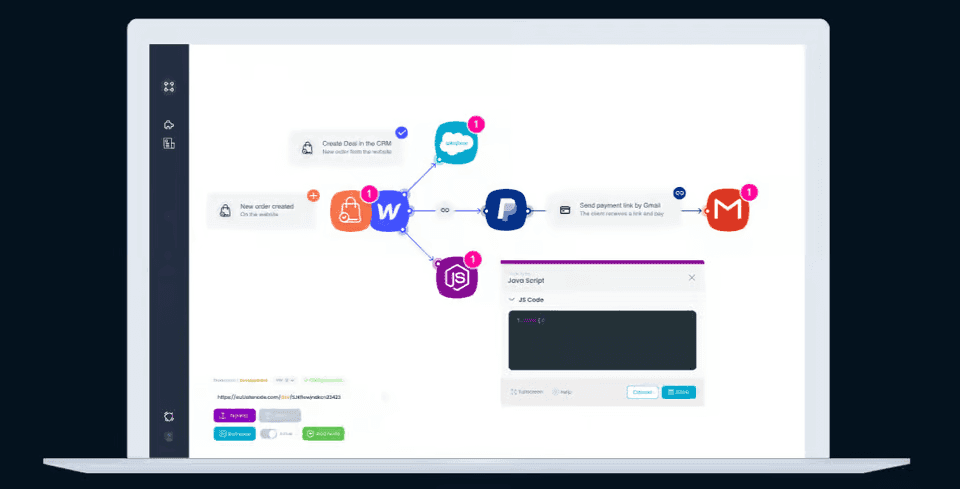
Latenode, while a relatively new entrant in the workflow automation market, has quickly gained attention for its innovative approach to integration and process management. Launched in 2022, the platform has seen rapid adoption, particularly among small to medium-sized enterprises and tech-savvy startups. The platform is great for a wide range of workflows, from content creation to AI writing or meeting preparation.
As of 2024, Latenode has secured a growing niche in the automation market, positioning itself as a bridge between simple, no-code solutions and more complex, enterprise-grade platforms. While it doesn't yet command the market share of giants like Zapier or Workato, Latenode has experienced a 200% year-over-year growth in its user base, indicating strong market traction.
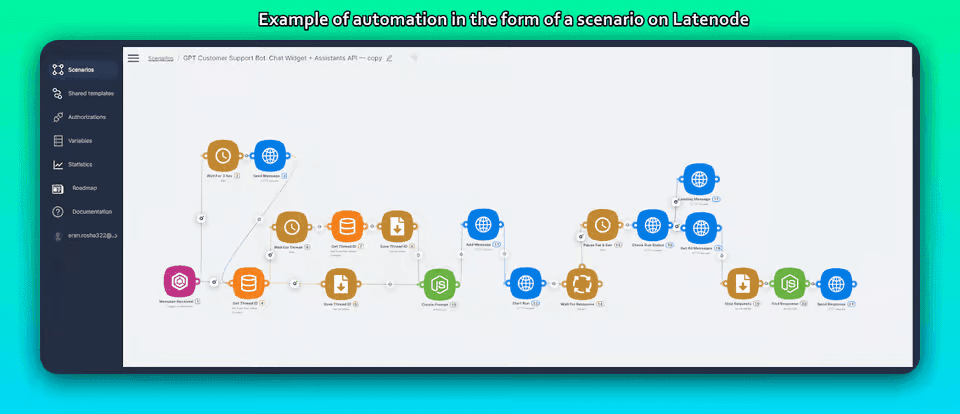
Key features of Latenode include:
- Intuitive Visual Workflow Builder: Latenode provides a user-friendly interface for creating complex workflows without coding, using a drag-and-drop system similar to mind mapping.
- Extensive App Integration Library: With support for over 300+ popular applications and services, from dictation software to web scraping, Latenode allows for seamless connection between various tools used in modern businesses.
- Custom API Support: For more advanced users, Latenode offers the ability to create custom integrations using RESTful APIs, expanding its capabilities beyond pre-built connectors.
- Real-Time Monitoring and Analytics: The platform provides comprehensive dashboards for tracking workflow performance, identifying bottlenecks, and optimizing processes over time.
- Scalable Architecture: Latenode is designed to handle both small-scale automations and enterprise-level workflows, with the ability to process millions of tasks daily.
Latenode's pricing model is flexible, offering a free tier for small teams or individual users, and scaling up to enterprise plans for larger organizations. This makes it an attractive option for businesses of all sizes looking for a Workato alternative.
Latenode's user base is diverse but shows particular strength in:
- Tech startups and SaaS companies looking for flexible automation solutions
- Digital marketing agencies requiring complex, multi-step workflows
- E-commerce businesses needing to integrate various platforms and marketplaces
- SMEs in the finance and healthcare sectors valuing its robust security features
While Latenode may not have the same level of market recognition as some other alternatives, its innovative features and user-friendly approach make it a strong contender in the integration and automation space. It's particularly well-suited for organizations looking for a balance between ease of use and advanced functionality.
2. SaveMyLeads

SaveMyLeads emerges as a compelling, cost-effective alternative to Tray.io, particularly for small to medium-sized businesses looking to streamline their lead management processes. The platform focuses on automating lead processing from popular advertising channels like Facebook and Google Ads, seamlessly transferring data directly into CRM systems. SaveMyLeads boasts a highly user-friendly interface that allows users to set up integrations without the need for extensive technical knowledge, making it accessible to a broader range of users. Moreover, the platform offers a flexible, subscription-based pricing model, ensuring that customers only pay for the features they actually use, making it a more budget-friendly option compared to Tray.io's opaque pricing structure.
3. Zapier
Zapier is a widely-recognized and trusted automation platform that boasts an impressive library of over 3,000 pre-built integrations, known as "Zaps." The platform's no-code interface makes it incredibly easy for non-technical users to create and manage workflows that connect various applications, enabling them to automate repetitive tasks and streamline processes.
Key features:
- Extensive App Integrations (3000+ apps)
- Simple Trigger-Action Model
- Multi-Step Workflows
Drawbacks:
- Can be expensive for high-volume users
- Limited customization for complex workflows
Zapier's extensive app ecosystem and user-friendly design make it an attractive alternative to Tray.io, particularly for organizations primarily focused on internal integrations. However, it may not be the optimal choice for customer-facing scenarios that require more advanced customization and control.
4. Integromat (Make)
For organizations seeking a more advanced and visually-oriented approach to workflow automation, Integromat presents a compelling alternative to Tray.io. The platform offers a sophisticated visual builder that enables users to create complex, multi-app workflows called "scenarios," providing a more granular level of control over data flow and transformation. While Integromat does have a moderate learning curve compared to some other alternatives, it offers a more flexible and customizable approach to workflow design.
Key features:
- Visual workflow builder
- 1000+ app integrations
- Flexible pricing plans
Drawbacks:
- Limited advanced features for enterprise needs
- Can become complex for very large-scale operations
However, some users have reported limitations in terms of customer support and community size, which may be a consideration for organizations that require extensive assistance or rely on peer support.
5. Workato
Workato positions itself as an enterprise-grade iPaaS solution, offering a comprehensive set of features for integrating applications and data sources across an organization's technology stack. The platform's robust capabilities and scalability make it an attractive option for larger enterprises with complex integration needs. While Workato does come with a higher price tag compared to some other alternatives, it is well-known for its exceptional customer support, which can be a significant advantage for organizations that require ongoing assistance and guidance. However, users should be prepared for a steeper learning curve when getting started with the platform, as its advanced features may require more technical expertise to fully leverage.
6. Automate.io
Automate.io presents a balanced and accessible alternative to Tray.io, focusing on simplifying the automation of marketing, sales, and business processes through the integration of cloud-based applications. The platform strikes a good balance between affordability and functionality, making it a suitable choice for a wide range of businesses, from small startups to larger enterprises. While Automate.io may not offer the same depth of features as some of its more complex competitors, it provides a solid foundation for workflow automation and is well-suited for organizations that prioritize ease of use and quick implementation.
Innovative Features Addressing Tray.io's Limitations
Latenode's roadmap demonstrates the company's commitment to addressing common limitations found in Tray.io. The platform focuses on enhancing artificial intelligence capabilities, particularly in predictive analytics for workflow optimization, which can help overcome the steep learning curve associated with Tray.io.
A key upcoming feature is a marketplace for user-created integrations and workflows, potentially solving the issue of outdated connectors that Tray.io users face. Latenode is also exploring advanced natural language processing to enable workflow creation through conversational inputs, which could simplify the complex interface problem of Tray.io.
For enterprise clients, the platform plans to introduce more robust features such as advanced role-based access control and comprehensive audit trails. These additions aim to address the cumbersome log and error management issues present in Tray.io.
Transparent Pricing and Global Accessibility
Unlike Tray.io's opaque pricing model, Latenode offers a more transparent and flexible approach. The platform supports 12 languages, including major international languages, with plans for further expansion. This global reach, combined with data centers across North America, Europe, and the Asia-Pacific region, positions Latenode as a more accessible alternative to Tray.io for international businesses.
Latenode's focus on region-specific integrations and compliance with various data protection regulations (GDPR, CCPA, PDPA) further enhances its appeal as a Tray.io alternative, especially for organizations requiring robust global support and localization features.
Conclusion
Selecting the ideal Tray.io alternative for your organization requires careful consideration of your specific needs, budget constraints, and available technical expertise. When evaluating potential solutions, it is essential to prioritize factors such as ease of use, scalability, the quality of customer support, and the platform's extensibility to ensure that it can grow and adapt alongside your business.
To make an informed decision, it is highly recommended to take advantage of free trials or proof-of-concept implementations offered by the top 2-3 contenders on your shortlist. This hands-on experience will provide valuable insights into each platform's strengths and weaknesses, allowing you to assess their fit with your unique requirements and workflow scenarios.
By thoroughly assessing your organization's needs and exploring the alternatives presented in this article, you can confidently identify the automation platform that will best support your goals of streamlining workflows, driving efficiency, and fostering business growth. Remember that the right choice will not only address your current challenges but also provide a foundation for future scalability and success.