
iPaaS integrado con IA para integraciones SaaS orientadas al cliente
Latenode ofrece a equipos B2B SaaS una capa de integración embebible con más de 5.500 conexiones de apps, lógica de workflow low-code, flexibilidad API, configuración asistida por IA y controles enterprise para despliegues específicos por cliente.
 Ver en Github
iPaaS integrado que hace que su B2B SaaS encaje en cada stack de cliente
Diseñado para empresas B2B SaaS que necesitan integraciones de clientes, integraciones de producto e integraciones nativas — desde pilotos startup hasta rollouts mid-market y enterprise.
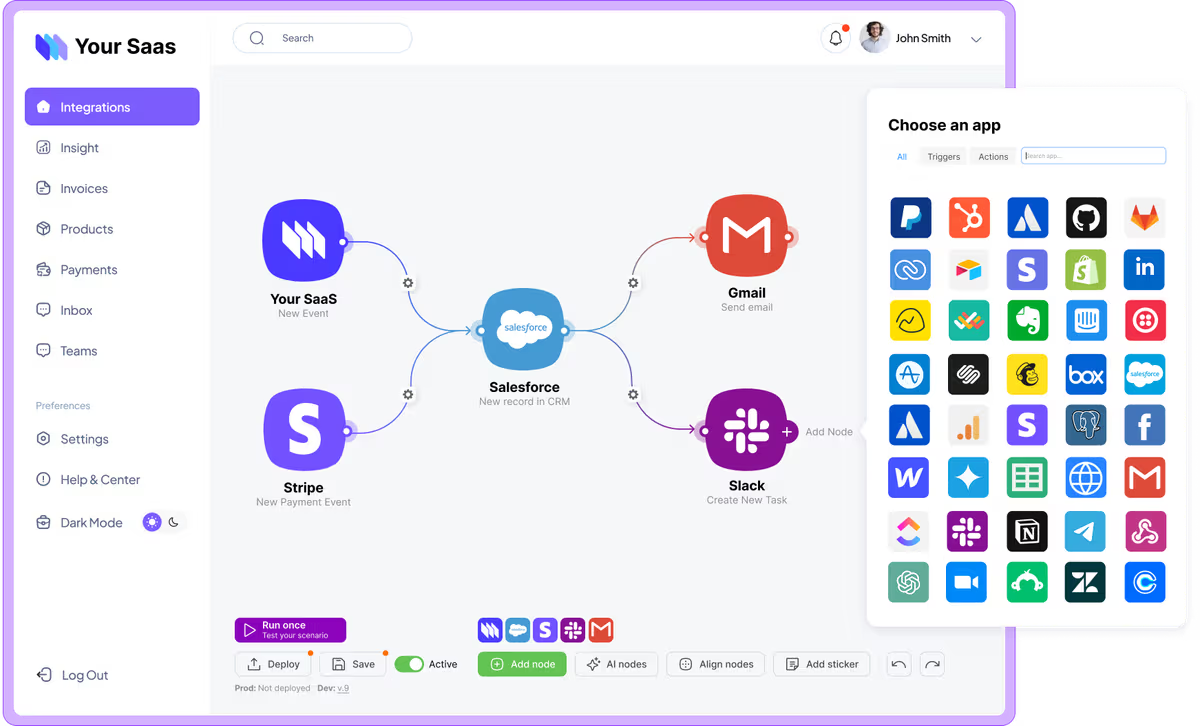
Ofrezca a su B2B SaaS más de 5.500 integraciones nativas de apps
Lance un marketplace de más de 5.500 apps, conectores, APIs y modelos de IA para que clientes conecten datos CRM, ERP, nómina, soporte y herramientas de nicho en un flujo low-code.
Gestione casos de integración enterprise sin reconstruir su app SaaS
Gestione trabajo API personalizado, auth API, lógica server-side y pipelines de datos con framework code-native, builder visual y herramientas low-code drag and drop.
Construya workflows agenticos con IA mediante lenguaje natural
Use IA para convertir lenguaje natural en workflows agenticos, acciones MCP, lógica de conectores y automatización de workflows.
Controles iPaaS enterprise para cumplimiento y necesidades de vendors
Despliegue una capa iPaaS enterprise para cumplimiento, reglas de tenant, versionado, troubleshooting apto para auditoría y necesidades de integración específicas de vendors.
Convierta necesidades de clientes en workflows SaaS nativos
Convierta cada necesidad de cliente en un workflow fluido: conecte herramientas, integre apps, automatice movimiento de datos y despliegue integraciones a escala.
Plan gratuito · Sin tarjeta de crédito · Primer workflow embedded iPaaS en minutos
¿Qué es embedded iPaaS para integraciones B2B SaaS?
El iPaaS integrado es una plataforma de integración diseñada para integraciones B2B SaaS que viven dentro de su app SaaS. En lugar de enviar clientes a herramientas externas, Latenode ayuda a su producto a exponer conectores nativos, acciones API, lógica de workflow y configuración con IA directamente en la UX del producto.
¿En qué se diferencia embedded iPaaS del iPaaS tradicional?
El iPaaS tradicional suele ayudar a equipos IT a conectar apps SaaS internas y sistemas enterprise. El iPaaS integrado ayuda a equipos de producto e ingeniería a entregar integraciones orientadas al cliente, patrones API unificados, versionado de conectores, publicación en marketplace y despliegue in-product para usuarios finales.
¿Podemos construir integraciones B2B SaaS sin mucha ingeniería?
Sí. Los equipos de producto pueden usar herramientas low-code, builder visual, APIs y nodos code-native para construir integraciones, estandarizar configuración y entregar plantillas de conectores reutilizables. Eso reduce tiempo de desarrollo y mantiene recursos de desarrollo para lógica API personalizada, casos de nicho y trabajo de producto de alto valor.
¿Dónde pueden los desarrolladores aprender cómo funciona la versión embebida?
Los desarrolladores pueden revisar la documentación white-label para detalles de setup, opciones de embedding y guía de implementación. Leer la documentación white-label.
¿Latenode soporta integración enterprise y necesidades de cumplimiento?
Sí. Latenode es opción iPaaS enterprise y embedded iPaaS para equipos que necesitan controles de cumplimiento, reglas por tenant, versionado, troubleshooting y workflows de despliegue. Puede soportar integración enterprise, datos ERP, datos CRM, acciones MCP server, pipelines API seguros y entornos de clientes complejos.
¿Cómo encaja Latenode frente a Cyclr, Prismatic, Workato, Tray o Zapier?
Cyclr, Prismatic, Workato, Tray y Zapier ayudaron a definir partes del mercado iPaaS. Latenode se centra en embedded iPaaS con IA, automatización de workflows low-code, flexibilidad API personalizada y un ecosistema estilo marketplace para equipos B2B SaaS que quieren desplegar integraciones a escala.
¿Por qué importa embedded iPaaS en 2025 y más allá?
Desde 2020, muchos equipos SaaS pasaron de scripts puntuales a embedded iPaaS porque cada cliente enterprise espera apps SaaS, modelos de datos y flujos de aprobación distintos. Desde una óptica analista estilo Gartner, es una migración de automatización interna hacia infraestructura de integración orientada al cliente, donde IA, patrones API unificados y workflows agenticos forman parte del producto SaaS.
Acerca de Latenode
Latenode es una plataforma de automatización con IA que ayuda a los equipos a construir, conectar y desplegar flujos de trabajo en todo su stack empresarial. Desde automatizaciones simples hasta agentes de IA listos para producción, Latenode reúne integraciones, modelos de IA, lógica personalizada y controles de despliegue en un solo espacio de trabajo visual.

Resúmenes y webinars
Aprenda a operar embedded iPaaS con IA
Guías para equipos B2B SaaS que operan embedded iPaaS, iPaaS enterprise, workflows IA, APIs, versionado de conectores, configuración, despliegue y troubleshooting.
iPaaS low-code: conectar IT y negocio para integración fluida
Cierre la brecha entre seguridad IT y velocidad de negocio. Aprenda cómo iPaaS low-code empodera citizen developers con automatización nativa de IA y gobernanza.
TutorialConstruir workflows autónomos con Latenode: eleve su automatización iPaaS
Vaya más allá de la automatización lineal. Aprenda a construir workflows autónomos con capacidades iPaaS con IA para crear agentes autocorrectivos y decisorios en Latenode.
Caso de usoPrincipales casos de uso iPaaS: eficiencia de negocio más allá del sync de datos
Descubra casos de uso iPaaS avanzados más allá de integraciones básicas. Aprenda cómo la plataforma nativa de IA de Latenode automatiza workflows complejos en ventas, soporte y finanzas.
Guide¿Qué es iPaaS? Guía completa de plataforma de integración + análisis de mercado 2025
Explore cómo Integration Platform as a Service (iPaaS) revoluciona la integración de software, optimizando workflows y procesos de negocio.
Playbook5 patrones de arquitectura iPaaS esenciales que todo arquitecto debe conocer
Explore 5 patrones esenciales de arquitectura iPaaS, de iPaaS híbrido a orquestación impulsada por IA. Aprenda a diseñar diagramas de integración cloud escalables con Latenode.