


Businesses rely on multiple software applications to streamline operations, but managing these systems can create inefficiencies. Integration and automation platforms like Workato solve this by connecting tools and automating workflows. While Workato is popular, its pricing, customization limits, or specific requirements may not suit everyone.
This article explores 11 top Workato alternatives for 2024, helping businesses find the best fit for their needs, whether they prioritize cost, scalability, or advanced features.
Key Takeaways: Workato is a powerful platform, but its pricing, customization, and specific industry needs may not suit all organizations. Key factors when exploring alternatives include integration capabilities, ease of use, scalability, and cost. By assessing your specific requirements and workflows, you can find a platform that best supports your integration and automation goals.
Workato is a cloud-based automation platform that allows organizations to integrate applications, databases, and services, automating workflows. It features a large library of pre-built connectors, making integration quick and requiring minimal coding. Its low-code/no-code interface empowers non-technical users to create and manage automations, while advanced features like data transformation and API management cater to complex workflows. Common use cases include customer data synchronization and automating approval processes. However, Workato's pricing can be costly for high-volume use, and some organizations may need more specialized integration features, prompting them to explore alternatives.
The 11 Best Workato Alternatives
Now that we've established a framework for comparing Workato to other integration solutions, let's take a closer look at the 11 best Workato alternatives to consider in 2024. Each of these platforms offers unique strengths and capabilities that may align with different organizational needs and priorities.
1. Latenode
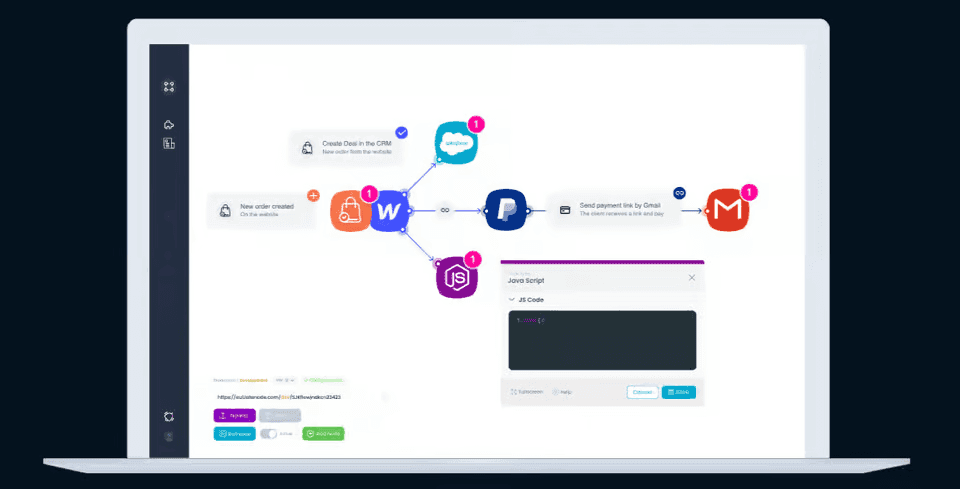
Latenode is an innovative integration and automation platform that stands out for its unique approach to workflow management. It offers a powerful combination of no-code simplicity and advanced customization options, making it suitable for both non-technical users who need simpler things like AI writing and experienced developers who need to handle web scraping and similar tasks.
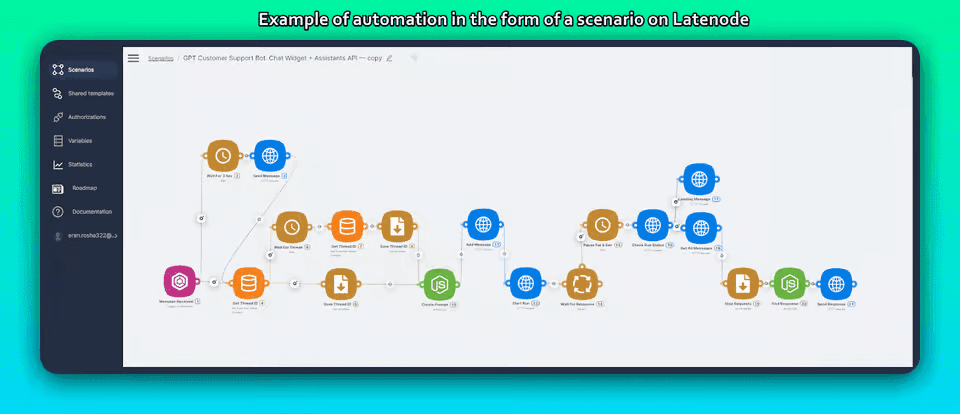
Key features of Latenode include:
- Intuitive Visual Workflow Builder: Latenode provides a user-friendly interface for creating complex workflows, using a drag-and-drop system similar to mind mapping.
- AI-Powered Automation Suggestions: The platform utilizes machine learning to analyze your existing processes and suggest potential automations, such as miniature dictation software in a scenario, helping users identify efficiency opportunities they might have missed.
- Extensive App Integration Library: With support for over 300+ popular applications and services, Latenode allows for seamless connection between various tools used in modern businesses.
- Custom API Support: For more advanced users, Latenode offers the ability to create custom integrations using RESTful APIs, expanding its capabilities beyond pre-built connectors.
- Real-Time Monitoring and Analytics: The platform provides comprehensive dashboards for tracking workflow performance, identifying bottlenecks, and optimizing processes over time.
- Scalable Architecture: Latenode is designed to handle both small-scale automations and enterprise-level workflows, with the ability to process millions of tasks daily.
Latenode's pricing model is flexible, offering a free tier for small teams or individual users, and scaling up to enterprise plans for larger organizations. This makes it an attractive option for businesses of all sizes looking for a Workato alternative.
While Latenode may not have the same level of market recognition as some other alternatives, its innovative features and user-friendly approach make it a strong contender in the integration and automation space. It's particularly well-suited for organizations looking for a balance between ease of use and advanced functionality.
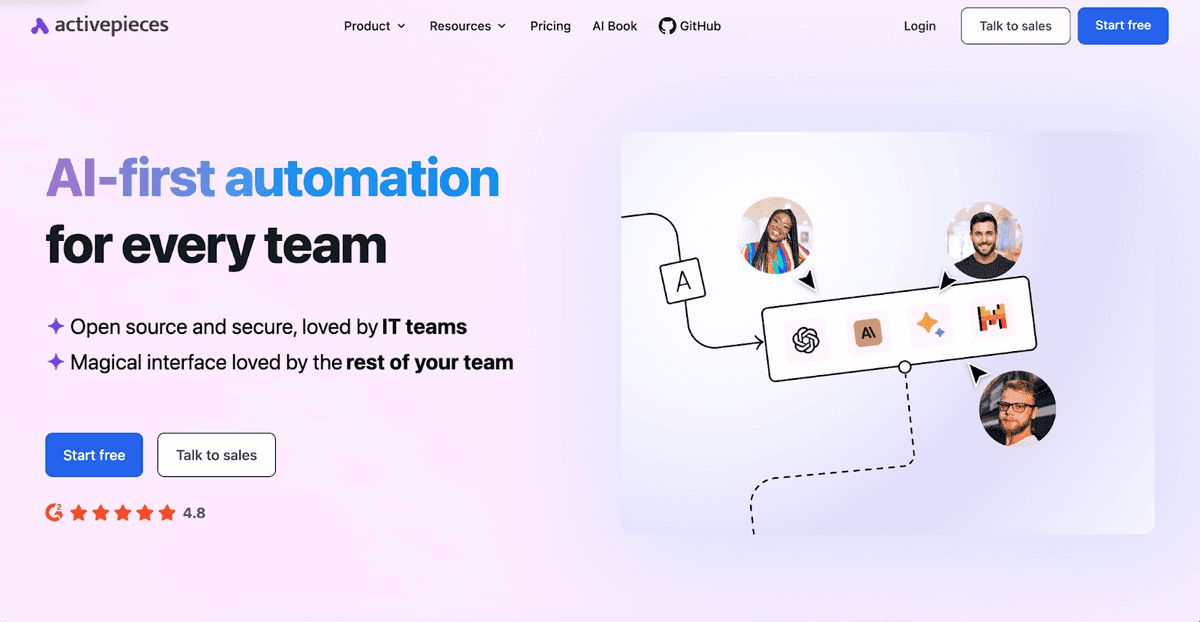
Activepieces is a no-code cloud platform for workflow automation, offering a simple drag-and-drop interface to connect apps like Slack, Gmail, and Hubspot without technical expertise. It focuses on real-time workflow tracking, error handling, and advanced filtering, allowing users to create sophisticated workflows and monitor them through a centralized dashboard. Granular user permissions and access controls further enhance security.
Key features:
- Drag-and-Drop Interface
- Real-Time Workflow Tracking
- Advanced Filtering
Drawbacks:
- Limited enterprise-level features
- Smaller app integration library compared to some competitors
With a transparent, usage-based pricing model, Activepieces enables organizations to track and manage costs effectively. While it may not have the full enterprise feature set of Workato, its user-friendly design and cost efficiency make it a strong alternative for small to medium-sized businesses seeking streamlined automation.
3. Zapier
Zapier is a widely-used no-code workflow automation platform, offering over 3,000 app integrations for automating tasks across tools like Salesforce, Google Workspace, and Dropbox. Its user-friendly interface allows non-technical users to create automations using a simple "trigger and action" model, making it accessible to organizations of all sizes. Zapier also supports advanced features like multi-step workflows, filters, and custom webhooks, along with a centralized dashboard for monitoring automations.
Key features:
- Extensive App Integrations (3000+ apps)
- Simple Trigger-Action Model
- Multi-Step Workflows
Drawbacks:
- Can be expensive for high-volume users
- Limited customization for complex workflows
Zapier's AI-powered workflow suggestions help users quickly identify automation opportunities, while its flexible pricing plans cater to different needs and budgets. However, its pricing may be expensive for high-volume use, and its simplicity may not be ideal for organizations with complex or custom integration requirements. Overall, Zapier is a strong alternative to Workato, particularly for businesses seeking an easy-to-use platform with extensive app integrations.
4. Tableau
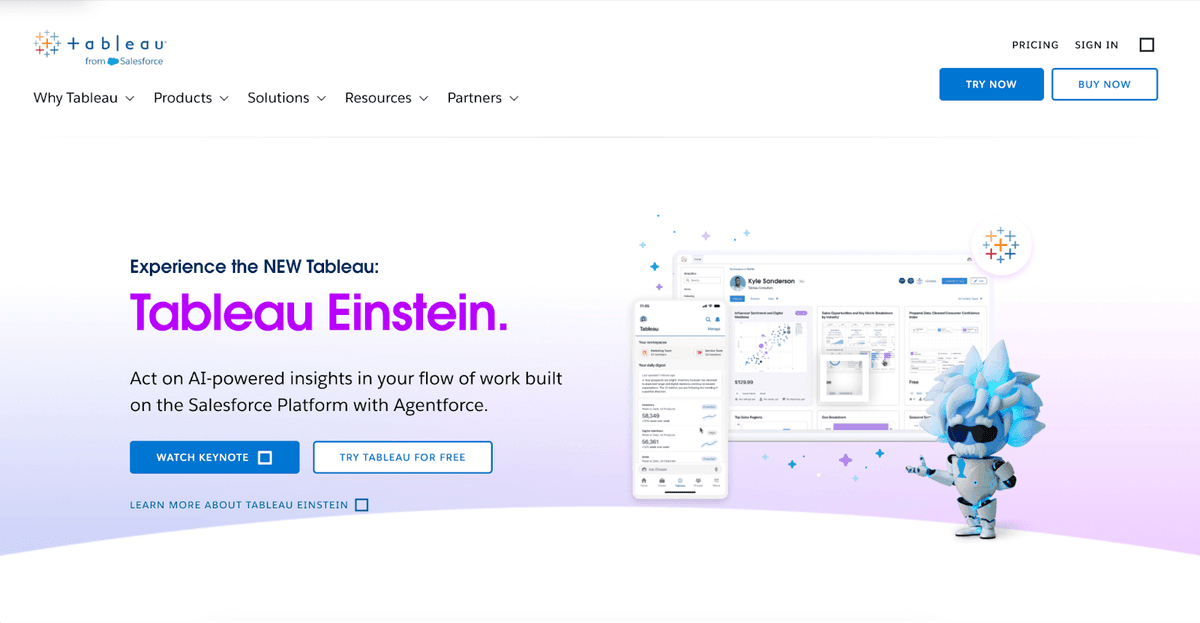
Tableau is a popular data visualization and business intelligence platform that also offers powerful automation capabilities, making it a unique alternative to Workato for organizations looking to combine data integration, analytics, and workflow automation in a single solution.
Key features:
- Powerful data visualization tools
- Wide range of data source integrations
- User-friendly interface for complex data models
Drawbacks:
- Primarily focused on data analytics, not general automation
- Steeper learning curve for non-data analysts
One of the key strengths of Tableau is its ability to connect to and integrate data from a wide range of sources, including databases, cloud applications, spreadsheets, and more. The platform offers a user-friendly, drag-and-drop interface for building complex data models and creating interactive dashboards and reports.
5. Hevo
Hevo is a no-code data pipeline platform focused on automated data integration and transformation, making it a strong Workato alternative for organizations needing to streamline data workflows. With over 150 pre-built integrations, Hevo supports data syncing from SaaS applications, databases, and cloud storage, emphasizing data reliability through features like schema mapping, validation, and error handling. It also offers end-to-end encryption and compliance with regulations like GDPR and HIPAA.
Key features:
- 150+ pre-built integrations
- Real-time data replication
- Strong data security and compliance features
Drawbacks:
- Focused on data integration rather than general workflow automation
- Can be costly for high data volumes
Hevo's real-time data replication allows organizations to sync data quickly, making it ideal for businesses requiring up-to-date information for decision-making. Its user-friendly interface lets non-technical users manage data pipelines without coding, and the platform provides pre-built models and transformations. Starting at $249 per month for up to 5 million records, Hevo is a strong option for organizations prioritizing data reliability and security, though it focuses more on data integration than broader workflow automation.
6. Integrate.io
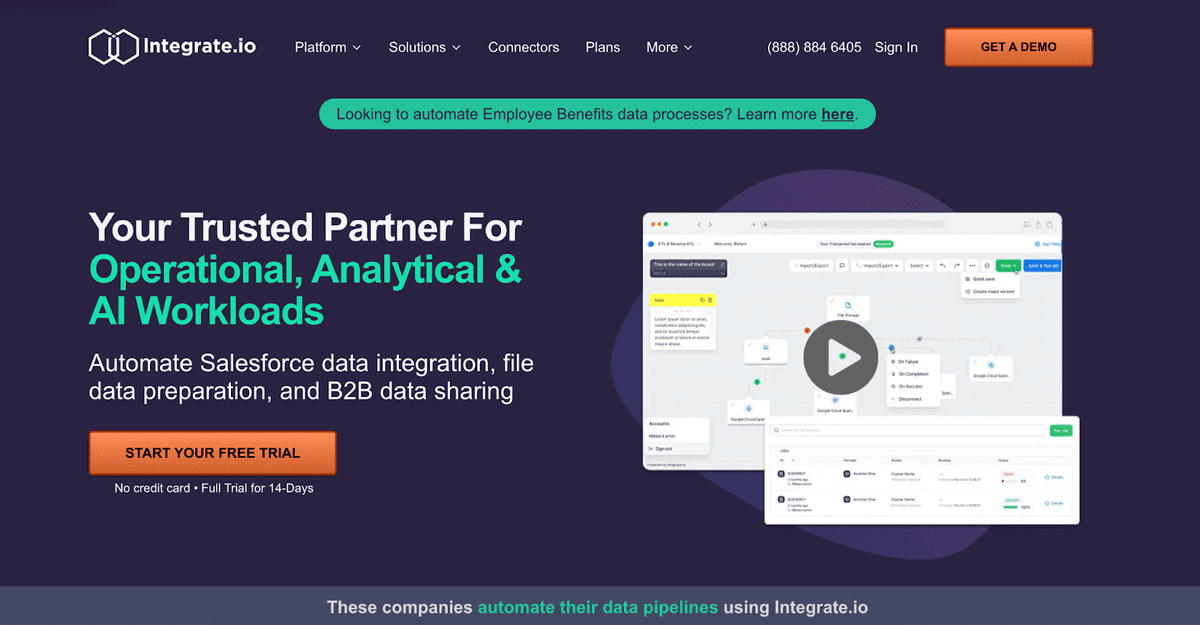
Integrate.io is a cloud-based data integration platform ideal for organizations seeking a data-centric alternative to Workato. It supports over 100 pre-built connectors, enabling easy integration from various sources like SaaS applications, databases, and cloud storage. Its low-code, visual interface makes it accessible to non-technical users, allowing them to build and manage data workflows without heavy IT involvement.
Key features:
- 100+ pre-built connectors
- Low-code visual interface
- Advanced data processing tools
Drawbacks:
- May require some technical knowledge for complex integrations
- Limited workflow automation features compared to some alternatives
The platform offers advanced data processing and transformation tools, including built-in functions and support for custom scripts. It also provides robust monitoring features like real-time error handling, data lineage tracking, and enterprise-grade security, including SOC 2 and GDPR compliance. With consumption-based pricing and a free trial, Integrate.io is a strong option for organizations prioritizing ease of use, data processing, and compliance, though its focus is more on data integration than broader automation.
7. Tray.io
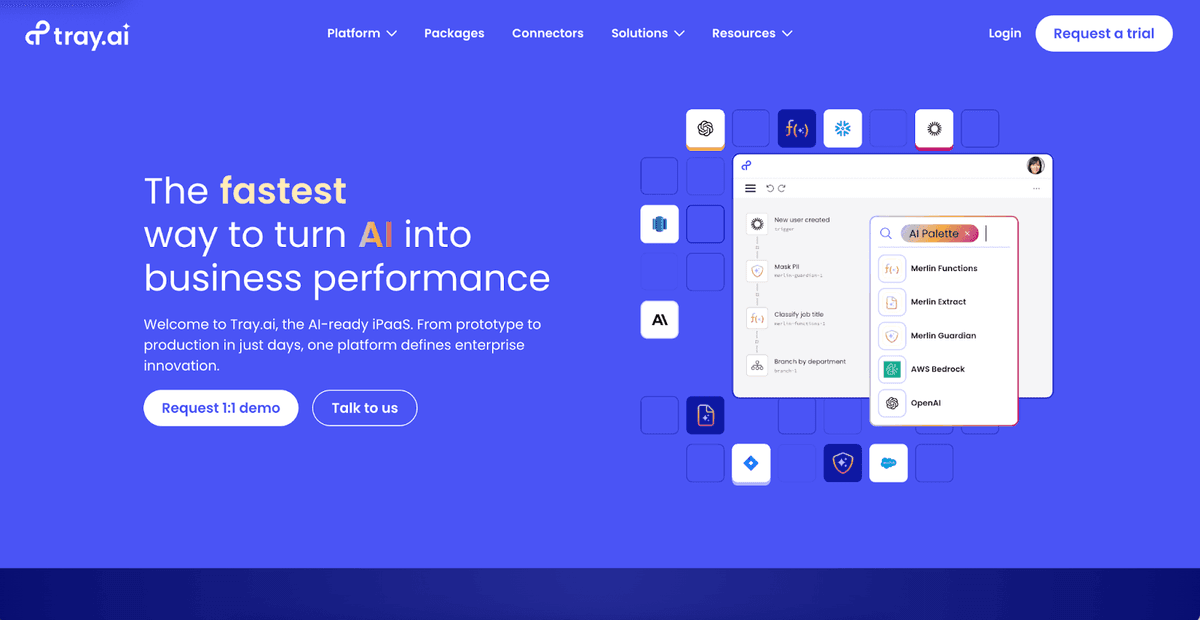
Tray.io is a cloud-based integration and automation platform that offers flexibility and customization, making it a strong alternative to Workato for organizations with complex integration needs. With over 500 pre-built connectors, it allows users to connect data from various sources easily, using a drag-and-drop workflow builder that supports event-based, scheduled, and manual automations.
Key features:
- 500+ pre-built connectors
- Advanced customization options
- Support for complex workflows
Drawbacks:
- Steeper learning curve for non-technical users
- Higher pricing for enterprise-level features
Tray.io also provides advanced features like custom connectors, serverless functions, and scripting with Python and Node.js for more complex workflows. Its enterprise-grade security includes encryption, role-based access, and GDPR and HIPAA compliance. Starting at $595 per month for 50,000 operations, Tray.io is ideal for businesses seeking customizable automation with robust security, though it may have a steeper learning curve.
Make (formerly Integromat) is a user-friendly integration and automation platform ideal for individuals and small to medium-sized businesses. It supports over 1,000 apps and services, allowing users to quickly automate workflows across tools like Slack, Trello, and Google Workspace without coding. Its drag-and-drop visual builder enables easy creation of multi-step workflows with conditional logic.
Key features:
- Visual workflow builder
- 1000+ app integrations
- Flexible pricing plans
Drawbacks:
- Limited advanced features for enterprise needs
- Can become complex for very large-scale operations
Make offers built-in data processing, including filtering, mapping, and formatting, along with custom JavaScript and Python support for advanced scenarios. Starting at $9 per month, it provides a range of plans, including a free option. While it's excellent for smaller businesses, it may not be suited for enterprises with complex needs. Overall, Make is a strong, affordable alternative to Workato for simpler automation tasks.
9. Appmixer
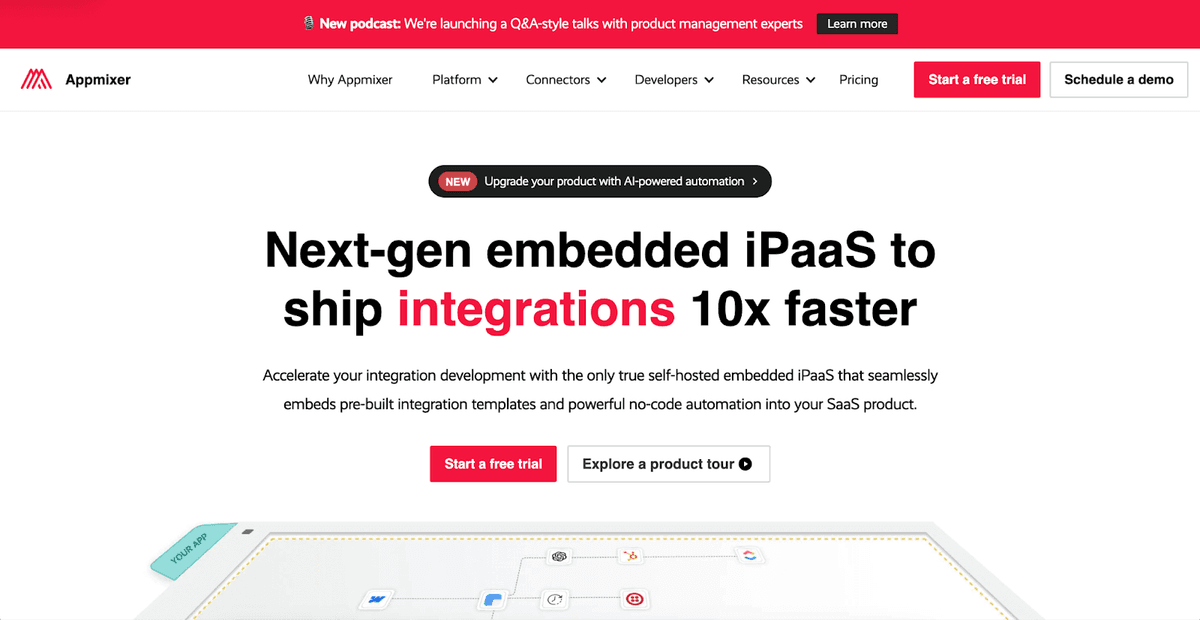
Appmixer is a cloud-based integration platform that simplifies automation by offering a no-code, drag-and-drop interface. It features pre-built connectors for popular SaaS apps like Salesforce, HubSpot, and QuickBooks, along with support for custom REST API integrations. This allows users to easily create workflows that automate tasks such as data transfer and record updates based on triggers.
Key features:
- Drag-and-drop interface
- Custom API integrations
- Real-time data synchronization
Drawbacks:
- Smaller app library compared to some competitors
- May lack some advanced enterprise features
Appmixer offers real-time data synchronization, data mapping, and robust security features like encryption and access controls. With flexible pricing starting at $99 per month and a free trial, it suits small to medium-sized businesses seeking user-friendly automation. While it may not be ideal for organizations with highly complex integration needs, it's a solid alternative to Workato for those prioritizing simplicity and security.
10. Panoply
Panoply is a cloud-based data management platform that integrates data warehousing and business intelligence, making it a strong alternative to Workato for data-driven organizations. Its automated data integration simplifies the process of ingesting data from multiple sources, such as SaaS apps and databases, without manual ETL. Panoply's smart data warehouse optimizes storage and query performance, allowing users to focus on data analysis.
Key features:
- Automated data integration
- Built-in analytics tools
- Optimized data storage and query performance
Drawbacks:
- Primarily focused on data management, not general automation
- May be overkill for simple integration needs
In addition to its data integration capabilities, Panoply offers built-in analytics tools like a SQL editor, data visualization, and dashboards, enabling users to explore and share insights. With strong security features and compliance standards, Panoply's pricing is consumption-based, tailored to different data needs. While it may not suit those focused solely on workflow automation, Panoply is ideal for businesses looking to streamline data management and analytics.
11. Cyclr
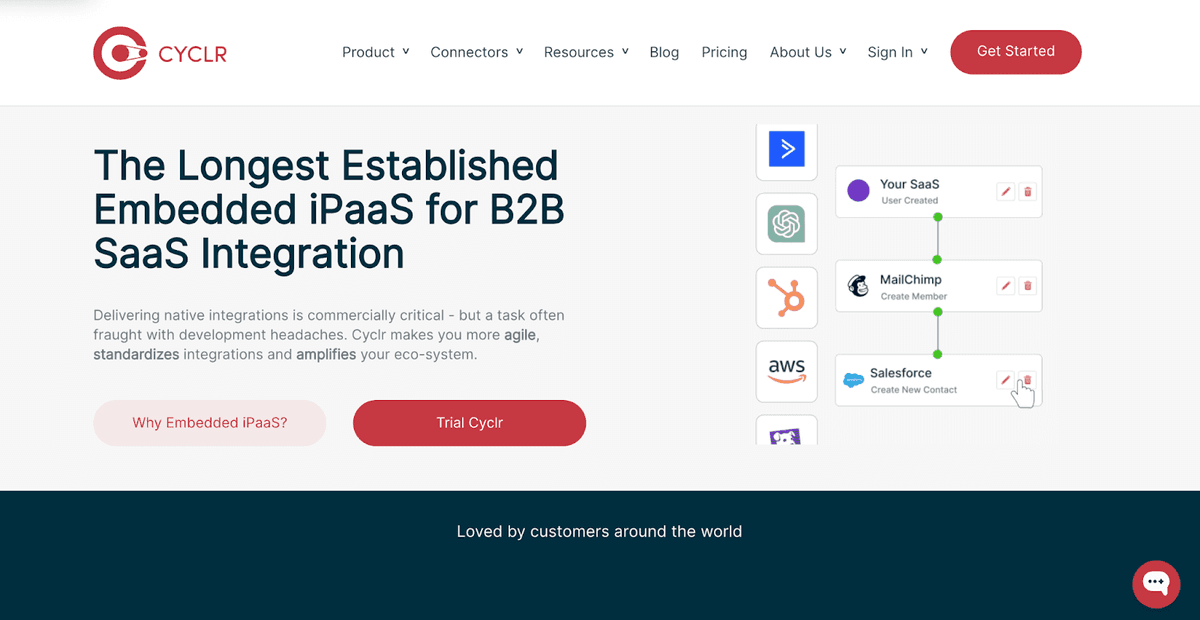
Cyclr is an embedded integration platform tailored for software companies and digital agencies, making it a specialized alternative to Workato. Its key strength lies in enabling software providers to embed integration capabilities directly into their applications, offering a white-label solution with custom branding. Cyclr’s drag-and-drop interface and library of over 400 pre-built connectors allow users to quickly create complex integrations without technical expertise.
Key features:
- White-label solution
- 400+ pre-built connectors
- Custom connector development support
Drawbacks:
- Primarily aimed at software providers, not end-users
- May have a learning curve for those new to integration concepts
Additionally, Cyclr supports custom connector development through its API and SDK, offering flexibility for proprietary systems. The platform includes real-time monitoring, error handling, and security features such as user access controls. With flexible pricing options, Cyclr is ideal for software companies focused on embedding integrations, though it may have a learning curve for those unfamiliar with integration concepts.
Industry Trends: The Integration and Automation.
The integration and automation sector, with several key trends shaping the future of work and digital transformation. Here's an overview of current trends and how the presented Workato alternatives align with them:
- Low-Code/No-Code Solutions: The demand for platforms that empower non-technical users to create integrations and automations is growing. Alternatives like Zapier, Make, and Activepieces are at the forefront of this trend, offering intuitive interfaces that reduce the need for coding expertise.
- AI and Machine Learning Integration: Artificial Intelligence is becoming increasingly important in suggesting and optimizing workflows. Latenode's AI-powered automation suggestions and Zapier's smart recommendations demonstrate this trend in action.
- Data-Centric Approach: As data becomes the lifeblood of modern businesses, platforms that specialize in data integration and analytics are gaining traction. Tableau, Hevo, and Panoply cater to this trend by focusing on data management and visualization capabilities.
- Scalability and Enterprise-Grade Features: There's a growing need for solutions that can handle complex, large-scale operations. Tray.io and Cyclr offer advanced features and customization options that align with this trend, catering to enterprises with sophisticated integration needs.
- Industry-Specific Solutions: The market is seeing a rise in platforms tailored for specific industries or use cases. While not explicitly mentioned for most alternatives, this trend suggests an opportunity for these platforms to develop more specialized offerings.
- Enhanced Security and Compliance: With increasing data regulations, platforms that prioritize security and compliance are becoming essential. Most of the alternatives mentioned emphasize their security features, reflecting this important trend.
- Cloud-Native and Hybrid Integrations: As businesses continue to migrate to the cloud, there's a growing need for platforms that can seamlessly integrate cloud and on-premises systems. Many of the alternatives support this hybrid approach, catering to businesses at various stages of cloud adoption.
- Real-Time Data Processing: The ability to process and act on data in real-time is becoming crucial. Platforms like Hevo and Integrate.io, with their real-time data replication and processing capabilities, are well-positioned to meet this demand.
- Embedded Integration Platforms: There's a growing trend towards embedding integration capabilities directly into software products. Cyclr's focus on this area demonstrates how some alternatives are aligning with this emerging market need.
By aligning with these trends, the Workato alternatives presented in this article are well-positioned to meet the evolving needs of businesses in their digital transformation journeys. As the integration and automation landscape continues to evolve, we can expect these platforms to adapt and innovate further to stay competitive and relevant.
Conclusion
In conclusion, while Workato is a powerful and versatile integration and automation platform, it may not be the best fit for every organization. Factors such as specific integration requirements, technical expertise, budget constraints, and industry-specific needs can all influence the choice of an alternative solution.
The 11 Workato alternatives presented in this article demonstrate the diverse range of options available in the market, each with its own strengths, target audience, and unique value proposition. From no-code platforms like Zapier and Make that prioritize ease of use and accessibility, to data-centric solutions like Hevo and Panoply that focus on streamlining data workflows, there is a Workato alternative to suit a variety of business needs and preferences.
When evaluating these alternatives, it is crucial to consider factors such as the scope of integration capabilities, ease of use for both technical and non-technical users, flexibility in handling complex workflows, scalability to accommodate future growth, and overall cost of ownership. By carefully assessing these factors and aligning them with your organization's specific requirements, you can make an informed decision and select a platform that will support your integration and automation goals both now and in the future.
Ultimately, the best Workato alternative for your organization will depend on a thorough understanding of your unique needs, challenges, and objectives. By taking the time to evaluate the options presented in this article and considering the key factors outlined, you can find the right solution to streamline your operations, drive efficiency, and unlock the full potential of your data and applications.