

Bonjour ! Ici Radzivon de Latenode. Aujourd’hui, je suis ravi de vous présenter l’API OpenAI, un outil puissant qui permet aux développeurs et aux entreprises d’exploiter le potentiel des modèles d’IA de pointe.
L’API OpenAI donne accès à des modèles de langage avancés tels que GPT-3 et GPT-4, qui ont révolutionné le traitement du langage naturel. Cette API vous permet d’intégrer des fonctionnalités d’IA sophistiquées dans vos applications, des chatbots et de la génération de contenu à l’analyse de données et à la complétion de code.
Que vous soyez développeur souhaitant enrichir vos projets ou entreprise cherchant à innover dans ses services, l’API OpenAI ouvre la voie vers les vastes possibilités de l’intelligence artificielle. Dans ce guide, nous verrons comment tirer parti de cette technologie afin de créer des solutions intelligentes, réactives et innovantes pour vos utilisateurs ou clients.
Alors, prenez une tasse de café, installez-vous confortablement et explorons ensemble le fascinant univers de l’API OpenAI. Croyez-moi, vous allez vous régaler !
À retenir : L’API OpenAI offre aux développeurs et aux entreprises l’accès à des modèles d’IA avancés tels que GPT-3, GPT-4 et ChatGPT-4o, permettant d’intégrer des fonctionnalités d’IA sophistiquées dans différentes applications, allant des chatbots et de la génération de contenu à la traduction linguistique et à la reconnaissance d’images. L’API est facile à intégrer, évolutive et rentable, avec une offre gratuite limitée pour l’expérimentation et un modèle de paiement à l’usage pour une utilisation continue. Bien qu’elle puisse être utilisée à des fins commerciales, les utilisateurs doivent respecter les conditions d’OpenAI et prendre en compte des facteurs tels que la confidentialité des données, la modération du contenu et l’usage éthique. Les bonnes pratiques incluent une gestion sécurisée des clés API, un suivi régulier de l’utilisation et des coûts, ainsi qu’une veille sur les dernières offres d’OpenAI. Des outils tels que Latenode assurent une intégration fluide avec l’API OpenAI, simplifiant l’ajout de fonctionnalités d’IA aux workflows d’automatisation des entreprises.
Vous pouvez essayer l’API OpenAI gratuitement sur Latenode, la meilleure plateforme d’automatisation pour vous 🚀
Qu’est-ce que ChatGPT ?
Voici une version légèrement plus courte qui conserve les informations essentielles :
ChatGPT est un modèle d’IA conversationnelle de pointe développé par OpenAI. Basé sur l’architecture GPT, il est conçu pour mener des conversations semblables à celles des humains avec des réponses intelligentes et cohérentes.
Voici quelques-unes des caractéristiques notables de ChatGPT :
- Compréhension du langage naturel : ChatGPT peut comprendre et interpréter les saisies des utilisateurs, même lorsqu’elles sont formulées de différentes manières ou contiennent des expressions familières ou un langage informel. Il peut saisir l’intention derrière le message et fournir des réponses appropriées.
- Conscience du contexte : ChatGPT conserve le contexte tout au long de la conversation. Il peut se référer aux messages précédents, comprendre le déroulement du dialogue et fournir des réponses cohérentes et pertinentes pour la discussion en cours.
- Recherche de connaissances : ChatGPT a été entraîné sur une immense quantité d’informations couvrant différents domaines. Il peut s’appuyer sur ces connaissances pour fournir des réponses précises et informatives aux questions des utilisateurs, ce qui en fait une ressource précieuse pour la recherche d’informations et l’apprentissage.
- Personnalité et ton : ChatGPT peut adapter sa personnalité et son ton en fonction des préférences de l’utilisateur ou du contexte de la conversation. Il peut engager des échanges amicaux et décontractés, fournir des réponses professionnelles et formelles, ou même faire preuve d’humour lorsque cela est approprié.
- Conversations à plusieurs tours : Contrairement aux simples systèmes de questions-réponses, ChatGPT peut gérer des conversations à plusieurs tours. Il peut participer à des échanges successifs, poser des questions de suivi et conserver un dialogue cohérent sur plusieurs interactions.
ChatGPT peut répondre à des questions, fournir des explications, proposer des suggestions et même effectuer des tâches créatives. Il est largement utilisé dans le support client, l’assistance virtuelle, l’éducation et le divertissement.
Bien que très avancé, ChatGPT ne remplace pas complètement l’interaction humaine. Il peut parfois produire des réponses biaisées ou incohérentes. Les utilisateurs doivent faire preuve d’esprit critique et vérifier les informations importantes.
Le modèle continue d’évoluer, OpenAI le mettant régulièrement à jour et l’affinant en fonction des retours utilisateurs et des avancées de l’IA, afin d’améliorer sa sophistication et ses capacités conversationnelles.
Qu’est-ce que l’API OpenAI ?
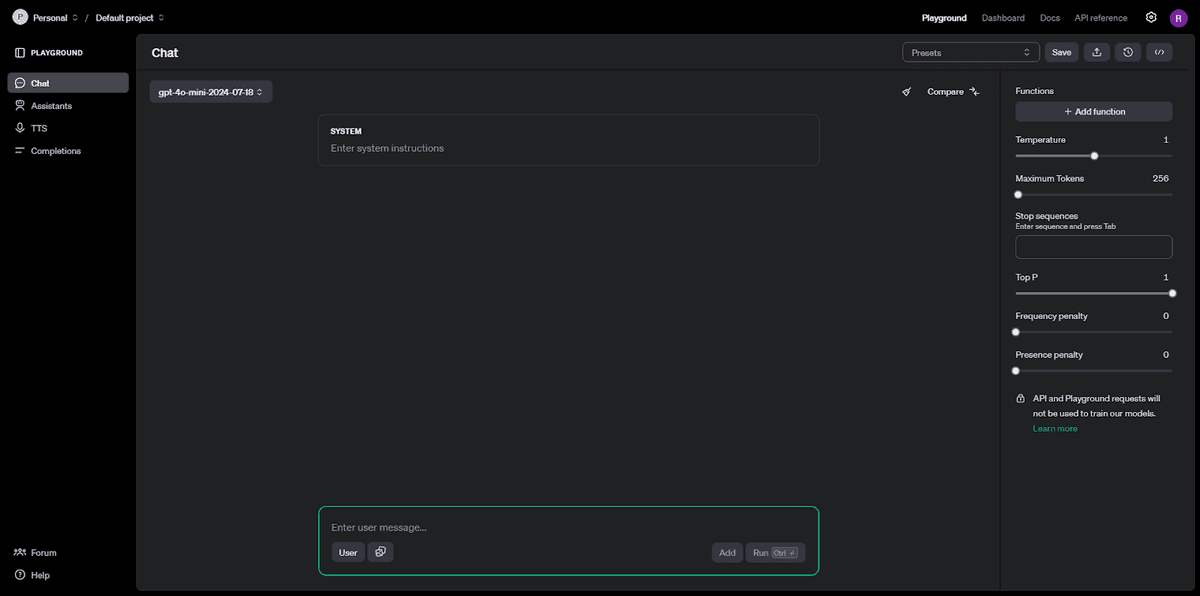
L’API OpenAI est un outil polyvalent qui permet aux développeurs d’intégrer facilement des fonctionnalités d’IA avancées dans leurs applications. Grâce à une interface simple de type « texte en entrée, texte en sortie », elle permet aux utilisateurs d’exploiter les puissants modèles de machine learning d’OpenAI pour de nombreuses tâches sans nécessiter de connaissances techniques approfondies. Cette API peut être utilisée dans de nombreux domaines, notamment le service client, la création de contenu et l’analyse de données, ce qui en fait une ressource précieuse pour améliorer les projets avec des solutions basées sur l’IA.
Présentation d’OpenAI et de son API
L’aventure d’OpenAI a commencé en 2015, lorsqu’un groupe d’entrepreneurs et de chercheurs visionnaires, dont Elon Musk et Sam Altman, a fondé l’entreprise avec une mission ambitieuse : faire en sorte que l’intelligence artificielle générale bénéficie à toute l’humanité. Au fil des années, OpenAI est passé de ses origines à but non lucratif à un modèle hybride, en nouant des partenariats stratégiques avec des géants de la tech tels que Microsoft afin d’accélérer ses progrès en recherche et développement en IA.
Au cœur de l’offre d’OpenAI se trouve l’API OpenAI, un pont puissant reliant les développeurs aux modèles de machine learning de pointe d’OpenAI. Cette API agit comme un canal permettant aux développeurs d’intégrer sans difficulté des capacités d’IA avancées dans leurs projets, sans devoir se plonger dans les détails complexes des modèles sous-jacents. La force de l’API OpenAI réside dans sa polyvalence : elle propose une interface générale de type « texte en entrée, texte en sortie », ce qui la rend adaptable à une grande variété d’applications dans de multiples domaines.
Avantages et applications de l’API OpenAI : comment elle est utilisée
L’API OpenAI offre une polyvalence remarquable et de nombreux avantages aux développeurs et aux entreprises qui souhaitent enrichir leurs applications avec une IA avancée. Elle donne accès à de puissants modèles de machine learning, permettant de mettre en œuvre un large éventail de fonctionnalités qui transforment l’expérience utilisateur, rationalisent les opérations et stimulent l’innovation.
La polyvalence de l’API est visible dans ses applications variées : alimenter des chatbots intelligents et des assistants virtuels, générer du contenu, traduire des langues, analyser les sentiments, ou encore reconnaître et générer des images. Plus de 300 applications démontrent déjà sa flexibilité et son potentiel pour des solutions innovantes.
Les développeurs peuvent facilement intégrer des fonctionnalités d’IA sans posséder une expertise approfondie en machine learning, tandis que les entreprises de toutes tailles profitent de son évolutivité et de sa rentabilité. L’API traite de grands volumes de données et fournit des informations précieuses pour les décisions stratégiques. Elle garantit également que les applications restent à jour avec les dernières avancées de l’IA, en offrant une solution pérenne pour une innovation continue.
- Facilité d’intégration : La conception conviviale de l’API permet aux développeurs d’intégrer rapidement et efficacement des fonctionnalités d’IA dans leurs applications, sans nécessiter une expertise poussée en machine learning.
- Polyvalence : L’API OpenAI est adaptable à différents secteurs et cas d’usage, de la génération de contenu et l’analyse de données au service client et aux outils pédagogiques.
- Évolutivité : L’API prend en charge des solutions évolutives et convient aux projets de toutes tailles, des petites startups aux grandes entreprises.
- Rentabilité : En exploitant les modèles préentraînés d’OpenAI, les entreprises peuvent économiser le temps et les ressources considérables nécessaires pour développer des capacités d’IA à partir de zéro.
- Expérience utilisateur améliorée : Les applications intégrées à l’API OpenAI peuvent offrir des interactions plus intuitives, réactives et personnalisées, ce qui accroît la satisfaction et l’engagement des utilisateurs.
- Informations basées sur les données : L’API peut traiter et analyser de grands volumes de données textuelles, fournissant des informations précieuses pour éclairer les décisions stratégiques et améliorer les produits ou services.
- Amélioration continue : Grâce à l’accès aux dernières avancées de la recherche en IA, l’API garantit que les applications restent à jour avec les technologies de pointe et offre une solution pérenne pour une innovation continue.
Ces avantages montrent comment l’API OpenAI peut donner aux développeurs et aux entreprises les moyens de créer des applications plus intelligentes, plus efficaces et très engageantes :
Chatbots IA
L’une des applications les plus prometteuses de l’API OpenAI se situe dans le domaine des chatbots et des assistants virtuels. Grâce à leur capacité à comprendre et générer du texte semblable à celui des humains, des modèles tels que GPT-3.5 et GPT-4o ont révolutionné notre manière d’interagir avec les machines. En intégrant l’API OpenAI, les développeurs peuvent créer des chatbots qui engagent les utilisateurs dans des conversations naturelles et fluides, tout en fournissant une assistance et un support personnalisés. Ces chatbots propulsés par l’IA peuvent être déployés sur différentes plateformes, des sites web et applications mobiles aux portails de service client, améliorant l’engagement utilisateur et rationalisant le support client.
Analyse
L’API OpenAI se distingue également dans le domaine de l’analyse, notamment l’analyse des sentiments. En exploitant les capacités de l’API, les entreprises peuvent obtenir des informations précieuses à partir de grandes quantités de données textuelles, telles que les avis clients, les publications sur les réseaux sociaux et les retours. L’API automatise la compréhension du sentiment sous-jacent, qu’il soit positif, négatif ou neutre, ce qui permet aux entreprises d’évaluer l’opinion publique, de surveiller la perception de leur marque et de prendre des décisions basées sur les données afin d’améliorer leurs produits ou services.
Technologie de pointe
L’intégration de l’API OpenAI dans vos applications ouvre la porte aux dernières avancées de la technologie IA. Alors qu’OpenAI continue de repousser les limites avec ses efforts de recherche et développement, son API sert de canal pour accéder à ces capacités de pointe. En exploitant l’API, vos applications peuvent bénéficier des améliorations et innovations continues apportées aux modèles d’OpenAI, vous permettant de rester à l’avant-garde de la révolution de l’IA. Cet aspect pérenne de l’API vous permet d’améliorer continuellement vos applications et d’offrir à vos utilisateurs les expériences basées sur l’IA les plus avancées.
Fonctionnalités de l’API OpenAI
L’API OpenAI est un outil puissant qui fournit aux développeurs un ensemble de fonctionnalités d’IA avancées, conçues pour améliorer leurs applications et rationaliser les processus de développement. Axée sur l’accessibilité, la personnalisation et l’évolutivité, l’API OpenAI se distingue par sa capacité à fournir des solutions d’IA de pointe dans différents domaines. Voici quelques-unes de ses principales fonctionnalités :
- Modèles d’IA préentraînés : Accédez immédiatement à des modèles d’IA sophistiqués, sans avoir besoin d’un entraînement extensif ni d’investissements importants en ressources.
- Modèles d’IA personnalisables : Adaptez les modèles d’IA à des besoins spécifiques, en améliorant leur pertinence et leurs performances grâce au fine-tuning.
- Interface API simple : Profitez d’une interface conviviale et d’une documentation complète permettant une intégration rapide et facile.
- Infrastructure évolutive : Assurez une évolutivité fluide pour répondre à une demande croissante, grâce à une infrastructure robuste et à des partenariats cloud.
Ces fonctionnalités font collectivement de l’API OpenAI un outil polyvalent et précieux pour les développeurs qui souhaitent exploiter les dernières avancées de la technologie IA.
Modèles d’IA préentraînés
L’une des principales forces de l’API OpenAI est l’accès qu’elle fournit à un large éventail de modèles d’IA préentraînés. Ces modèles, tels que GPT-3.5, GPT-4, DALL·E et Whisper, ont été rigoureusement entraînés sur de vastes quantités de données diverses, ce qui leur permet d’exécuter de nombreuses tâches immédiatement. Pour les développeurs, cela signifie qu’ils peuvent exploiter la puissance de ces modèles sans avoir besoin de ressources d’entraînement importantes ou d’une infrastructure de calcul conséquente. En utilisant l’API OpenAI, les développeurs peuvent bénéficier des connaissances et capacités collectives intégrées dans ces modèles préentraînés, accélérer leur processus de développement et obtenir des résultats impressionnants avec un minimum d’efforts.
Modèles d’IA personnalisables
Bien que les modèles préentraînés proposés par OpenAI soient extrêmement puissants, certaines situations peuvent nécessiter une approche plus personnalisée pour répondre à des besoins métier spécifiques. C’est là qu’intervient le concept de fine-tuning. OpenAI permet aux développeurs de prendre ses modèles préentraînés et de les affiner davantage à l’aide de leurs propres données spécifiques à leur domaine. En affinant les modèles, les développeurs peuvent les adapter pour mieux comprendre et générer du contenu correspondant à leur cas d’usage, secteur ou niche. Cette capacité de personnalisation permet aux entreprises de créer des solutions d’IA très pertinentes et optimisées pour leurs exigences uniques, ce qui améliore les performances et la précision des résultats.
Interface API simple
L’un des principaux aspects qui distingue l’API OpenAI est son interface intuitive et conviviale. OpenAI a déployé des efforts importants pour offrir aux développeurs une expérience fluide lors de l’intégration de son API dans les applications. La documentation de l’API est complète et bien structurée, avec des instructions claires et des exemples de code pour aider les développeurs à démarrer rapidement. Avec seulement quelques lignes de code, les développeurs peuvent commencer à exploiter la puissance des modèles d’OpenAI grâce aux endpoints API simples et à la disponibilité de SDK dans les langages de programmation populaires. Cette simplicité réduit la barrière à l’entrée pour les développeurs et rend l’API accessible même à ceux qui n’ont pas une grande expérience de l’IA ou des API complexes.
Infrastructure évolutive
À mesure que les entreprises se développent et que leurs applications propulsées par l’IA gagnent en popularité, la capacité à évoluer devient essentielle. OpenAI comprend ce besoin et a investi massivement dans la création d’une infrastructure robuste et évolutive capable de répondre aux exigences de ses utilisateurs API. En exploitant des technologies de pointe comme Kubernetes et en collaborant avec des fournisseurs cloud comme Microsoft Azure, OpenAI a mis en place une infrastructure capable de gérer l’échelle et la complexité des applications d’IA réelles. Cette infrastructure évolutive garantit que, lorsque votre base d’utilisateurs s’élargit et que l’utilisation de vos fonctionnalités propulsées par l’IA augmente, l’API OpenAI peut accompagner cette croissance de manière fluide sans compromettre les performances ni la fiabilité.
Comment démarrer avec l’API OpenAI : guide pour débutants
Commencer votre parcours avec l’API OpenAI peut ouvrir un monde de possibilités, de la création de chatbots intelligents à l’analyse sophistiquée de données. Ce guide vous accompagnera dans les premières étapes pour démarrer avec l’API OpenAI et vous assurera de disposer des connaissances et outils fondamentaux nécessaires pour intégrer des fonctionnalités d’IA avancées dans vos applications. Que vous soyez un développeur expérimenté ou débutant, ces étapes vous aideront à exploiter la puissance des modèles de pointe d’OpenAI pour innover et améliorer vos projets. C’est parti !
Étape 1. Créez un compte OpenAI
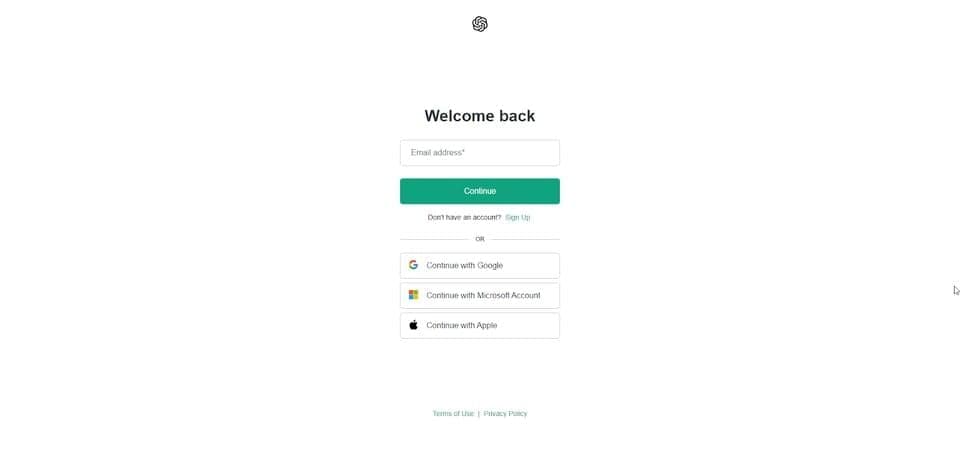
Pour commencer, rendez-vous sur platform.openai.com et cliquez sur le bouton « Sign Up ». Vous pouvez créer un nouveau compte à l’aide de votre adresse e-mail ou vous inscrire avec un compte Google ou Microsoft existant. Suivez les instructions pour terminer le processus d’inscription.
Étape 2. Vérifiez votre compte
Après votre inscription, OpenAI enverra un e-mail de confirmation à l’adresse que vous avez fournie. Ouvrez l’e-mail et cliquez sur le lien de vérification pour confirmer votre compte. Cette étape est essentielle pour garantir la sécurité et l’intégrité de votre compte.
Étape 3. Connectez-vous à votre compte OpenAI
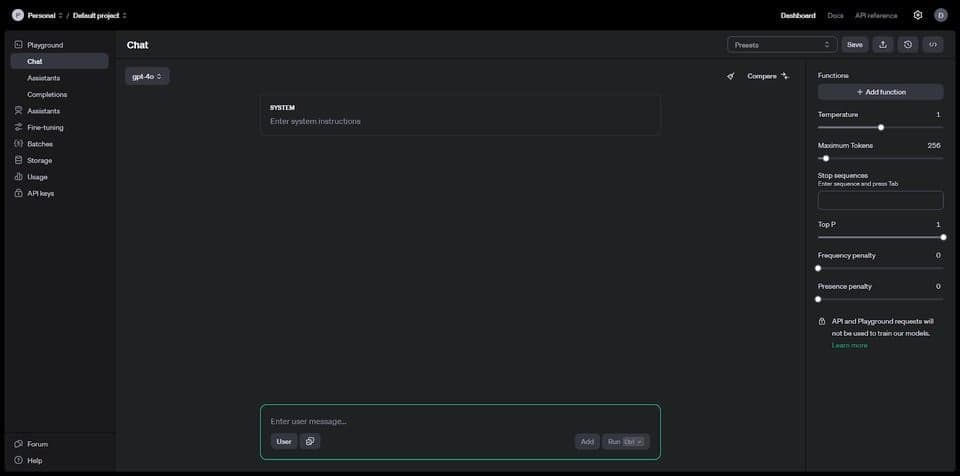
Une fois votre compte vérifié, retournez sur platform.openai.com et cliquez sur le bouton « Log In ». Saisissez les identifiants utilisés lors de l’inscription pour accéder au tableau de bord de votre compte.
Étape 4. Accédez à la section API
Après vous être connecté, repérez l’icône de votre compte en haut à droite de la page. Cliquez dessus pour afficher un menu déroulant, puis sélectionnez « View API keys ». Vous accéderez alors à la section des clés API chat gpt du tableau de bord de votre compte.
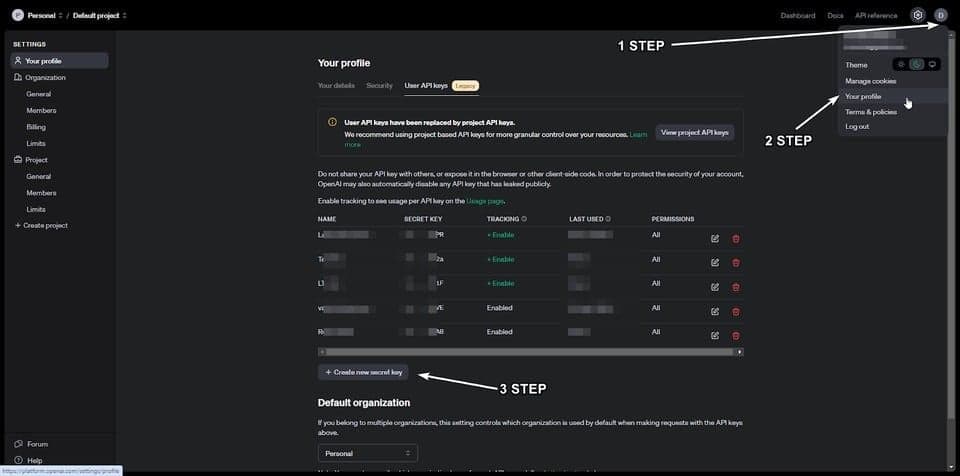
Étape 5. Générez une nouvelle clé API
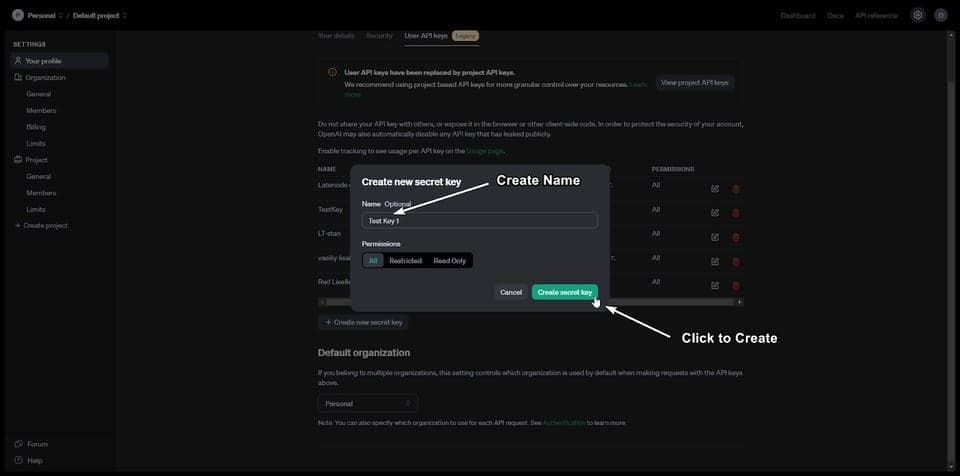
Dans la section API Keys, vous trouverez l’option permettant de créer une nouvelle clé secrète openAI. Cliquez sur le bouton « Create new secret key » pour continuer. Vous devrez donner un nom descriptif à votre clé, ce qui vous aidera à identifier son usage ultérieurement. Après avoir saisi un nom, cliquez sur « Create secret key » pour générer votre nouvelle clé API.
Étape 6. Enregistrez votre clé API
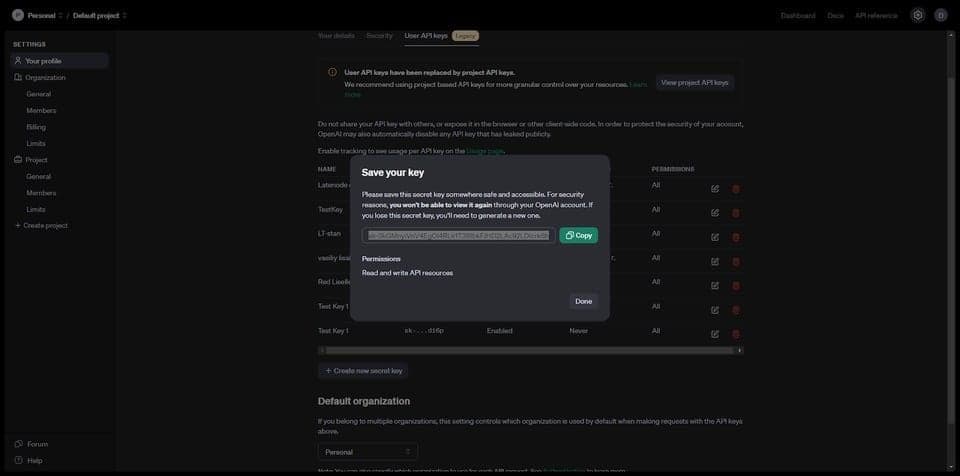
Une fois votre nouvelle clé API générée, elle s’affichera à l’écran. Il est essentiel de copier cette clé et de la conserver dans un emplacement sécurisé, tel qu’un gestionnaire de mots de passe ou un fichier chiffré. N’oubliez pas qu’OpenAI ne vous permet pas d’afficher à nouveau votre clé API après cette étape, pour des raisons de sécurité.
Étape 7 : Installez la bibliothèque Python OpenAI
Pour interagir avec l’API OpenAI par programmation, vous devrez installer la bibliothèque Python OpenAI. Cette bibliothèque fournit une interface pratique et intuitive pour effectuer des requêtes API et traiter les réponses. Pour installer la bibliothèque, ouvrez votre terminal ou votre invite de commande et exécutez la commande suivante :
pip install openai
Cette commande téléchargera et installera la dernière version de la bibliothèque Python OpenAI, ainsi que ses dépendances. Une fois l’installation terminée, vous êtes prêt à commencer à coder et à explorer les capacités de l’API OpenAI.
Étape 8 : Effectuez votre premier appel API
Maintenant que vous disposez de votre clé API et que la bibliothèque Python OpenAI est installée, il est temps d’effectuer votre premier appel API et de constater la puissance des modèles d’OpenAI en action. Commençons par un exemple simple utilisant l’API ChatCompletion pour traduire une phrase de l’anglais vers l’espagnol. Voici l’extrait de code :
import openai

def get_chat_completion(prompt, model="gpt-3.5-turbo"):
    openai.api_key = "YOUR_API_KEY"  # Remplacez par votre véritable clé API

    messages = [{"role": "user", "content": prompt}]
    response = openai.ChatCompletion.create(
        model=model,
        messages=messages,
        temperature=0,
    )
    return response.choices[0].message["content"]

prompt = "Traduisez en espagnol : En tant que data scientist débutant, je suis ravi d’en apprendre davantage sur l’API OpenAI !"
response = get_chat_completion(prompt)
print(response)
Dans ce code, nous définissons une fonction appelée get_chat_completion qui prend un prompt et un modèle comme paramètres d’entrée. Dans la fonction, nous définissons openai.api_key avec votre véritable clé API (remplacez « YOUR_API_KEY » par la clé obtenue à l’étape 2). Nous créons ensuite une liste messages contenant un seul objet de message avec le rôle « user » et le prompt fourni. Nous effectuons ensuite une requête vers l’API ChatCompletion à l’aide de openai.ChatCompletion.create(), en spécifiant le modèle souhaité, les messages et la température. Enfin, nous extrayons la réponse générée de la sortie de l’API et la renvoyons.
Pour utiliser cette fonction, nous fournissons un prompt demandant de traduire une phrase en espagnol et stockons la réponse dans la variable response. Lorsque vous exécutez ce code, vous devriez voir la phrase traduite s’afficher dans la console.
Étape 9. Explorez davantage
Félicitations pour avoir effectué votre premier appel API avec l’API OpenAI ! Ce n’est que le début de votre parcours dans le monde des applications propulsées par l’IA. À partir de là, vous pouvez explorer les différents modèles et fonctionnalités proposés par OpenAI, ainsi qu’expérimenter divers prompts et paramètres pour obtenir les résultats souhaités. Prenez le temps de consulter la documentation OpenAI, qui fournit des informations détaillées sur chaque endpoint API, les modèles pris en charge et les bonnes pratiques pour utiliser l’API efficacement.
À mesure que vous vous familiarisez avec l’API, commencez à réfléchir à la manière dont vous pouvez l’appliquer pour résoudre des problèmes réels ou améliorer des applications existantes. Que vous créiez un chatbot, analysiez des sentiments, génériez du contenu ou travailliez sur toute autre tâche liée à l’IA, l’API OpenAI offre de nombreuses possibilités. N’hésitez pas à expérimenter, itérer et tirer des enseignements de vos expériences. La communauté OpenAI est également une excellente ressource pour échanger avec d’autres développeurs, partager des connaissances et obtenir des conseils lorsque nécessaire.
N’oubliez pas que le domaine de l’IA évolue constamment et qu’OpenAI se trouve à l’avant-garde de ce parcours passionnant. En exploitant son API, vous accédez à des modèles et outils de pointe capables de transformer la manière dont vous créez des applications propulsées par l’IA et interagissez avec elles. Continuez donc à explorer, à apprendre et à libérer le potentiel de l’API OpenAI pour créer des solutions innovantes et impactantes.
Vous pouvez essayer l’API OpenAI gratuitement sur Latenode, la meilleure plateforme d’automatisation pour vous 🚀
Comment automatiser vos processus métier avec l’API ChatGPT-4o et Latenode
L’intégration fluide de GPT-4o d’OpenAI par Latenode fournit aux utilisateurs un outil puissant pour exploiter le potentiel de l’IA conversationnelle sans la complexité liée au déploiement du modèle sur leur propre infrastructure. L’éditeur visuel intuitif de la plateforme simplifie l’intégration de GPT-4o avec d’autres systèmes via des API, permettant aux entreprises d’incorporer sans effort les capacités sophistiquées de compréhension et de génération du langage de l’IA dans leurs processus d’automatisation. En utilisant Latenode, les utilisateurs peuvent accéder commodément aux fonctionnalités de GPT-4o, notamment ses puissantes capacités de vision IA, l’automatisation des tâches, l’assistance à la recherche, l’analyse de données et plus encore. L’intégration permet également aux utilisateurs de basculer facilement entre les différentes versions de GPT-4o, selon leurs besoins spécifiques et leur budget. Voici un exemple de script simple dans lequel nous créons un chatbot pour Telegram qui générera des réponses à vos questions. Voici à quoi ressemble le script :
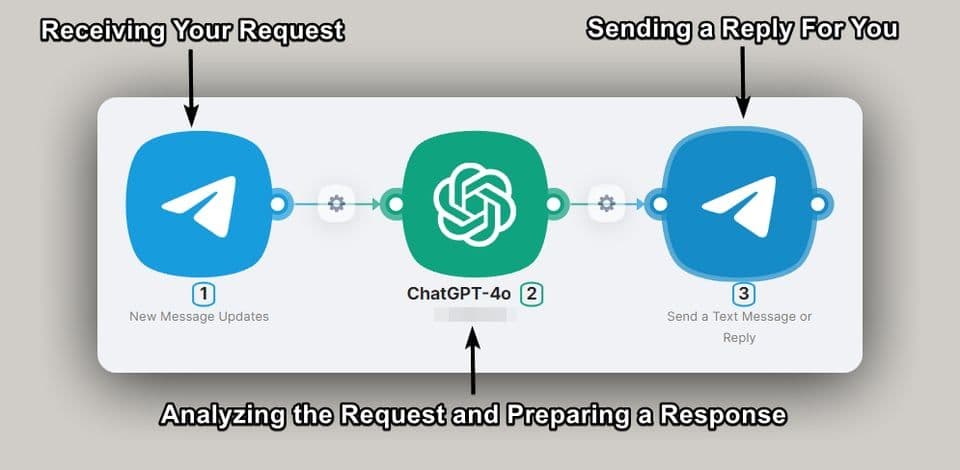
Voici le résultat de ce workflow, dans lequel un chatbot déjà créé avec Latenode répond à une question donnée :
Vous pouvez en savoir plus sur ce script et sur l’intégration avec Latenode dans cet article. L’intégration avec Latenode offre plusieurs avantages clés :
- Facilité d’utilisation : L’intégration de Latenode avec GPT-4o simplifie l’utilisation de l’IA, ce qui permet aux utilisateurs non techniques d’accéder plus facilement aux capacités d’IA dont ils ont besoin et de les comprendre. Les entreprises peuvent ainsi adopter rapidement et facilement des solutions d’IA sans exiger une expertise technique approfondie.
- Tarification flexible : L’intégration de Latenode permet aux utilisateurs de choisir parmi les différentes versions de GPT-4, avec des coûts et fonctionnalités variables, ce qui en fait une option plus accessible et abordable pour les entreprises et les particuliers.
- Solutions d’IA complètes : L’intégration de GPT-4o dans Latenode donne aux utilisateurs accès à un large éventail de capacités d’IA, des tâches complexes aux requêtes simples, ce qui en fait une plateforme d’IA polyvalente et puissante.
- Personnalisation : Avec l’intégration de Latenode, les utilisateurs peuvent personnaliser GPT-4o selon leurs besoins spécifiques, afin de créer des solutions d’IA sur mesure alignées sur leurs objectifs métier.
Voici le résultat de ce workflow, dans lequel un chatbot déjà créé avec Latenode répond à une question donnée :
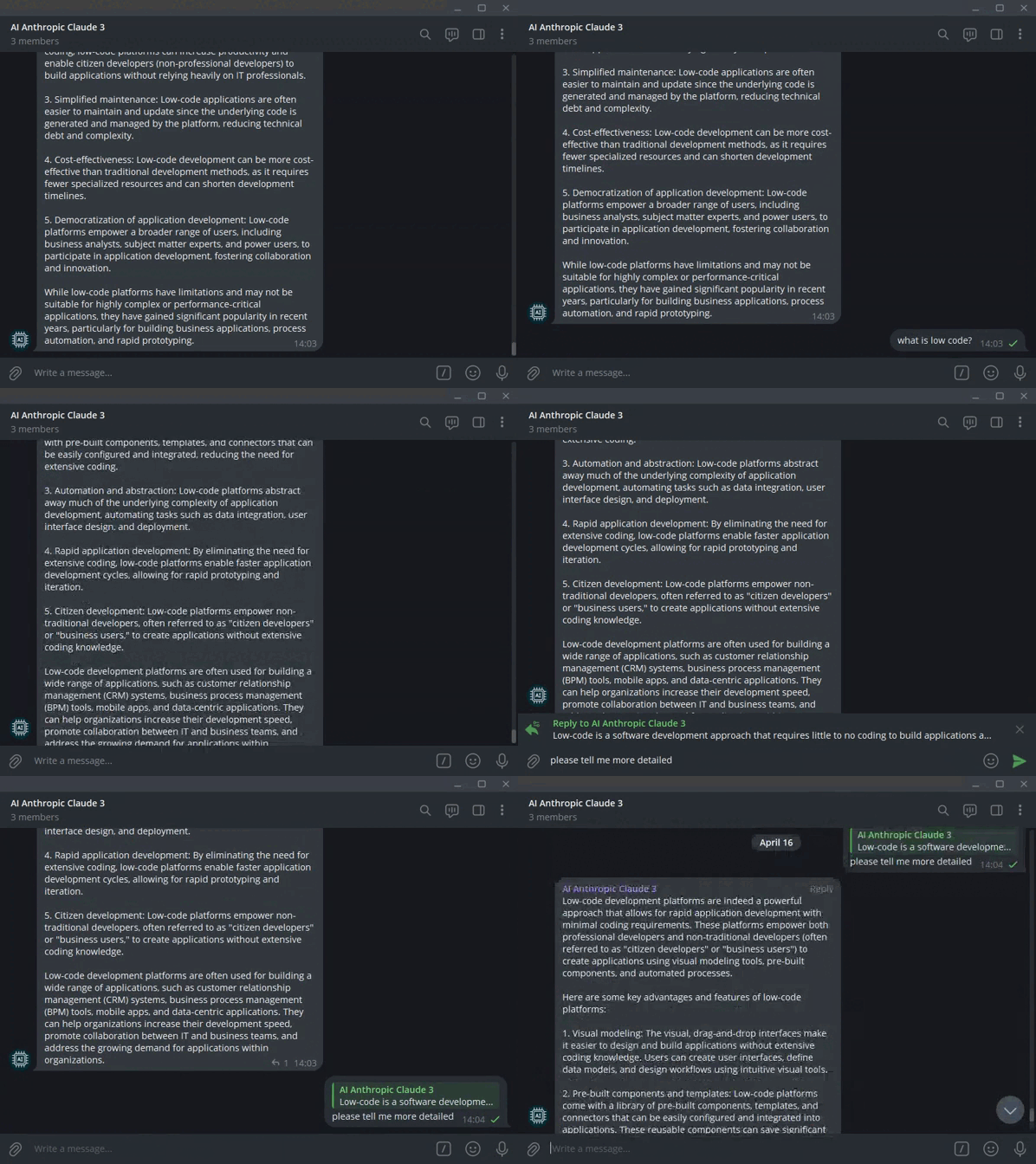
Ce n’est qu’un exemple de la manière dont Latenode peut transformer votre approche de l’utilisation de l’API OpenAI grâce à une automatisation puissante. Les capacités de la plateforme sont pratiquement illimitées et vous permettent de créer tous les workflows d’automatisation nécessaires pour améliorer l’efficacité de votre entreprise. Qu’il s’agisse de génération automatique de contenu, d’analyse de données, d’envoi de notifications ou de suivi d’indicateurs clés de performance, Latenode fournit les outils nécessaires pour les concrétiser.
En tirant parti du générateur visuel de workflows de Latenode et de son intégration fluide avec l’API OpenAI, vous pouvez facilement concevoir et mettre en œuvre des workflows d’automatisation complexes, améliorer l’efficacité de l’analyse des données et accélérer vos workflows.
Si vous avez besoin d’aide ou de conseils pour créer votre propre script, ou si vous souhaitez reproduire celui-ci, contactez notre communauté Discord, où se trouvent des experts de l’automatisation low-code.
Cas d’utilisation de l’API OpenAI dans les secteurs d’activité
L’API OpenAI est largement utilisée dans divers secteurs et propose des solutions innovantes à de nombreux défis métier. Voici quelques secteurs clés où l’utilisation de cette technologie apporte des avantages considérables :
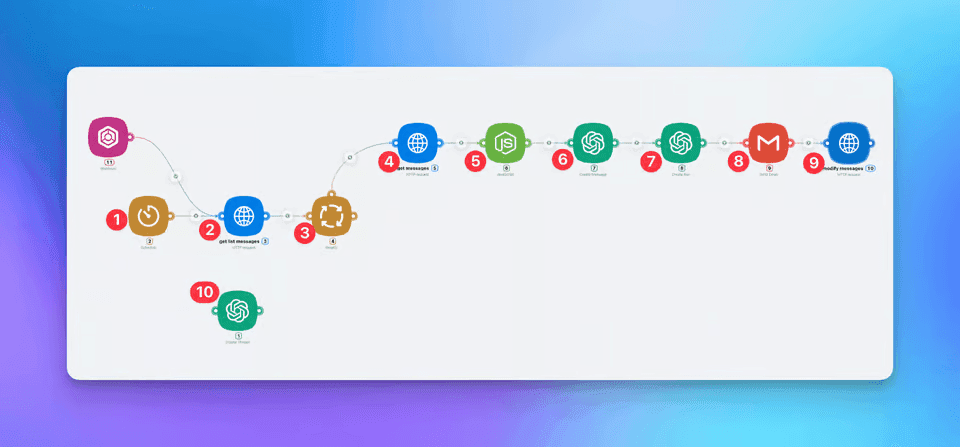
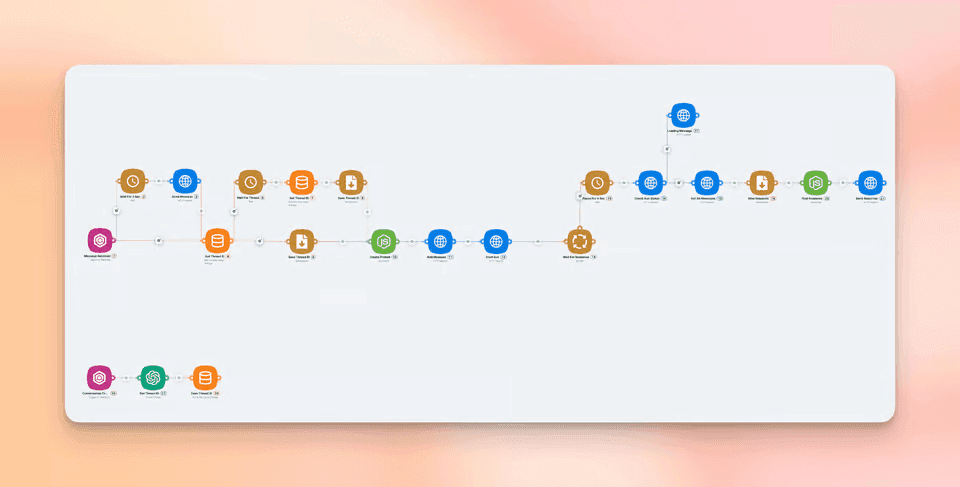
- - Extraire du texte d’un PDF
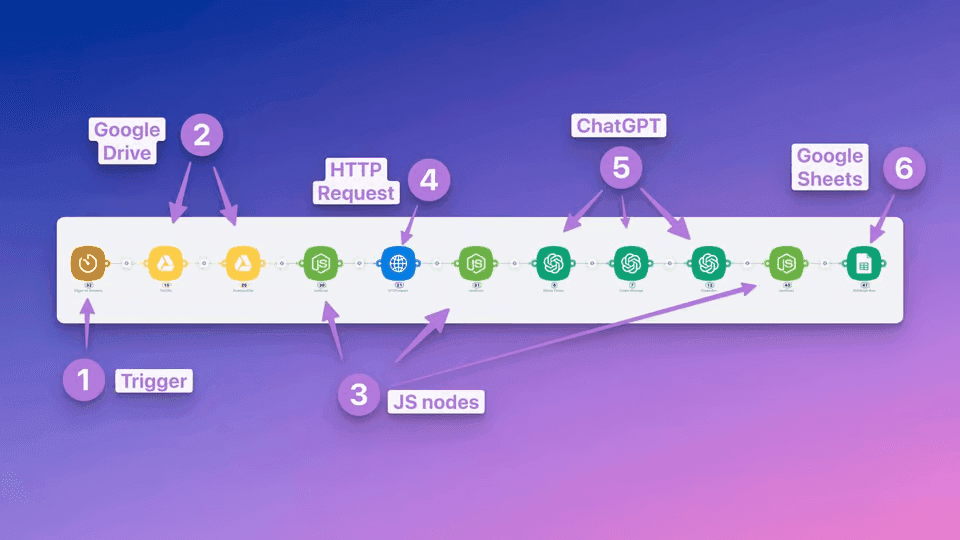
ChatGPT est déjà intégré à la plateforme Latenode. Commencez dès maintenant à l’utiliser pour automatiser vos processus métier !
L’API OpenAI est-elle gratuite ?
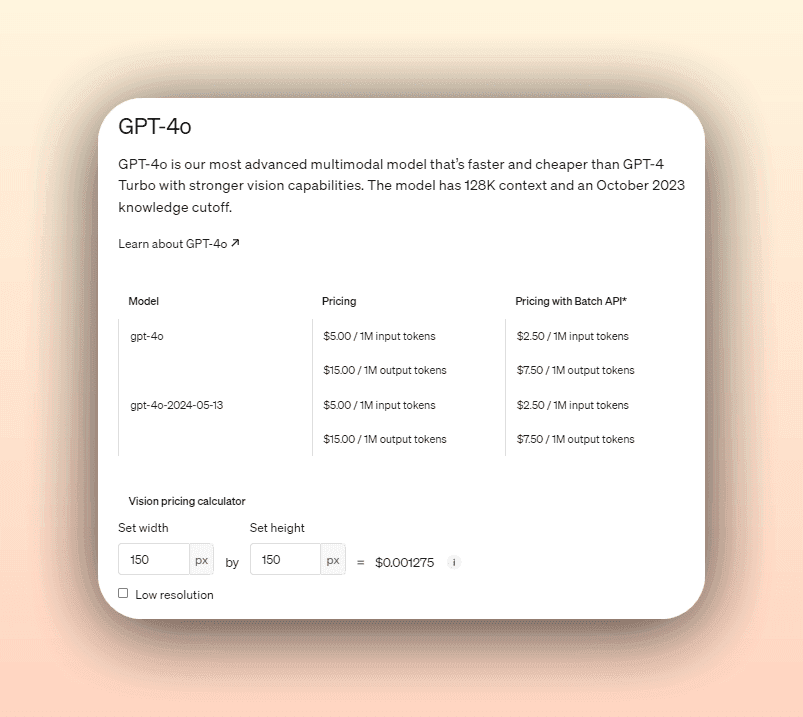
OpenAI propose une offre gratuite limitée permettant aux utilisateurs d’explorer et d’expérimenter son API. Les nouveaux utilisateurs reçoivent généralement un crédit de départ d’environ 18 $, utilisable avec différents modèles. Cela permet aux développeurs de tester les capacités de l’API et d’évaluer son adéquation à leurs projets.
Cependant, l’offre gratuite est destinée uniquement à l’exploration. Une fois le crédit initial épuisé ou après une certaine période, les utilisateurs doivent passer à une formule payante. OpenAI utilise un modèle de tarification à l’usage fondé sur le nombre de tokens traités, qui varie selon le modèle utilisé.
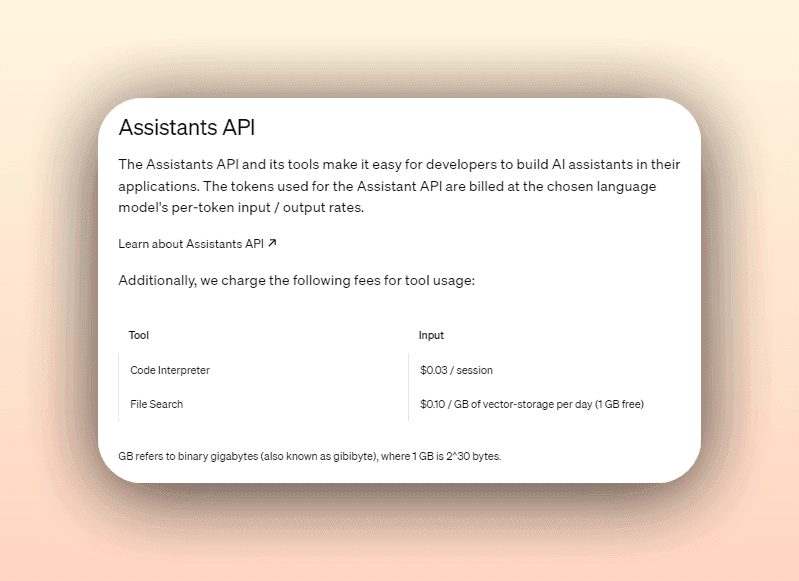
OpenAI propose parfois des crédits gratuits supplémentaires ou des promotions, généralement annoncés via ses canaux officiels. Bien que l’offre gratuite soit idéale pour démarrer, il est important de prévoir les coûts à long terme à mesure que votre application évolue. OpenAI fournit des informations tarifaires détaillées et des calculateurs de coûts pour vous aider à estimer et gérer les dépenses selon les schémas d’utilisation prévus.
Pensez à consulter la page de tarification OpenAI pour obtenir les informations les plus à jour sur les montants de crédit et les limites d’utilisation.
Types de modèles de l’API OpenAI
OpenAI propose une gamme variée de modèles via son API, chacun étant conçu pour exceller dans des tâches et applications spécifiques. Comprendre les différents types de modèles disponibles peut vous aider à choisir celui qui convient le mieux à votre cas d’usage. Explorons quelques-uns des principaux modèles fournis par OpenAI :
API GPT-4o
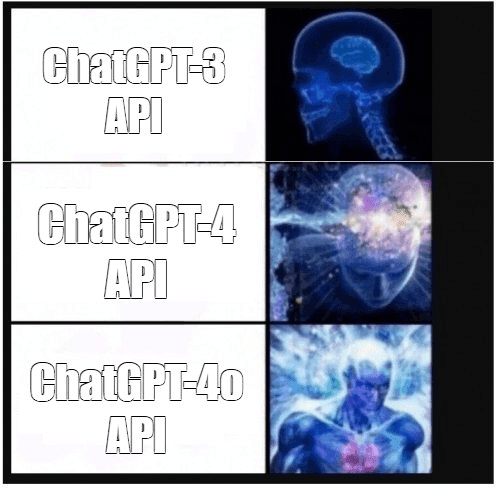
ChatGPT-4o est la version la plus récente et la plus avancée de la famille GPT-4, spécifiquement optimisée pour les tâches conversationnelles. Alors que GPT-4 excelle dans un large éventail d’applications liées au langage et au code, ChatGPT-4o est affiné pour gérer les dialogues et fournir des réponses plus cohérentes et conscientes du contexte dans un cadre conversationnel. Il est donc particulièrement adapté à la création de chatbots, d’assistants virtuels et d’autres applications interactives où le maintien d’une conversation naturelle et engageante est essentiel. ChatGPT-4o exploite les mêmes capacités avancées que GPT-4, mais est conçu pour améliorer l’expérience utilisateur dans les applications riches en dialogue, ce qui en fait le modèle le plus puissant pour les tâches d’IA conversationnelle.
API GPT-4
GPT-4 représente l’un des modèles de langage les plus avancés proposés par OpenAI. Il s’appuie sur le succès de son prédécesseur, GPT-3, et apporte des améliorations significatives en matière de performances, de précision et de capacités de raisonnement.
GPT-4 existe en deux variantes : GPT-4-8K et GPT-4-32K. Le modèle GPT-4-8K peut traiter jusqu’à 8 192 tokens dans une seule requête, tandis que GPT-4-32K peut gérer l’impressionnant volume de 32 768 tokens, soit l’équivalent d’environ 50 pages de texte. Cette capacité accrue permet de réaliser des tâches plus complexes et détaillées.
L’une des principales forces de GPT-4 est sa maîtrise des tâches liées au code. Il a démontré des capacités remarquables en génération, compréhension et complétion de code. Par conséquent, GPT-4 devrait remplacer les modèles Codex, qui ont été spécifiquement conçus pour les applications liées au code.
API GPT-3
L’API GPT-3 (Generative Pre-trained Transformer 3) est une famille de modèles de langage qui excellent dans la compréhension et la génération de texte semblable à celui des humains. Ces modèles ont été entraînés sur un vaste corpus de données diverses, ce qui leur permet de capturer les nuances et subtilités du langage naturel.
Au sein de l’API GPT-3, plusieurs modèles sont disponibles, tels que Davinci, Curie, Babbage et Ada. Chaque modèle possède ses propres forces et caractéristiques. Par exemple, Davinci est le modèle le plus puissant et le plus performant, adapté aux tâches linguistiques complexes telles que la génération de contenu, le résumé et la traduction. Curie, de son côté, est adapté à des tâches comme l’analyse des sentiments et la classification de texte.
Les modèles GPT-3 peuvent être utilisés pour un large éventail d’applications liées au langage, notamment les chatbots, la création de contenu, la traduction linguistique et bien plus encore. Ils sont capables de comprendre le contexte, de générer un texte cohérent et fluide, et même d’accomplir des tâches avec un minimum d’instructions.
Codex
Codex est un ensemble spécialisé de modèles développé par OpenAI pour aider dans les tâches liées au code. Ces modèles ont été entraînés sur une vaste quantité de code source issu de différents langages de programmation, ce qui leur permet de comprendre et de générer des extraits de code.
Avec Codex, vous pouvez accomplir des tâches telles que la complétion de code, l’explication de code et même la génération de code à partir d’instructions en langage naturel. Il prend en charge un large éventail de langages de programmation, notamment Python, JavaScript, Ruby et bien d’autres.
Les modèles Codex tels que code-davinci-002 et code-cushman-001 sont particulièrement utiles aux développeurs souhaitant automatiser des tâches de codage répétitives, améliorer la qualité du code ou générer des extraits de code selon des exigences spécifiques.
Whisper
Whisper est un modèle de reconnaissance automatique de la parole (ASR) développé par OpenAI. Il est spécialisé dans la transcription d’entrées audio en texte écrit. Whisper a été entraîné sur un ensemble varié d’échantillons audio, ce qui lui permet de transcrire avec précision la parole dans plusieurs langues.
Avec Whisper, vous pouvez créer des applications incluant la conversion de la parole en texte, comme des assistants vocaux, des services de transcription ou même du sous-titrage en temps réel. Le modèle prend en charge différents formats audio et fournit des transcriptions précises, ce qui en fait un outil puissant pour les tâches liées à la parole.
DALL-E
DALL-E est un modèle novateur qui combine le traitement du langage naturel et la vision par ordinateur afin de générer des images de haute qualité à partir de descriptions textuelles. Il peut créer des images entièrement nouvelles ou modifier des images existantes à partir des prompts fournis.
DALL-E ouvre un monde de possibilités pour les applications créatives, comme la génération d’images de produits, la création artistique ou la visualisation de concepts. En exploitant la puissance du langage et de la compréhension visuelle, DALL-E permet aux utilisateurs de donner vie à leurs idées grâce à une génération d’images réaliste et imaginative.
Embeddings
Les embeddings constituent un type spécial de modèle axé sur la conversion de texte en représentations numériques appelées embeddings. Ces représentations capturent le sens sémantique et les relations entre les mots ou les phrases, ce qui permet des comparaisons de similarité efficaces et la récupération d’informations.
Le modèle text-embedding-ada-002 est couramment utilisé pour des tâches telles que la recherche sémantique, les systèmes de recommandation et le clustering. En représentant le texte sous forme de vecteurs denses, les embeddings permettent une mise en correspondance rapide et précise de contenus similaires, ce qui les rend précieux pour diverses applications de traitement du langage naturel.
Ce ne sont là que quelques exemples des modèles disponibles via l’API OpenAI. OpenAI élargit et améliore continuellement son offre de modèles ; il est donc utile d’explorer sa documentation et de suivre les dernières versions afin d’identifier le modèle le plus adapté à votre cas d’usage spécifique.
Puis-je utiliser l’API OpenAI à des fins commerciales ?
Oui, vous pouvez utiliser l’API OpenAI à des fins commerciales, sous réserve de respecter ses conditions générales. L’API est conçue pour un large éventail d’applications, notamment les projets, produits et services commerciaux.
Lorsque vous utilisez l’API dans un contexte commercial, tenez compte de plusieurs facteurs clés. Comprenez la structure tarifaire et estimez les coûts correspondant à l’utilisation prévue. Traitez les données utilisateurs de manière responsable et respectez les lois et réglementations applicables. Mettez en œuvre des mécanismes de modération du contenu afin d’empêcher la génération ou la diffusion de contenus inappropriés. Respectez les droits de propriété intellectuelle d’OpenAI ainsi que les exigences d’attribution pour le contenu généré via l’API. Assurez-vous que votre application respecte les principes éthiques d’équité, de transparence et de responsabilité.
OpenAI fournit des ressources, de la documentation et du support pour un usage commercial. Échanger avec la communauté OpenAI et des développeurs expérimentés peut apporter des conseils précieux.
N’oubliez pas de surveiller l’utilisation de l’API, de suivre les coûts et d’optimiser votre mise en œuvre pour assurer sa viabilité à long terme. À mesure que votre entreprise se développe, vous devrez peut-être ajuster vos habitudes d’utilisation ou mettre à niveau vos formules.
Conclusion
L’API OpenAI représente un outil transformateur pour les développeurs, les data scientists et les entreprises qui souhaitent exploiter la puissance de l’intelligence artificielle. Elle donne accès à une gamme de modèles d’IA avancés, permettant de créer des agents conversationnels intelligents, de générer du contenu de haute qualité, d’analyser les sentiments et bien plus encore.
Nous avons exploré les principaux aspects de l’API, de la prise en main aux bonnes pratiques pour une utilisation efficace. Nous avons abordé différents modèles tels que GPT-3, GPT-4, Codex, Whisper et DALL-E, chacun offrant des capacités uniques pour différentes applications. Une attention particulière a été accordée à ChatGPT et à son potentiel pour révolutionner les interactions avec les clients.
L’API peut être utilisée à des fins commerciales, avec des considérations importantes concernant la tarification, la confidentialité des données, la modération du contenu et les principes éthiques. OpenAI fournit des ressources pour vous aider à gérer ces complexités.
Alors que vous commencez votre parcours dans l’IA avec l’API OpenAI, abordez-le avec curiosité, créativité et responsabilité. Efforcez-vous de créer des solutions qui soient non seulement technologiquement avancées, mais aussi éthiquement solides et bénéfiques pour la société.
Le domaine de l’IA évolue constamment et, en restant informé et en collaborant avec la communauté OpenAI, vous pouvez contribuer de manière significative à cette frontière passionnante. Avec l’API OpenAI comme outil et votre imagination comme guide, les possibilités d’innovation sont illimitées. Bienvenue dans le monde de l’IA et de l’API OpenAI !
Vous pouvez essayer l’API OpenAI gratuitement sur Latenode, la meilleure plateforme d’automatisation pour vous 🚀