
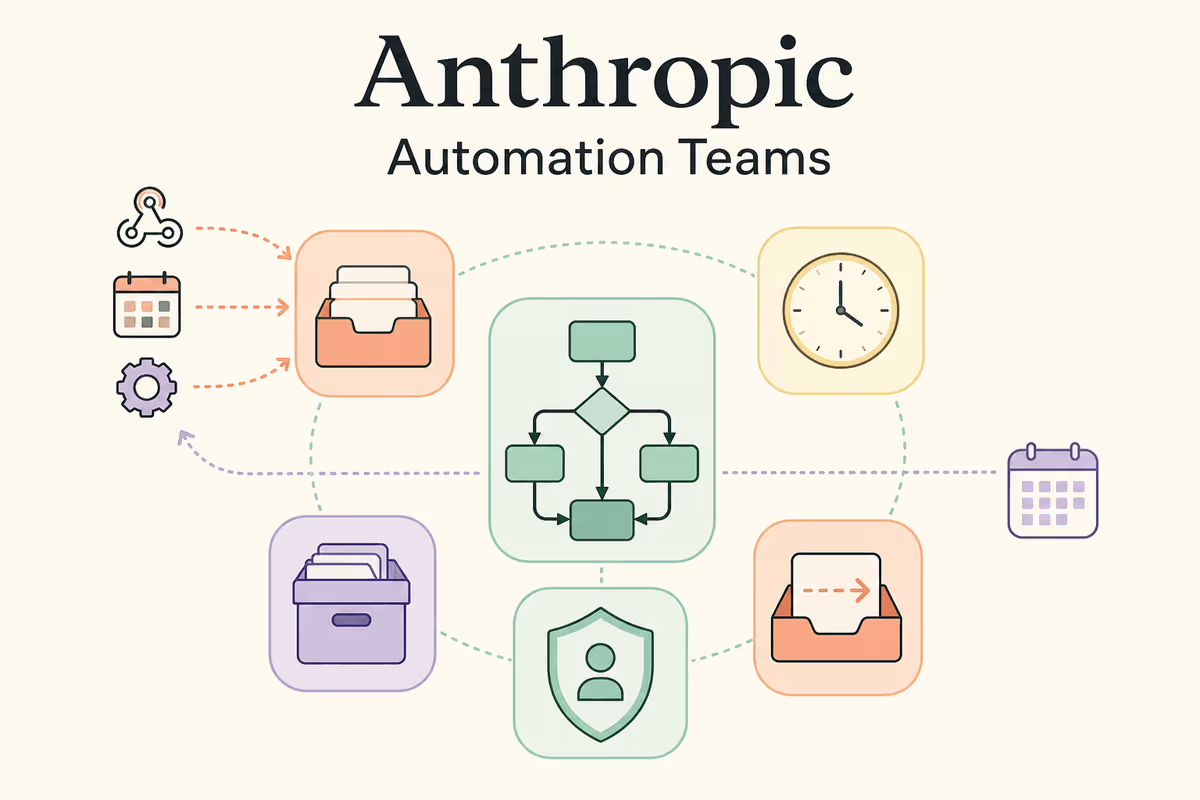
Anthropic published its Anthropic’s guide on November 13, laying out a five-part architecture for always-on agents: an event inbox, timers, memory, permissions, and an outbox.
The guide argues these agents should not run as one permanent process. Instead, triggers such as webhooks, scheduled tasks, and background jobs go into a durable inbox, and the agent wakes for discrete runs when work arrives. Anthropic also says timers should live in a separate durable store, with due work sent back into the inbox by a scheduler.
The rest of the design focuses on durable state and control. Memory should persist beyond any single worker, while permission layers can handle credentials automatically or pause execution for human approval on sensitive actions. Anthropic adds that an outbox can help with pacing and recovery when downstream steps fail.
For builders, the practical takeaway is to treat long-lived agents more like event-driven workflows than immortal chat sessions.