
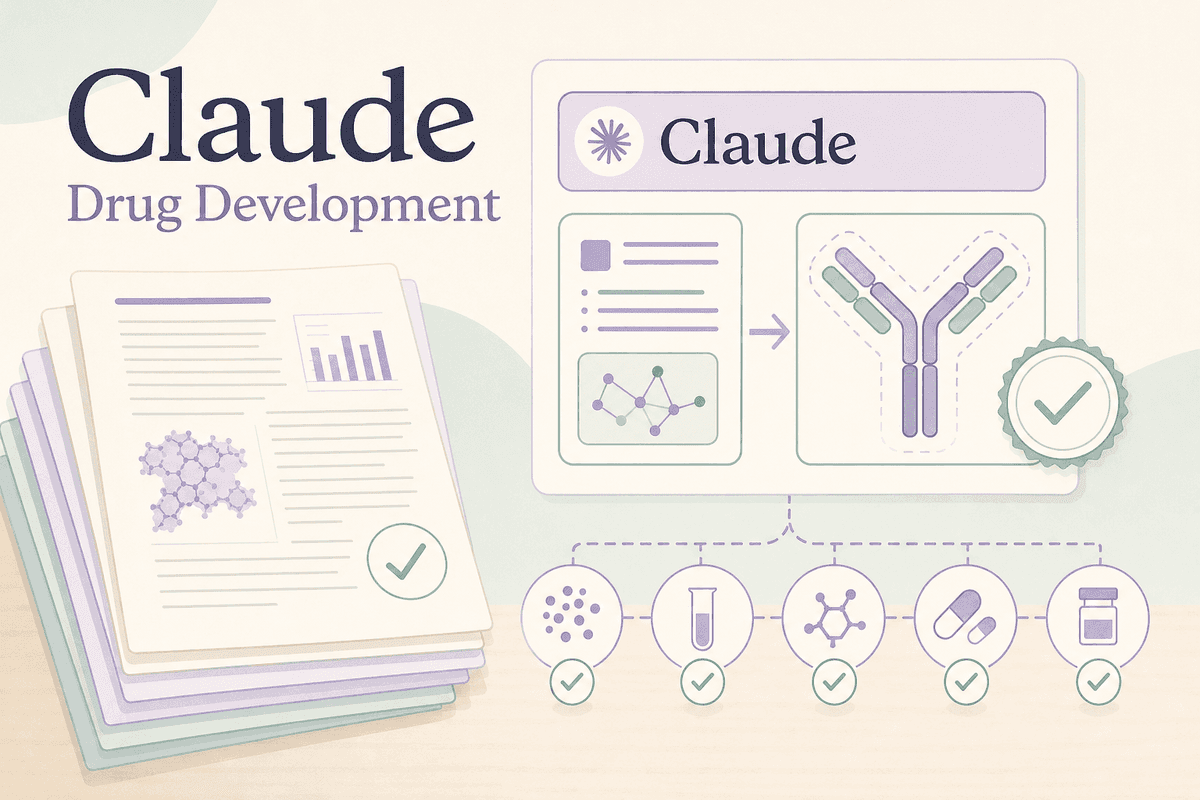
Anthropic said Claude is being used in drug-development programs with biotech and pharmaceutical partners, moving the model into day-to-day research and review workflows.
The Anthropic report names six collaborators. At Enveda, Claude reviewed 1,061 pages, matched all 11 issues previously found by humans, flagged seven more, and cut review time by 89%, from over 25 hours to under three. Generate Biomedicines produced a CAR T-cell component about 70% shorter than the standard design, while Divergence Labs generated roughly 35,000 antibody designs in about a month.
These are vendor-reported results, and most remain in preclinical research rather than demonstrating better medicines or clinical efficacy. Still, the Claude drug-development projects show where biotech AI workflows are becoming measurable: document QA, design generation, and trial planning can be instrumented, reviewed, and benchmarked instead of treated as open-ended chat.