
Black Forest Labs announced FLUX 3 Image Klein on October 15, 2026, releasing a 5.6B-parameter image model with open weights while also offering the distilled variant through the BFL API.
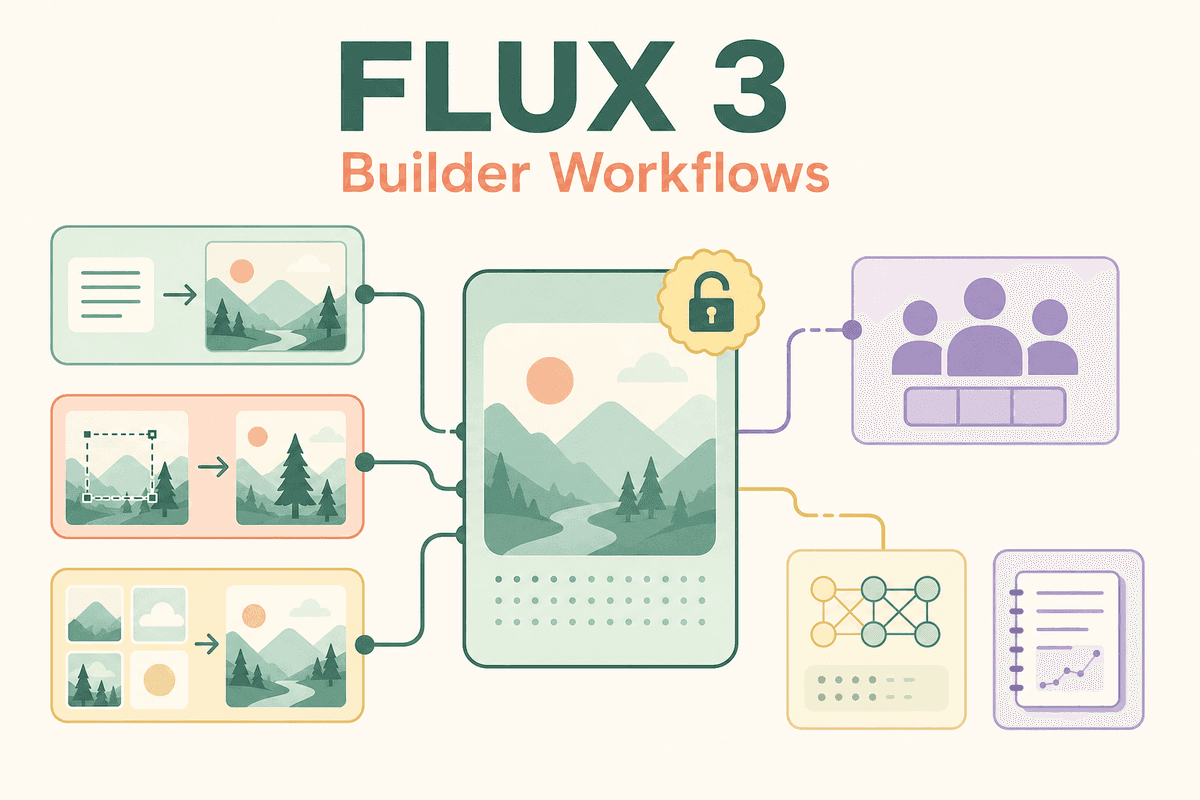
BFL says Klein handles several image tasks in one model: text-to-image generation, image editing, and multi-reference generation. The company also says it supports native 4K output, bounding-box controls for placement or constrained edits, and up to 10 reference images in multi-reference runs.
The release is split into two variants. BFL positions the distilled model for faster inference, while the base model is aimed at fine-tuning and research. According to the model page, the distilled model is available via the API and Hugging Face, while the base model is available on Hugging Face.
BFL’s published hardware figures are narrower than a full production workflow footprint. The company lists generator-weight requirements of 11.2 GB in BF16 and 5.6 GB in FP8, and says the INT8 build can run on NVIDIA GeForce RTX GPUs with as little as 8 GB of VRAM.