
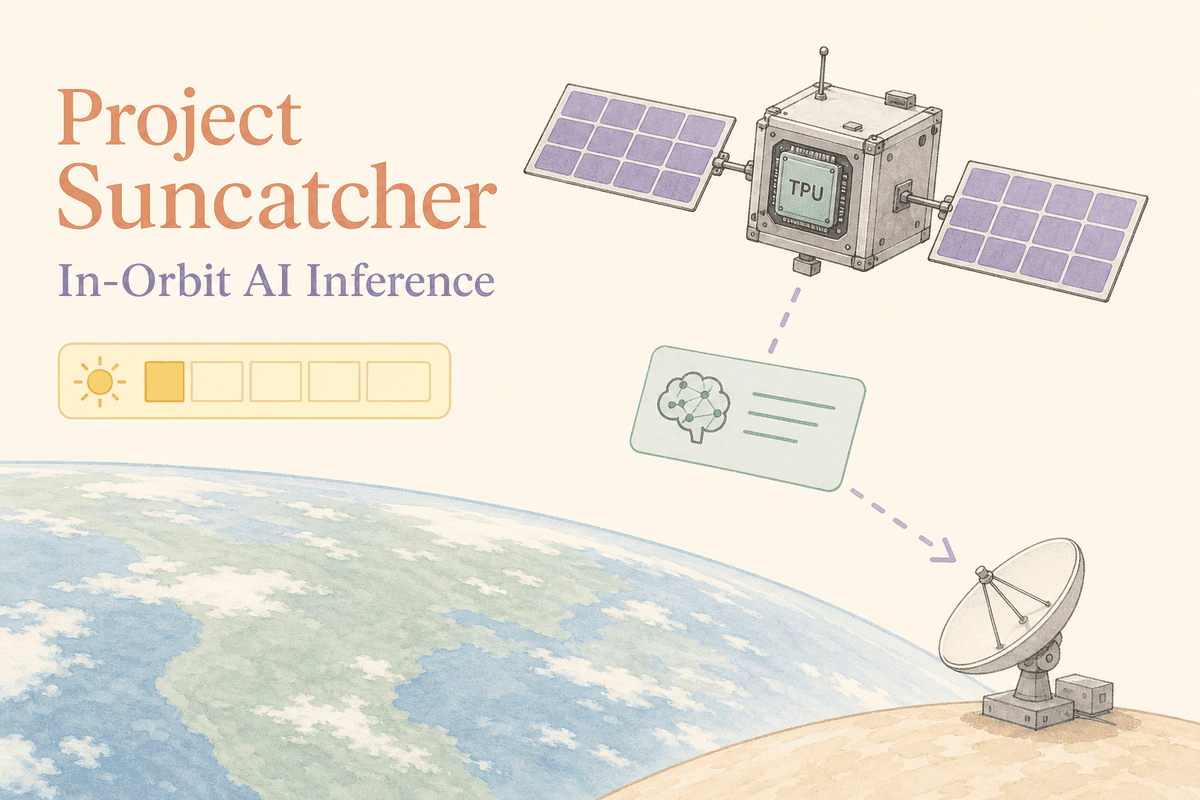
Google said on October 30, 2026 that its Project Suncatcher prototype satellite returned an AI-generated answer while in orbit, after a ground prompt to an onboard Gemma 4 model. The first output was a short poem about space, downlinked during a pass near Svalbard, Norway. In Google’s account, the company describes it as the first AI response from a data center-class TPU in orbit.
Independent reporting adds the hardware limits behind the demo. TechCrunch reported that the prototype carries four TPUs, but power constraints mean only one can run at a time, and only for about 20 minutes per session. Google said it also tested space-themed limericks and telemetry prompts, with thermal and radiation checks still ahead.
For builders, the signal is less the poem than the operating constraints: inference on remote hardware with tight power windows, intermittent links, and delayed validation.