
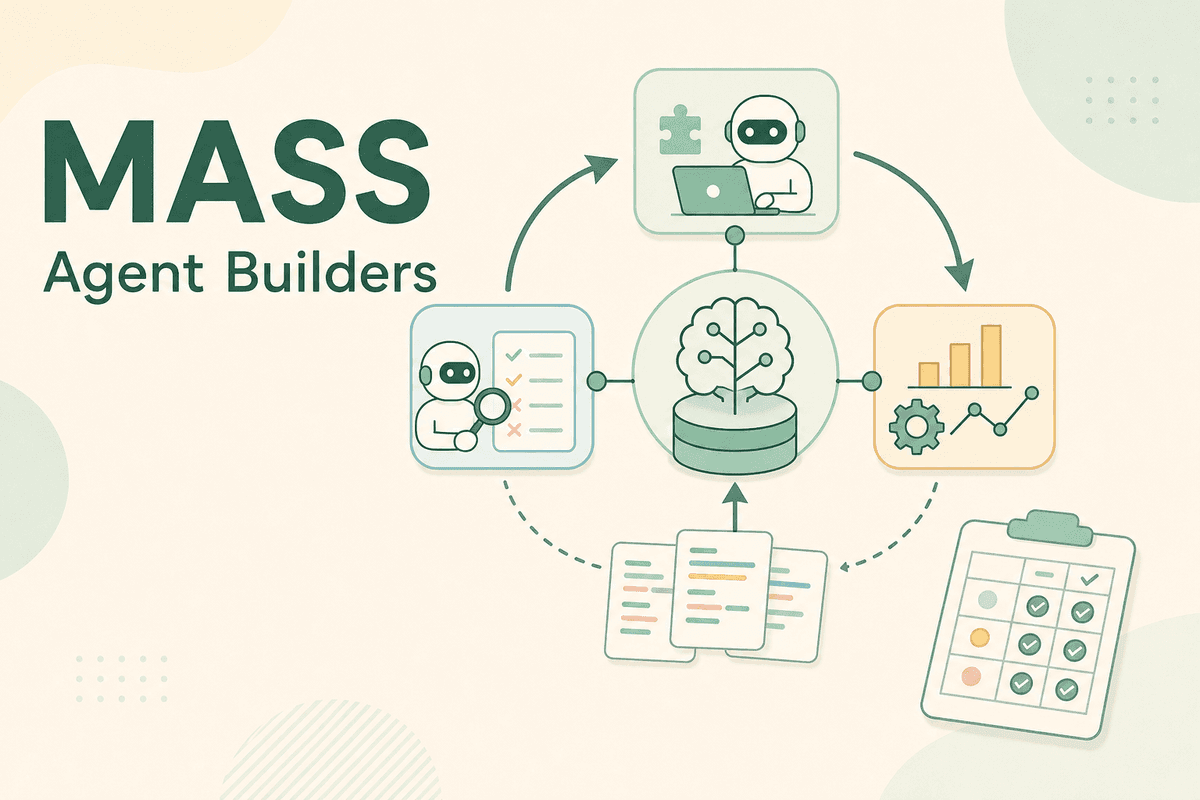
On October 11, 2026, Sakana AI and UC Berkeley researchers introduced MASS, a recursive self-improvement method for open-ended tasks. In the Sakana AI announcement, the system uses the same base model in three roles: task solver, workflow optimizer, and evaluator.
MASS alternates workflow search with fine-tuning on selected self-generated trajectories, aiming to improve the agent setup without bringing in a larger teacher model each round. Sakana reports two MASS cycles on Qwen3.6-27B, with 1.2–1.6× higher score per output token on four research benchmarks versus the base model.
On three held-out synthetic test tasks, the reported win rate against the base model rose from 53.9% after one round to 69.9% after two. The post also flags a safety concern with homogeneous recursive self-improvement: if the same model fills every role, shared blind spots can be reinforced through training.