
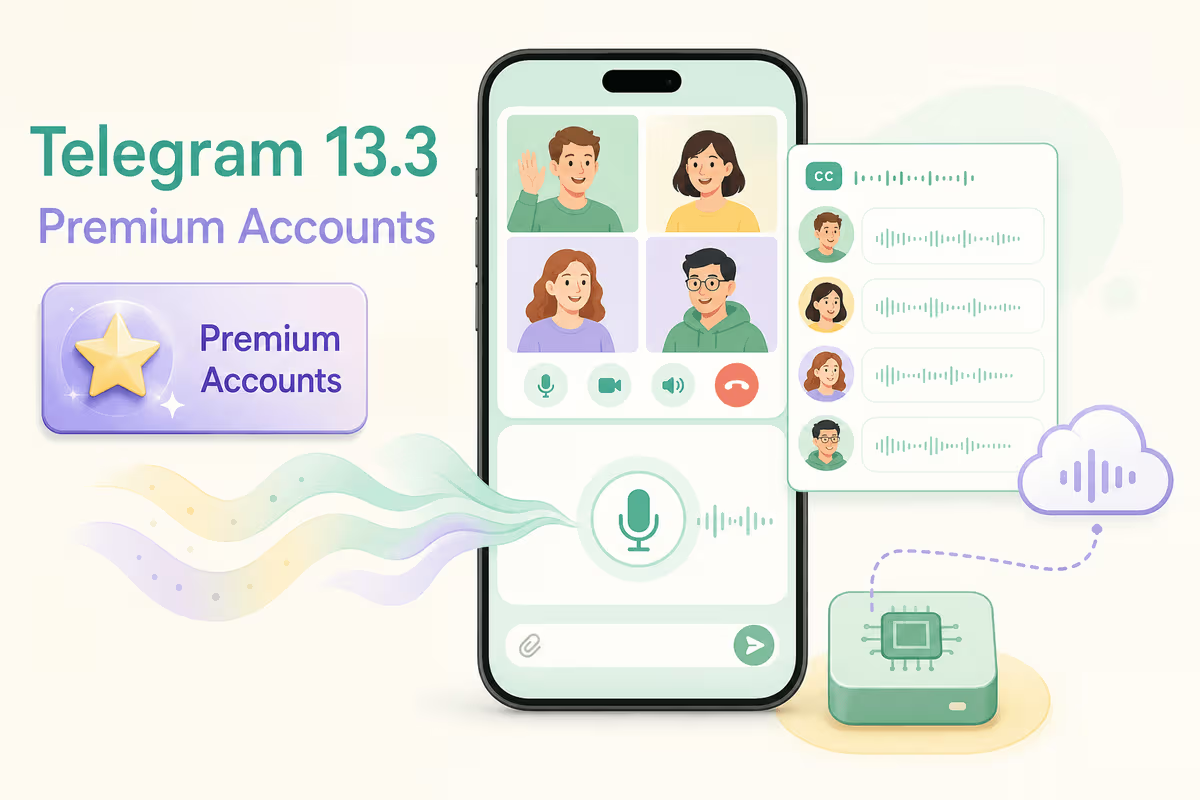
Telegram 13.3 added two speech features on November 23, 2026: voice-message dictation and live captions on Android and iOS, both limited to Premium accounts.
The dictation feature works while recording a voice message, placing recognized speech into the compose field as you speak. Telegram can process that audio on-device, but unsupported languages may still fall back to Google speech recognition, according to Telegram 13.3.
Live captions have narrower support than the headline feature list might imply. They can be enabled in group calls and video chats, start off disabled, and do not work in encrypted one-to-one calls.
Telegram Beta also said the local speech models are powered by tinyasr, currently support nine languages, and that live captions in calls remain experimental.
For builders, the notable pattern is local-first transcription with selective cloud fallback inside a mainstream messaging app. That means automations built around dictated text or captions should account for language coverage, call-type limits, and Premium-only access.